

In May 2026, Montenegro celebrated one of the most important anniversaries in its modern history – 20 years since the restoration of its independence. This symbolic date is linked to the referendum of May 21, 2006, when 55.5% of voters supported secession from the state union with Serbia; on June 3, 2006, Montenegro declared independence. OSCE international observers assessed this referendum as a process that gave citizens a genuine opportunity to peacefully and legitimately determine the country’s future.
The anniversary was celebrated throughout the country, but Bar became one of the most vibrant centers of the festivities. The city at the foot of Mount Rumija prepared not just a concert, but a three-day program that combined the national holiday with summer spirit, the tourist season, regional music, and a contemporary electronic scene. The venue was the Šetalište of King Nikola, a seaside promenade where concerts began at 9:00 PM on all three evenings.
Why Bar was particularly symbolic
For Bar, the independence anniversary was more than just an excuse for a large-scale concert. The local program constantly emphasized the city’s historical role: the Bar administration recalled that the city was “Montenegro’s gateway to the world,” a meeting place for traditions, religions, dynasties, and cultures. Official reports also linked Montenegro’s state tradition to the Bar region and the Battle of Tujemili, after which the early statehood of Duklja was consolidated.
This historical depth is also felt within the city itself. Old Bar is included on the UNESCO tentative list; it is described as the largest and one of the most important medieval archaeological complexes in the Balkans, covering 4.5 hectares and containing the remains of approximately 600 public and private buildings from various eras. Therefore, the festival in Bar felt more than just a random summer concert, but rather an event at the intersection of history, the sea, urban memory, and contemporary culture.
Program: Not Just a Stage, but Also a Major City Anniversary
The musical portion was the most prominent, but not the only one. The Bar Municipality had prepared a broader anniversary program: literary and art competitions for children on the themes of statehood and history, a school quiz called “How We Learn to Know Crnu Gora,” the “Dvadeset godina pod svojim nebom — od sna do stvarnosti” (St. John the Baptist) grandstand in Stari Bar, as well as events related to carnival, maritime tradition, and the “Jedra Jadrana — spoj tradicije i zajedništva” (St. John the Baptist’s Day) regatta.
The musical program was structured around three distinct moods of the festival. May 21st featured an energetic regional evening with Who See and Dubioza Kolektiv. May 22nd – Rock evening with Bar band AkademiA and the legendary Parni Valjak. May 23rd – Electronic night with DJ Marko Milanović, Tom Novy, and Burak Yeter.
Evening One: Who See and Dubioza Kolektiv – Youth, Ska, Hip-Hop, and a Community Choir
The first evening, May 21st, was the most street-oriented and festival-like. The program opened with the Montenegrin anthem, and during the intermission, a multi-minute fireworks display intensified the festive atmosphere at the Bar koro.
First, the Montenegrin duo Who See took the stage. They opened with “Dinamida,” followed by “Nisam Doma,” “Nemam Ti Kad,” “Bar–Bari,” “Regeton Montenegro,” “Đedovina,” and one of their most recognizable hits, “Đe Se Kupaš?” For Bar, it was a particularly lucky break: Who See isn’t just a popular hip-hop project, but the voice of coastal Montenegro, with humor, a local accent, self-irony, and a recognizable Boka Kotorska temperament.
Who See is a duo from Boka Kotorska: Dedduh, aka Dejan Dedović, from Kotor, and Noyz, aka Mario Đorđević, from Herceg Novi. The group formed in the early 2000s, released their debut album, “Sviranje kupcu,” in 2007, and the single “Reggaeton Montenegro” became one of their major regional breakthroughs. They also made history as the first Montenegrin musicians nominated for an MTV EMA, and for “Reggaeton Montenegro,” they won the MTV EMA Best Adriatic Act 2012.
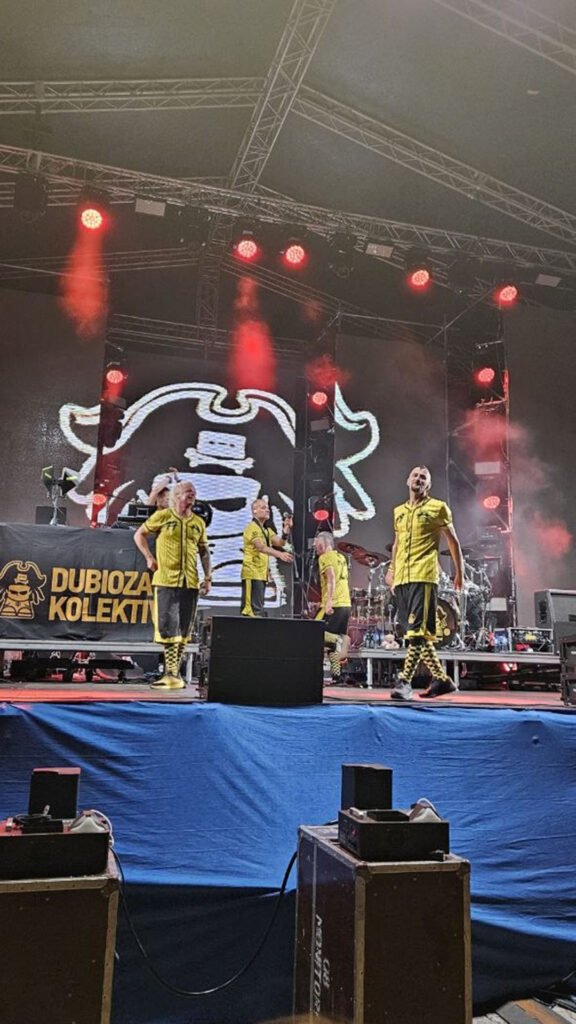
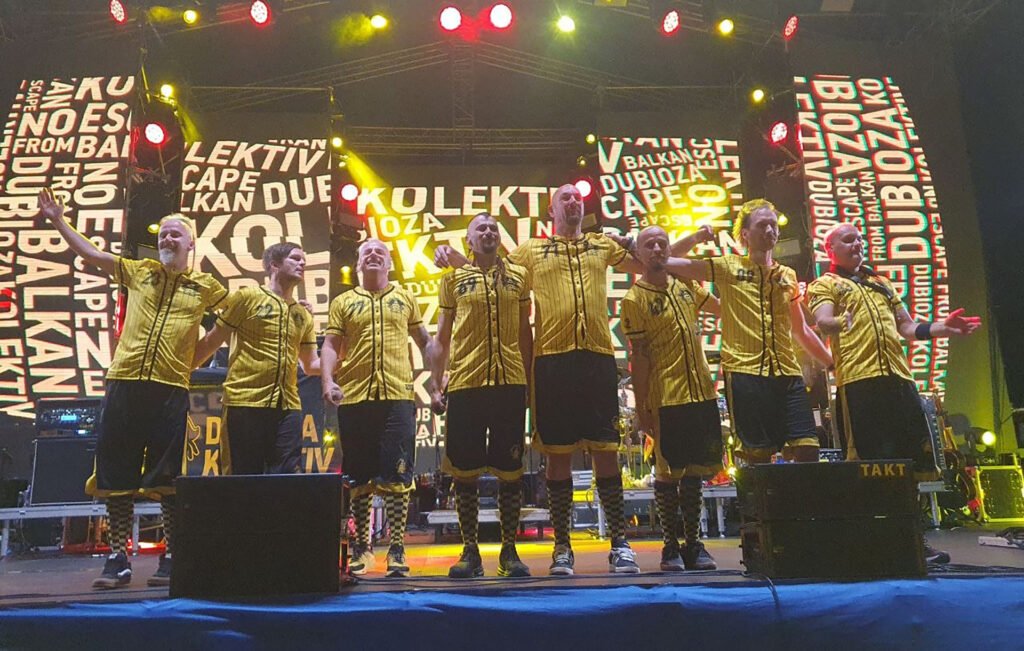
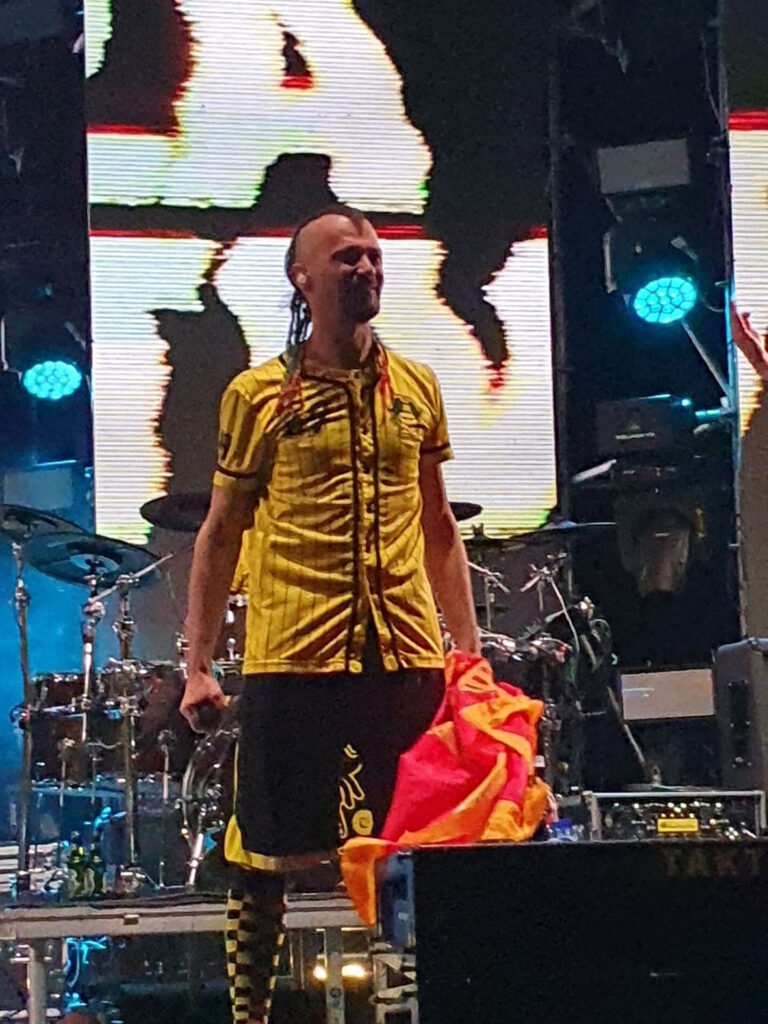
After Who See, the atmosphere became even more explosive: Dubioza Kolektiv took the stage. After “U.S.A.” and “Volio BiH,” the audience practically transformed into a large choir, and towards the end, “Blam Blam” rang out; some of the band members came down to the audience to perform their signature “burek-pit” choreography.
For Dubioza, this evening was also special because, according to frontman Vedran Mujagić, it was their first concert in Bar. The musician emphasized that they were pleased “to come from the continent to the sea,” and the festive week in Montenegro itself created an almost festival-like atmosphere. He also noted that Dubioza continues to experiment with genres, as this blending of styles remains part of their live energy.
Dubioza Kolektiv’s biography perfectly explains why they were a strong choice for Independence Day. The band formed in 2003 in Bosnia and Herzegovina, fusing Balkan influences with ska, punk, reggae, electronica, and hip-hop. Their official website describes them as a project born out of the complex post-war social climate, where young people lacked space for cultural and political expression.
From the very beginning, Dubioza made concerts more than just entertainment, but a form of civic energy. Their first album was released in 2004, followed by “Open Wide,” “Dubnamite,” “Firma Ilegal,” “5 do 12,” “Wild Wild East,” and “Apsurdistan.” Interestingly, the band consciously made their music available for free download, and “Wild, Wild East” was released on Koolarrow Records, a label associated with Bill Gould of Faith No More.
Second Evening: AkademiA and Parni Valjak – Rock, Generations, and a Double Anniversary
If the first evening was youthful and explosive, the second – on May 22 – became an evening of rock remembrance, family audiences, and intergenerational unity. The Bar band AkademiA and regional rock legends Parni Valjak performed at King Nikola’s Shetalishte. Bar Info described the evening as a concert celebrating two anniversaries: 20 years of Montenegro’s restored independence and 50 years of Parni Valjak.
AkademiA was a crucial part of the Bar-specific character of the celebration. They are a local rock band, officially known as AkademiA since October 2, 2008, and are considered a continuation of the former Bar lineup, “Ponoćni ritam.” The band features experienced musicians who have played in various significant Bar bands since the late 1980s; AkademiA’s repertoire is largely built on ex-YU rock standards with a few touches of international music.
At the celebratory concert, vocalist Gavro Gajo Ugrenović emphasized that the band was especially pleased to play in their hometown and to be the precursor to Parni Valjak. Their lordly set included songs by Partibrejkers, Riblja Čorba, and Zabranjeno Pušenje, as well as the usual fast and rhythmic repertoire that AkademiA audiences love most.
Then came the moment of Parni Valjak (translated as “Steamroller”) – a band that has become almost family music for several generations of listeners in the former Yugoslavia. Parni Valjak was founded in Zagreb in 1975, and the “50” tour is dedicated to the band’s 50th anniversary. On the tour’s official page, the band is described as one of the region’s most enduring rock bands, whose songs “Stranica Dnevnika,” “Jesen u Meni,” “Dođi,” “Ugasi Me,” and “Zastave” have become part of the musical anthology of these spaces.
Parni Valjak’s special emotional thread is tied to Aki Rahimovski. His voice defined the band’s sound for decades, and after his death in 2022, the group went on hiatus. In 2023, Parni Valjak continued on with new vocalist Igor Drvenkar; the musicians themselves explained it very simply: they don’t play to live, but live to play.
In Bar, Igor Drvenkar said it was a great honor for him to take the stage to celebrate the 20th anniversary of Montenegro’s independence, especially since Parni Valjak himself had also reached his own milestone – 50 years. The audience heard both the obligatory hits, essential to any band concert, and new songs featuring the signature style of Husein Hasanefendić Hus.
Drvenkar himself was born in 1991 and grew up listening to the voice of Akija Rahimovski. In an interview with Bar Info, he called “Dođi” and “Jesen u meni” songs that “get into the soul,” and among the uptempo numbers, he singled out “Lutka za bal” as a must-have. Thus, the second evening became not just a rock concert, but a symbolic passing of the musical baton: from classic Yugoslav and Croatian rock to the band’s new chapter, after Aki.
Third evening: Electronic Night, Tom Novy, Burak Yeter, and a Gift for Montenegro
The finale of the festival, May 23rd, was dedicated to electronic music. It was the most modern-sounding evening: after a warm-up by Bar DJ Marko Milanović, German house DJ Tom Novy and Turkish producer Burak Yeter took the stage. Bar Info wrote that their performances brought modern sound, high-quality production, and the energy of major international music events to Bar.
Tom Novy is a prominent figure in the German house scene. Amsterdam Dance Event lists him as born on March 10, 1970, releasing his first single, “I House You,” in 1995 and achieving international fame with “Superstar” a year later. His well-known tracks include “I Rock,” “Pumpin,” “Lovin U,” “Take It,” and “Your Body,” and he has also hosted music programs on MTV and other channels.
Burak Yeter is a DJ and producer with ties to Amsterdam, Los Angeles, and Istanbul. His official biography states that he began making music early, playing piano and guitar, founded his first band, Tatbikat, won the MTV & Burn Best DJ Contest in 2004, worked on remixes for major international artists, and opened Connection Records studios in Amsterdam, Los Angeles, and Istanbul.
The most touching moment of the third night was Burak Yeter’s special remix of Slobodan Kovačević’s “Montenegro”—a gift for the anniversary of independence. Judging by the crowd’s reaction, it was this gesture that transformed the electronic finale from a regular DJ set into a part of the national holiday.
The result: Bar showed three faces of one country.
The celebration at Bar was multilayered. The first evening spoke the language of youth, hip-hop, ska, reggae, and socially charged Balkan energy. The second evening brought together generations around classic rock, local band AkademiA, and Parni Valjak’s big anniversary. The third evening took the celebration to an international electronic format, with Tom Novy, Burak Yeter, contemporary production, and a dance atmosphere by the sea.
The key to this program was the precise blend of local and international. It featured musicians from Bar, the Montenegrin duo Who See, Bosnian Dubioza Kolektiv, Croatian Parni Valjak, German Tom Novy, and Turkish Burak Yeter. This lineup perfectly conveyed the idea of modern Montenegro: a small country with an ancient history, a strong local identity, and an openness to the region, Europe, and the world. Twenty years after the referendum, Bar celebrated its independence not only with flags and official words, but with a vibrant city festival—complete with an anthem, fireworks, rock, hip-hop, ska, reggae, house music, and people of different generations gathered on the same embankment. This is why Bar’s program became one of the most striking examples of how a state anniversary can be simultaneously solemn, popular, and truly musical.
The main thing is not to confuse the levels of infrastructure. Carnival, Jaz Beach, Mogren, and the Citadel are well-known and well-described tourist destinations. Velja Maslina has official status as a natural monument. Čučuci Waterfall and Ivanovići Cave, however, are more of a local natural attraction for a careful, independent walk: without guaranteed water, signs, lighting, or services. This, however, is precisely their value – they show the other side of the Budva Riviera, where beyond the bustling beach line begins a quiet stone landscape of old villages, paths, olive trees and dry streams.
It was an incredible event! Dubiosa were amazing! I still can’t believe they actually performed at the Bar.