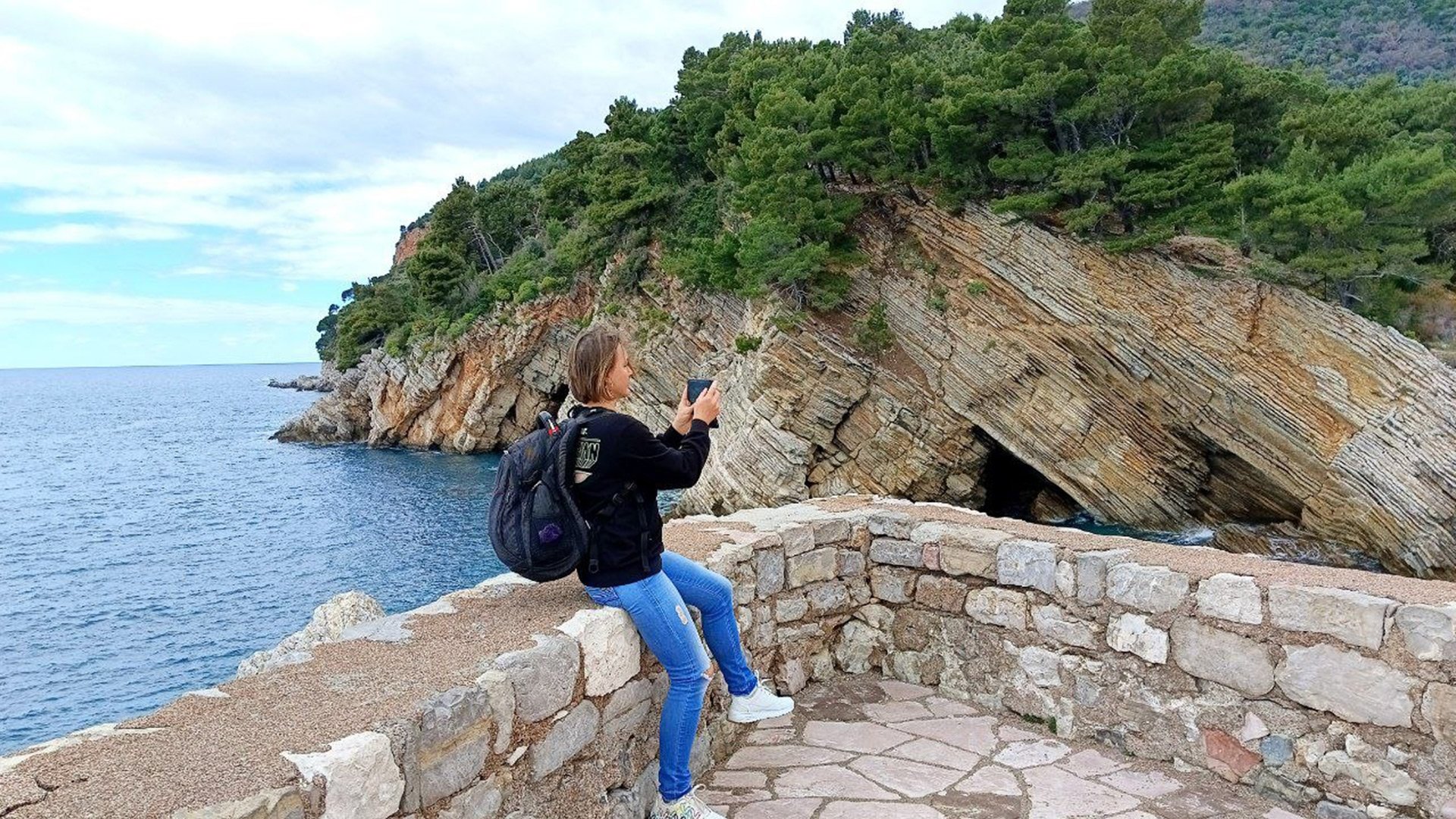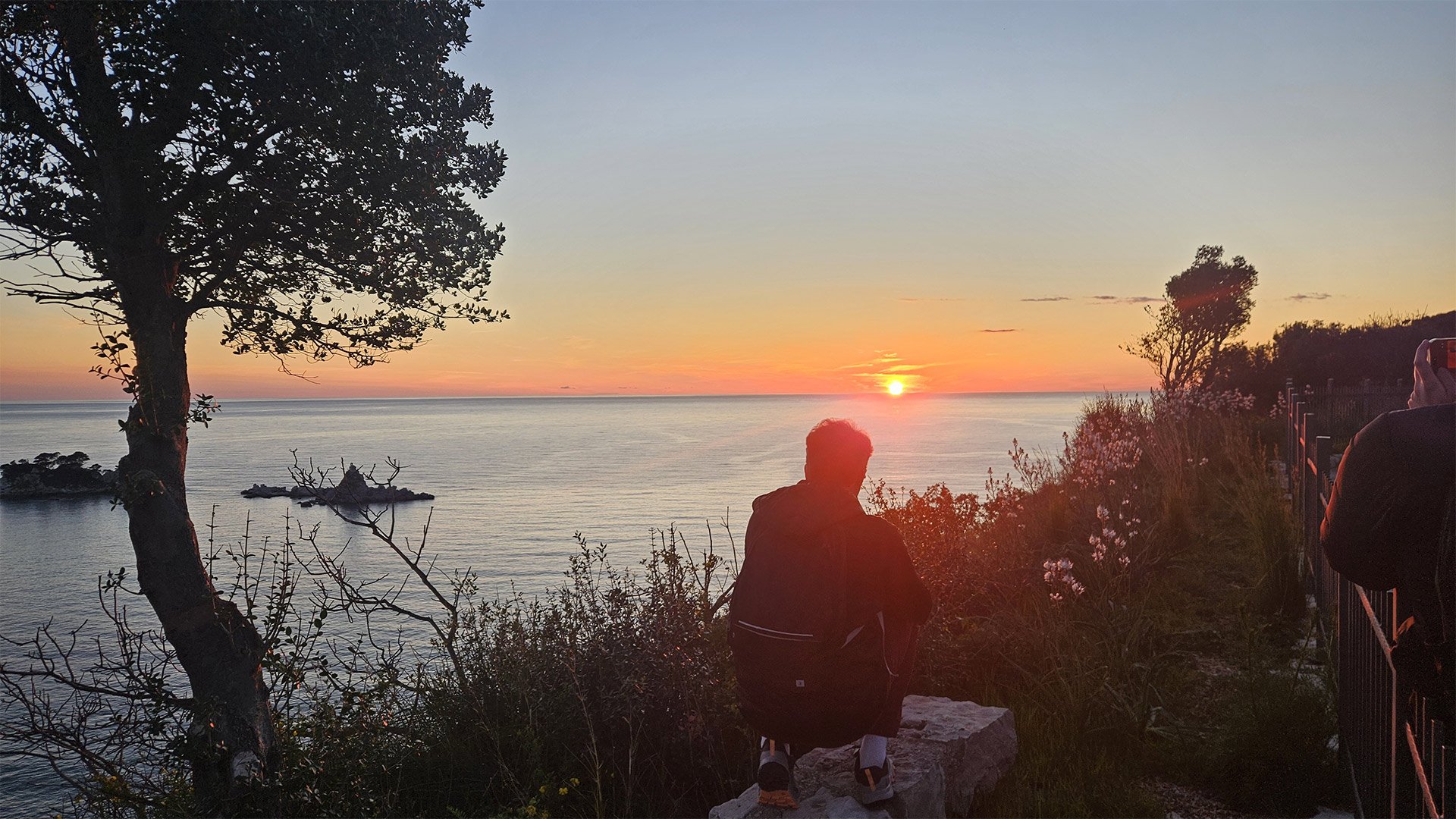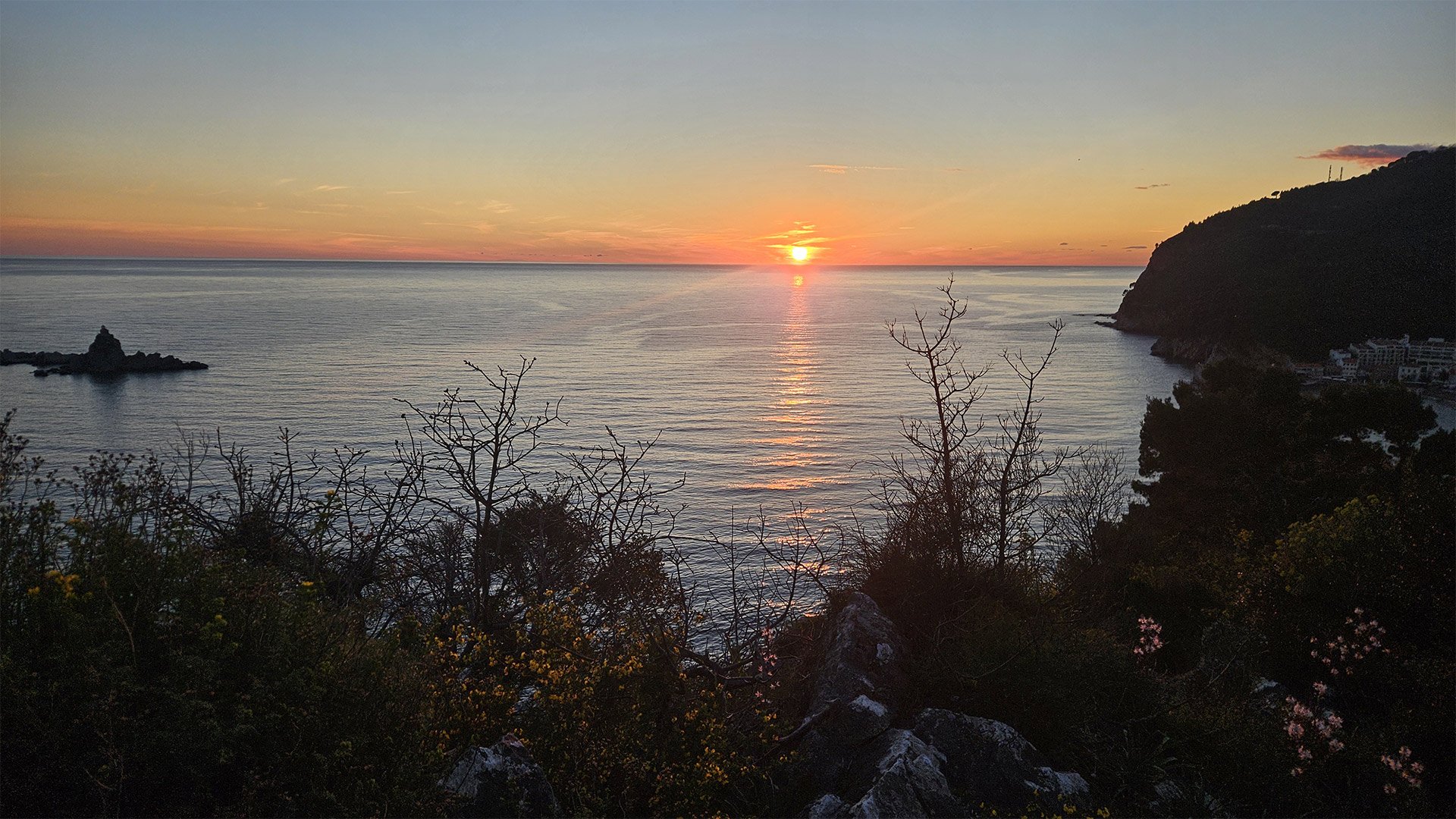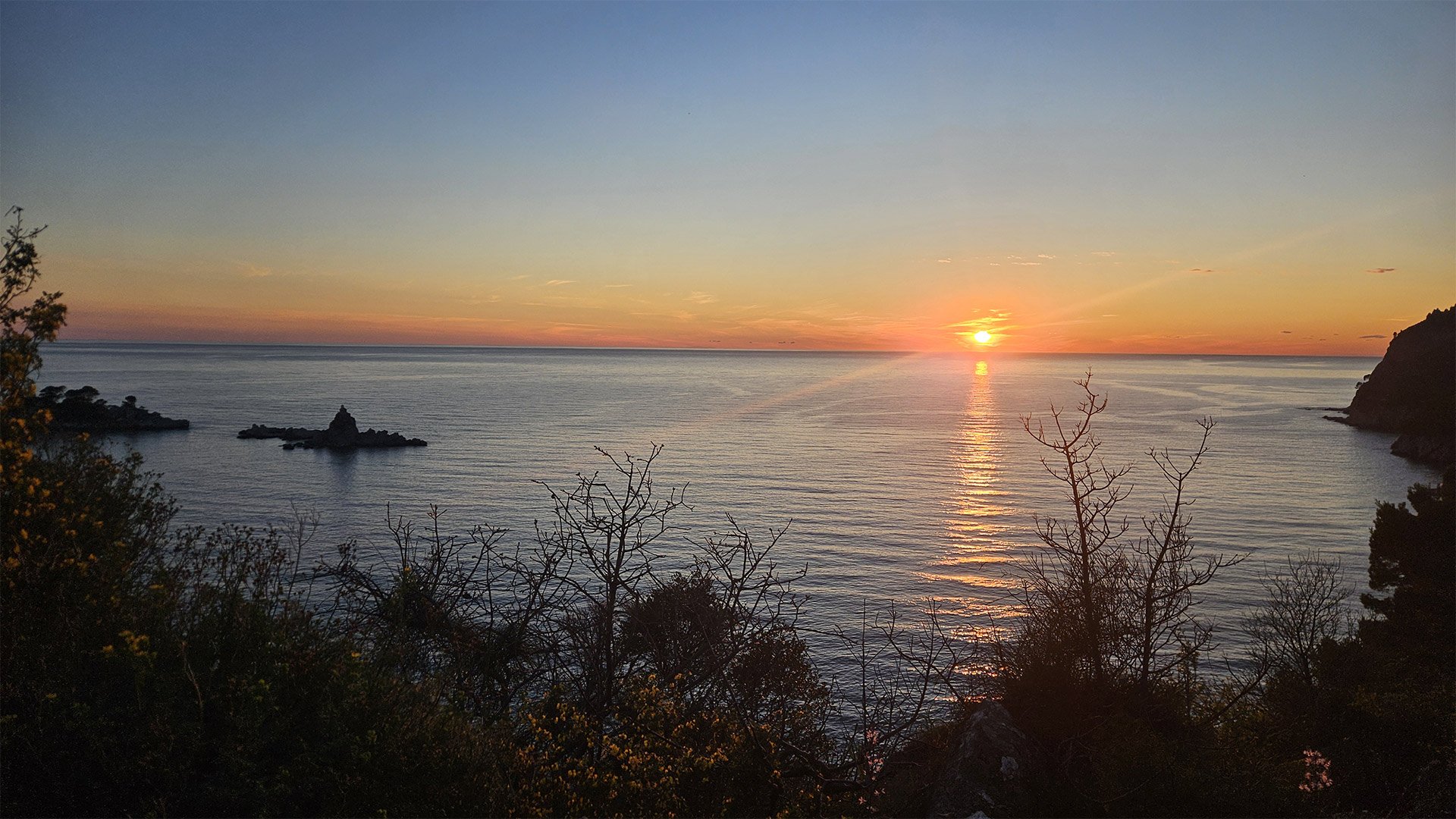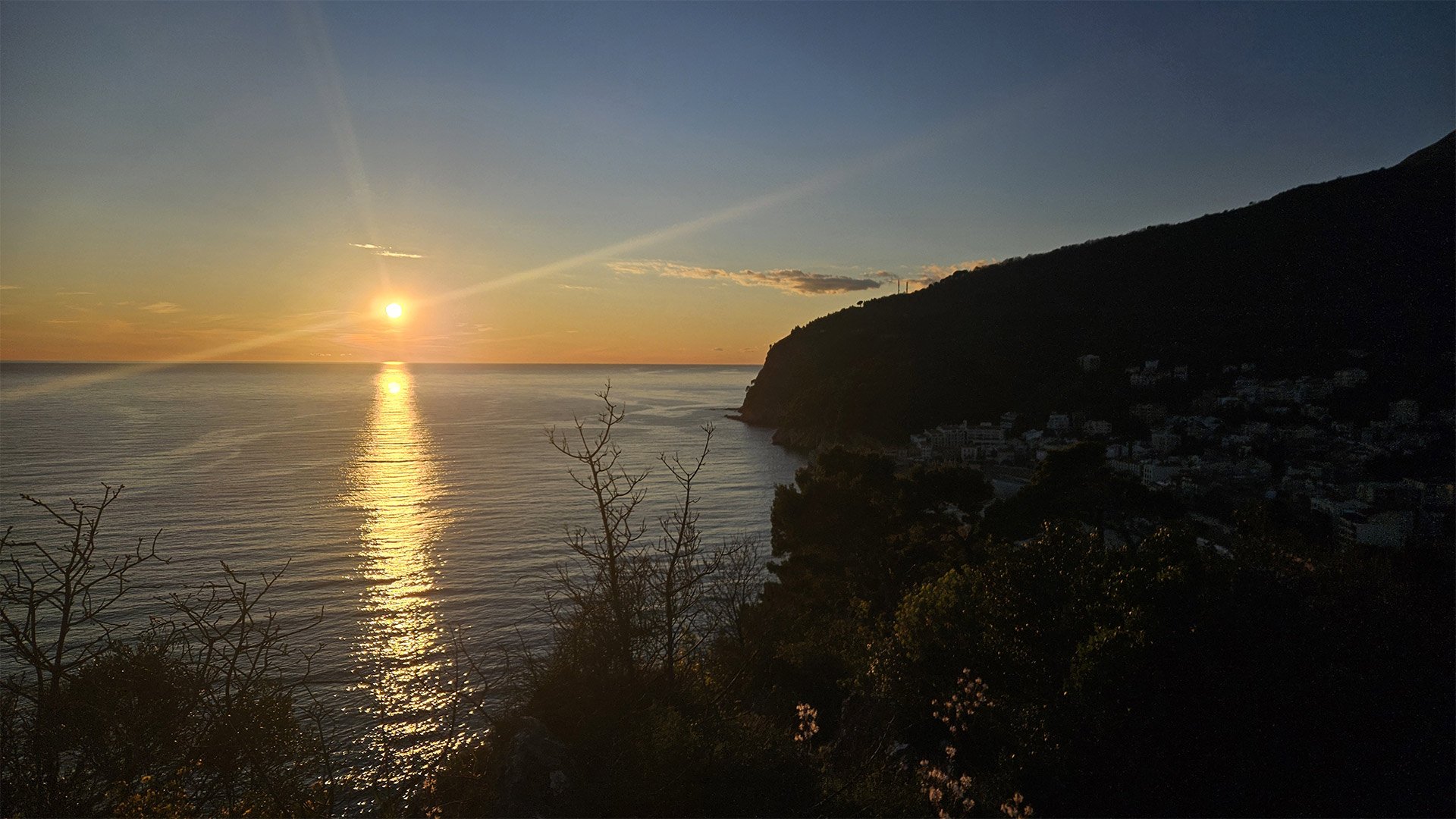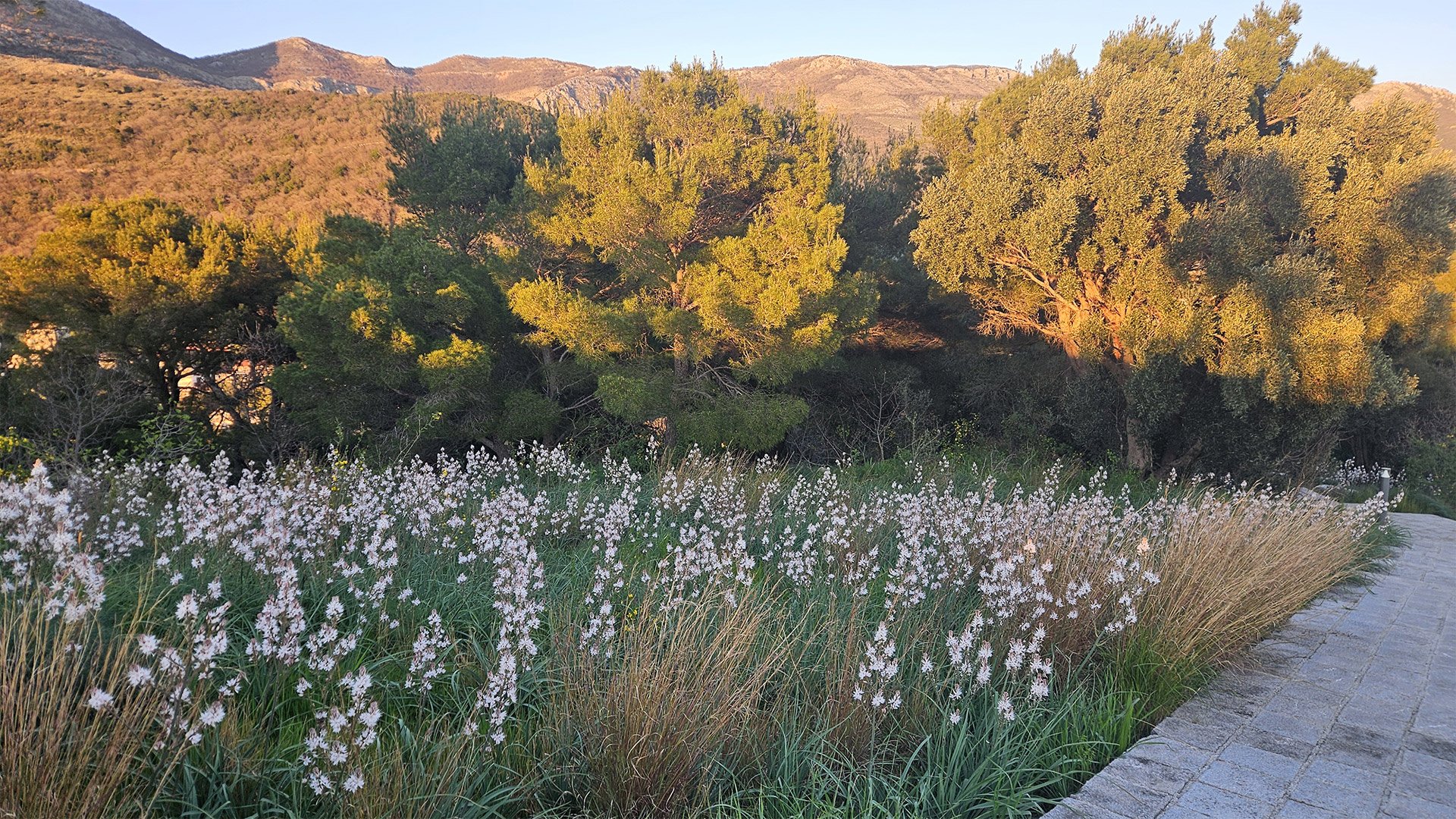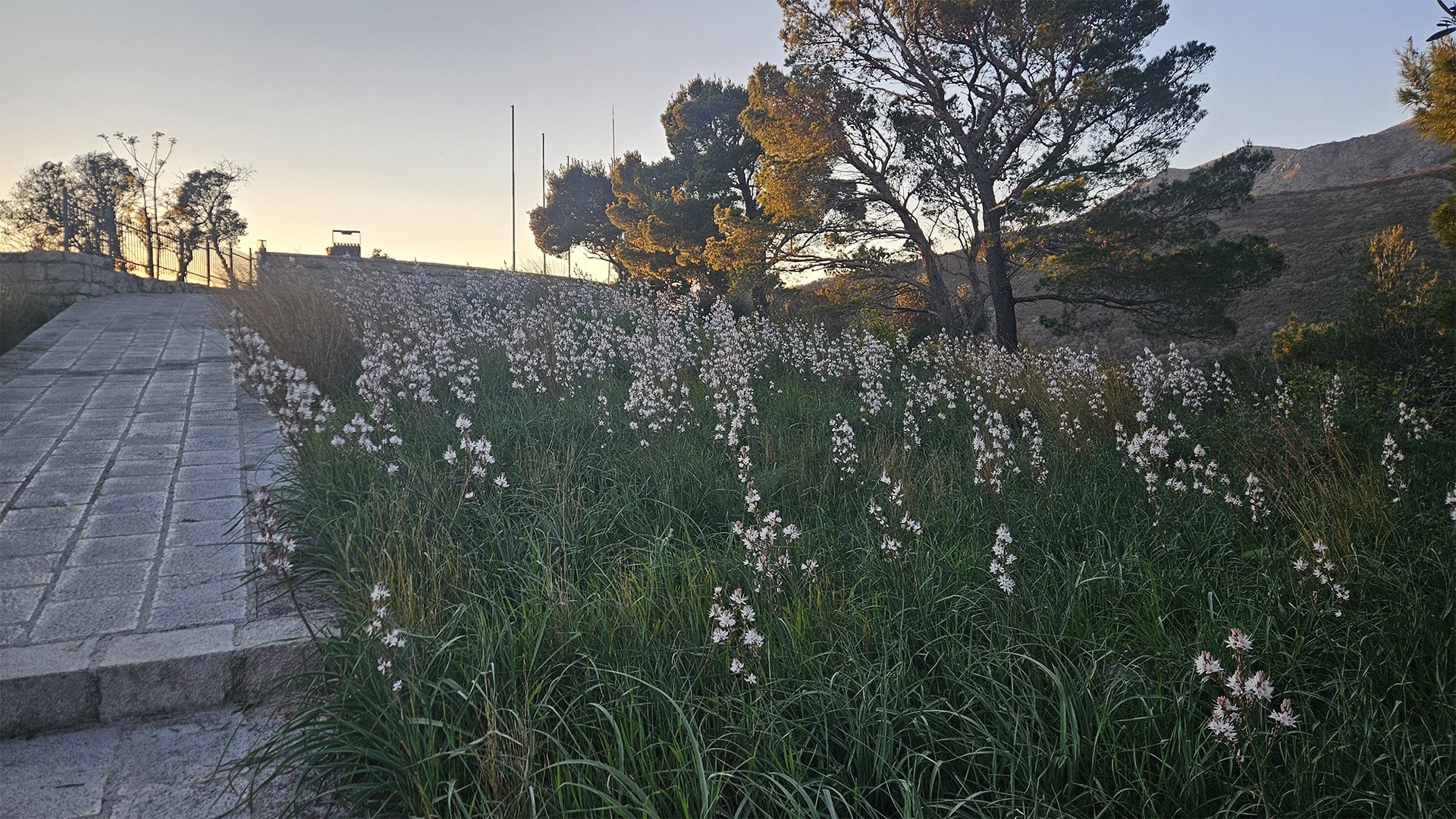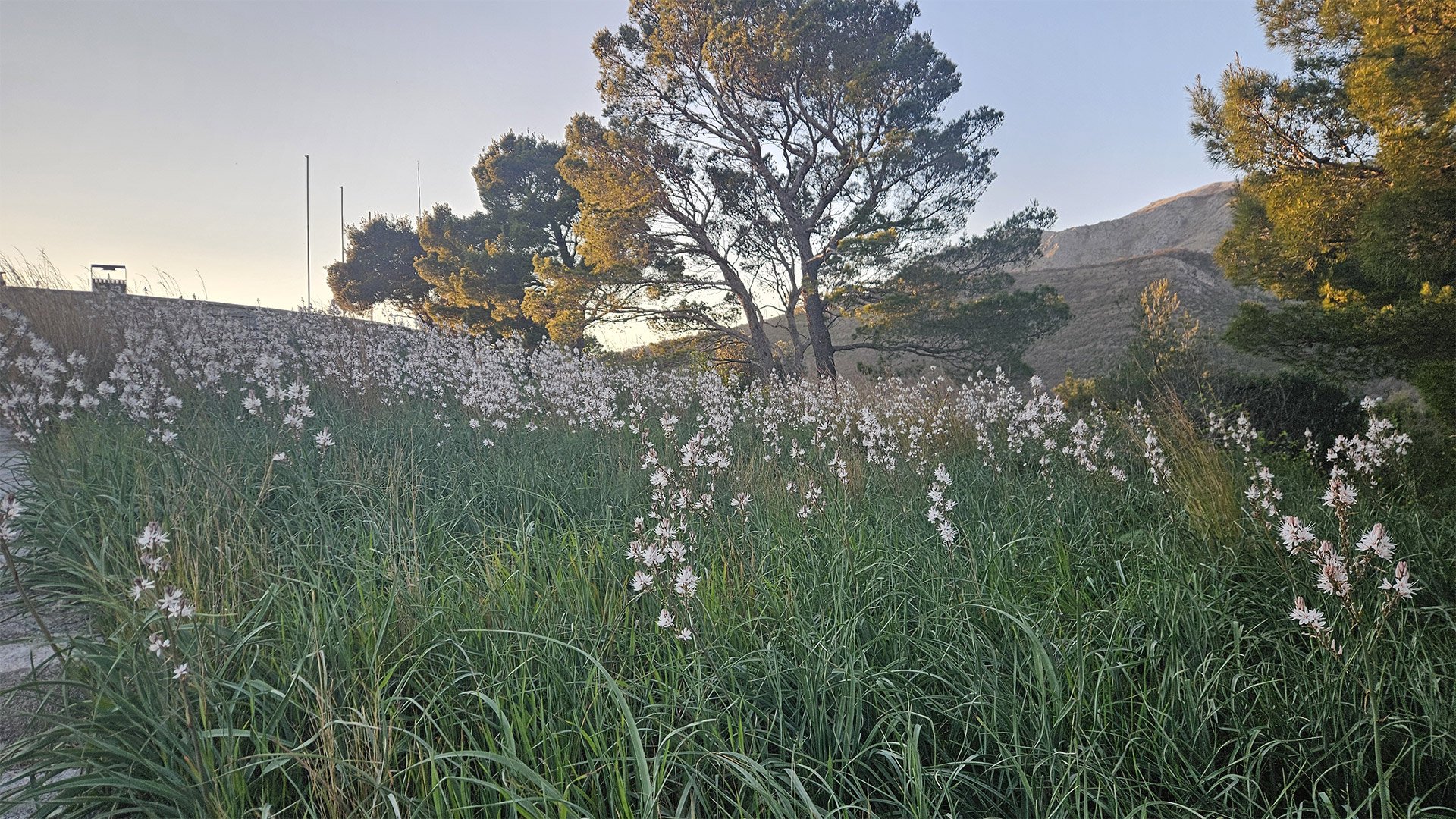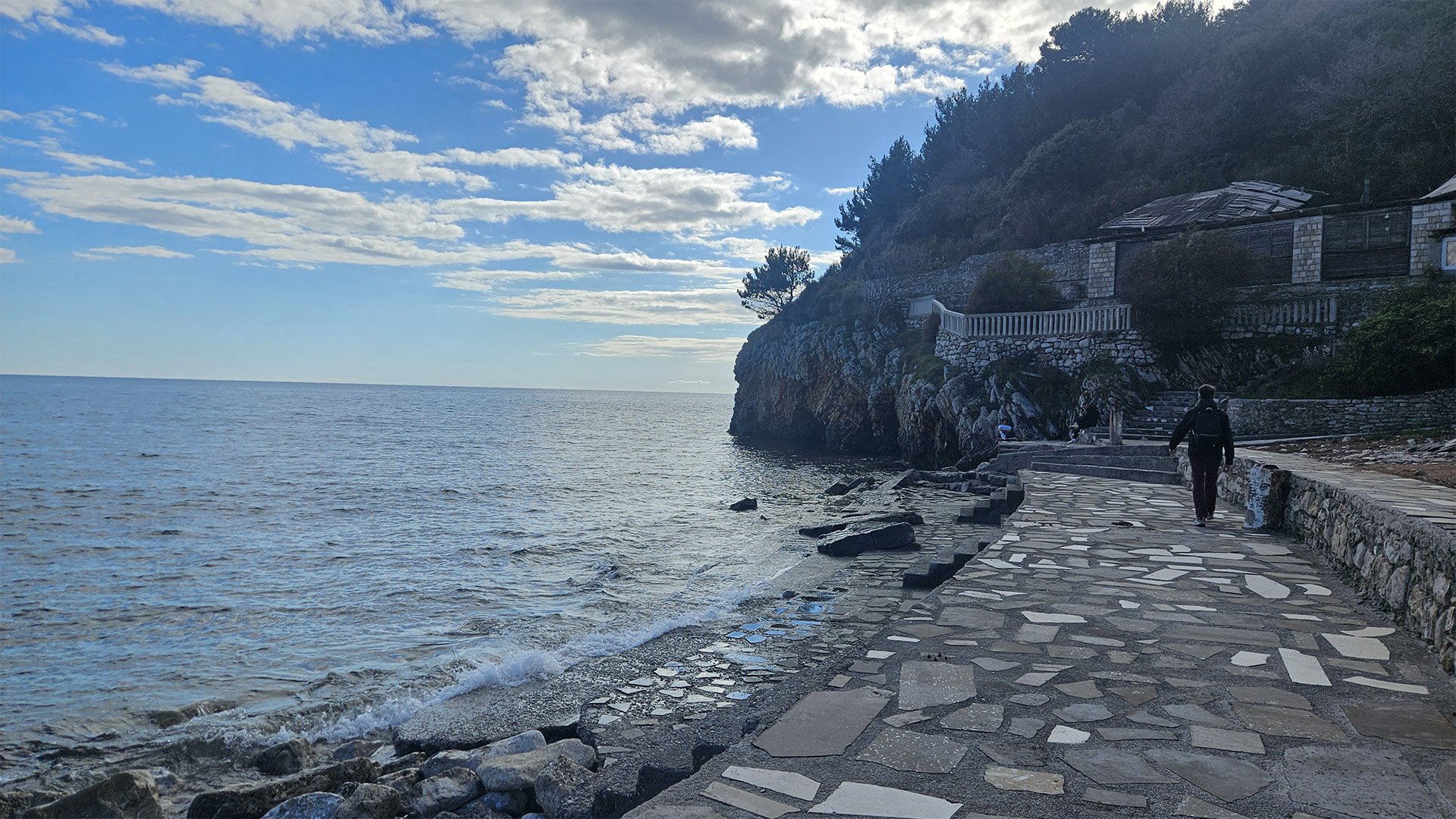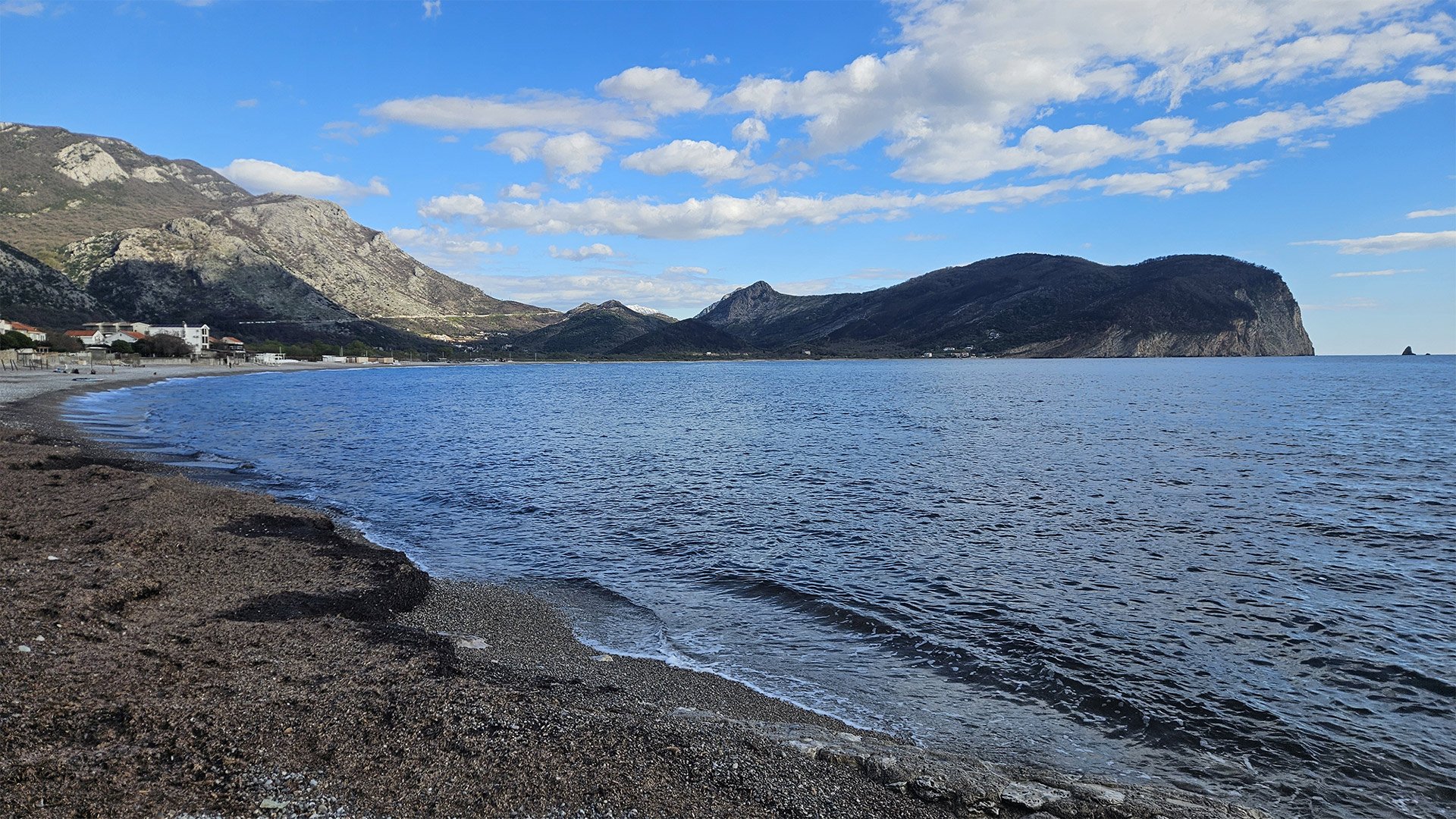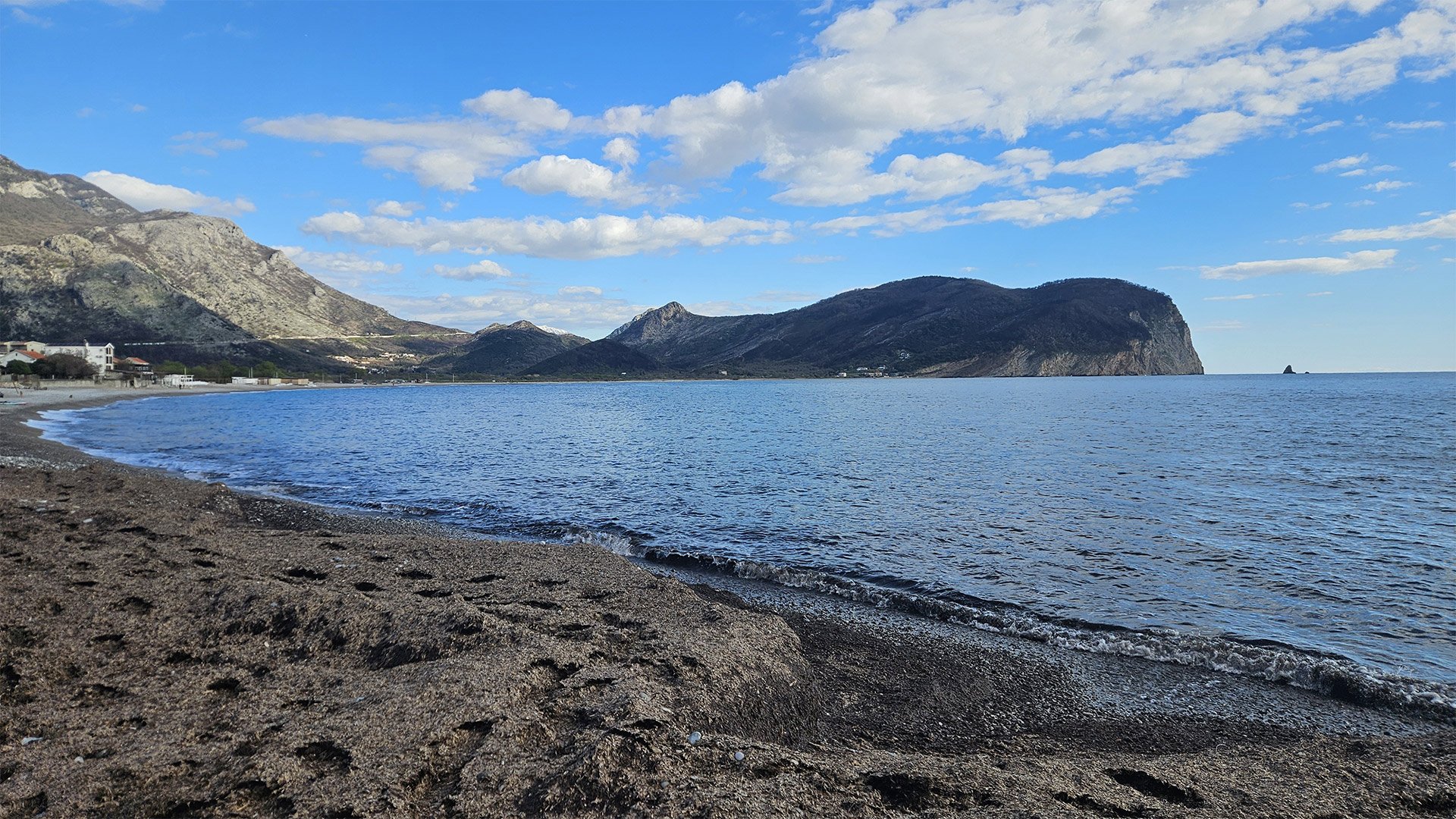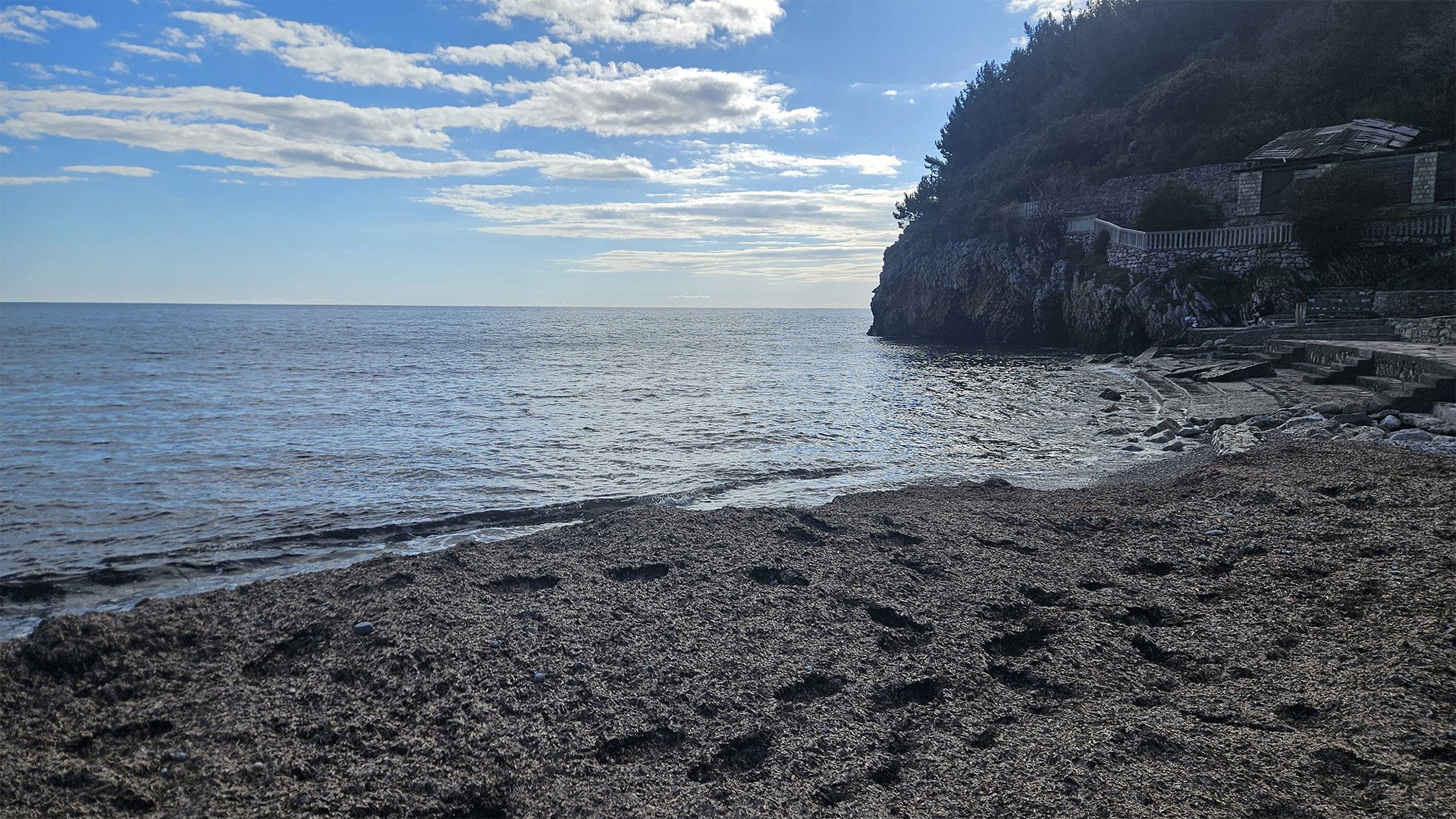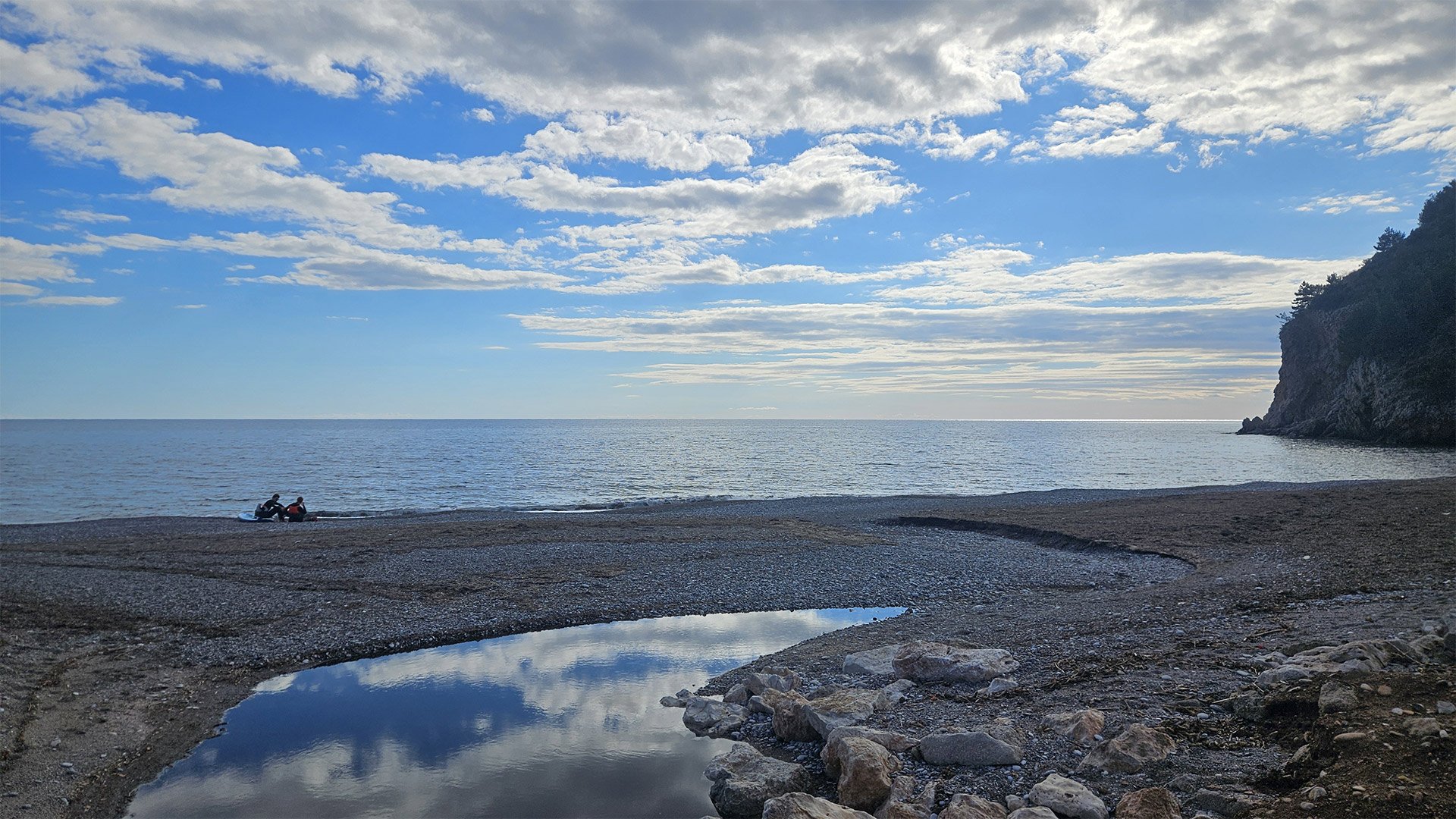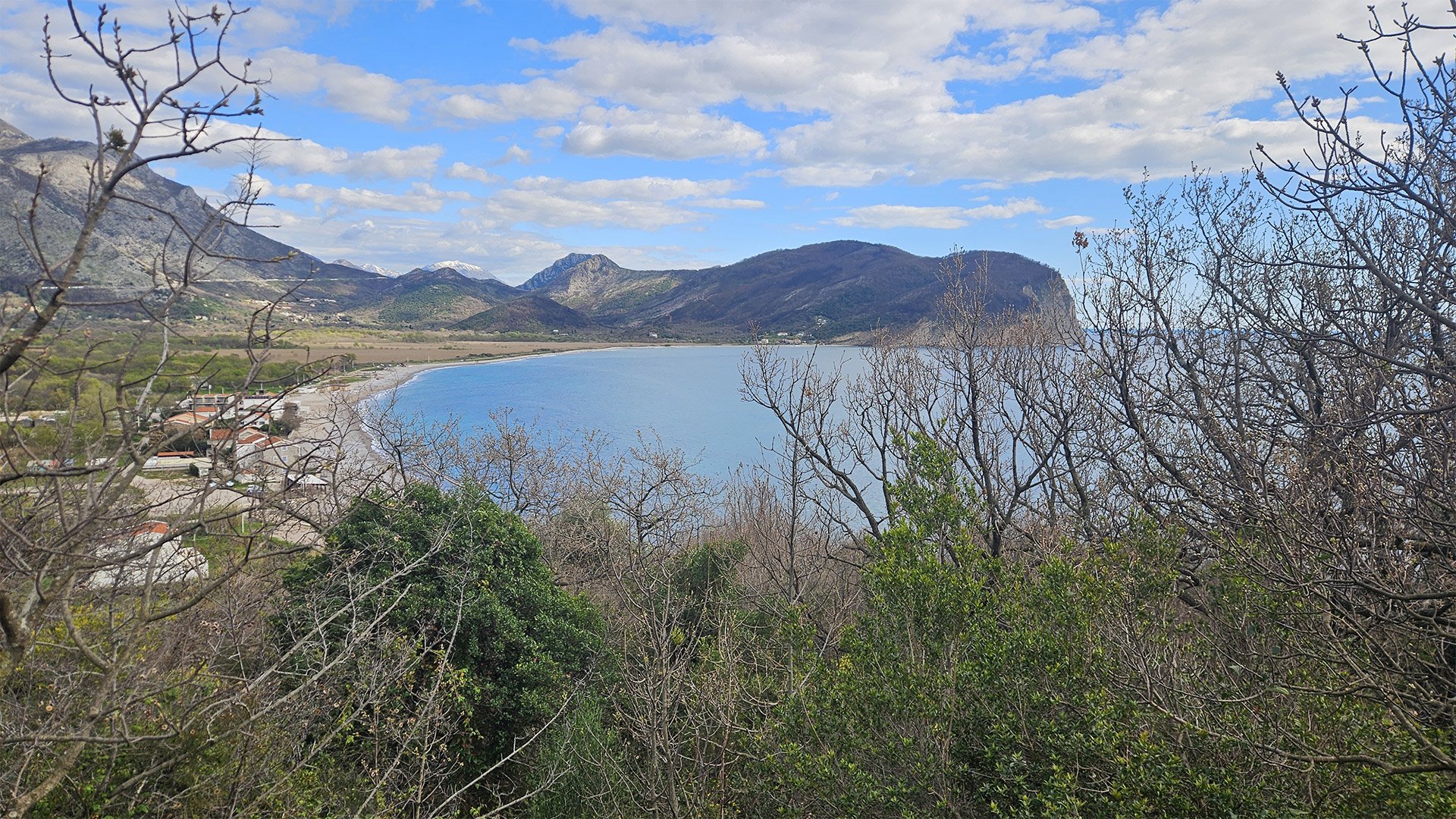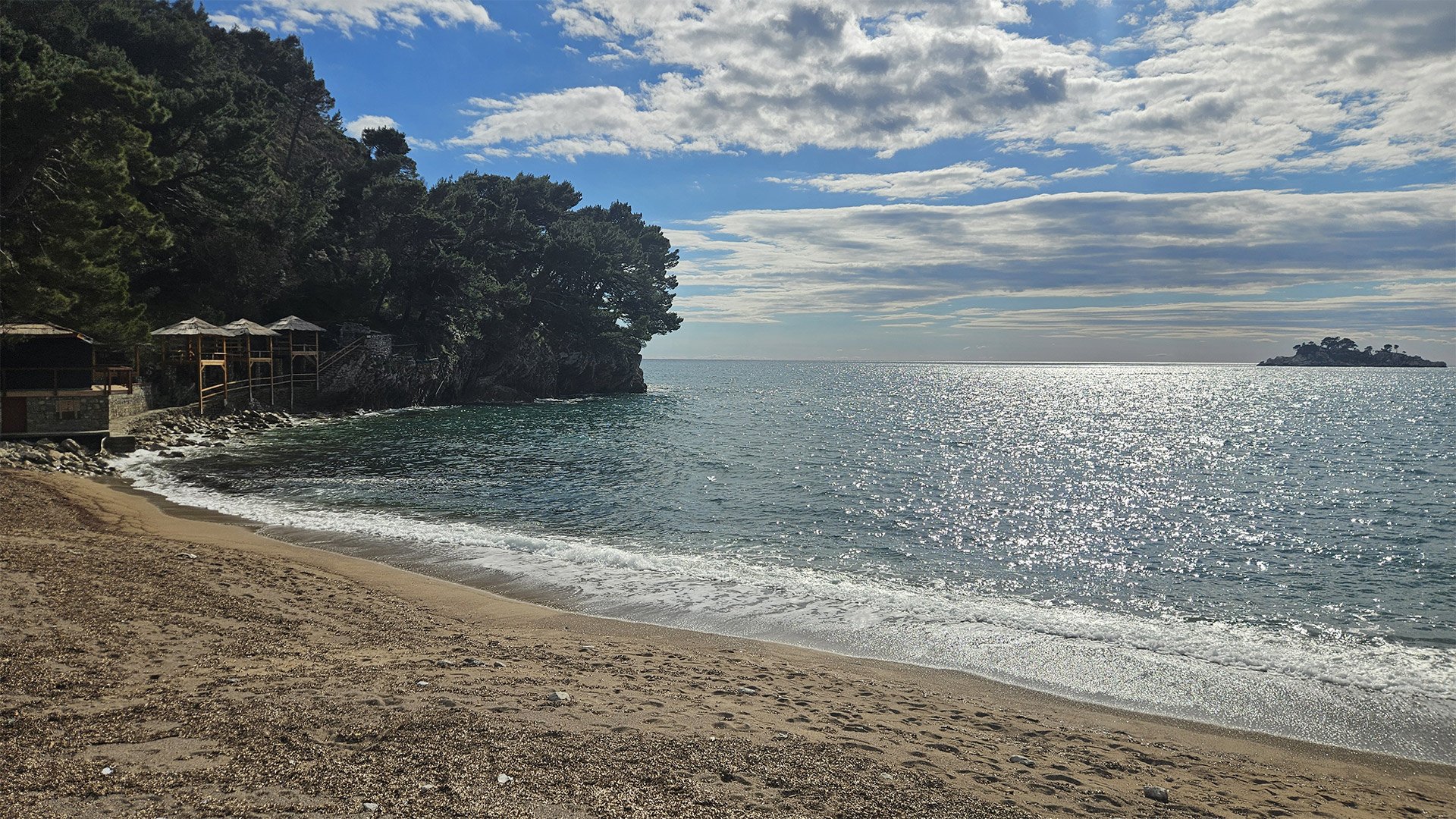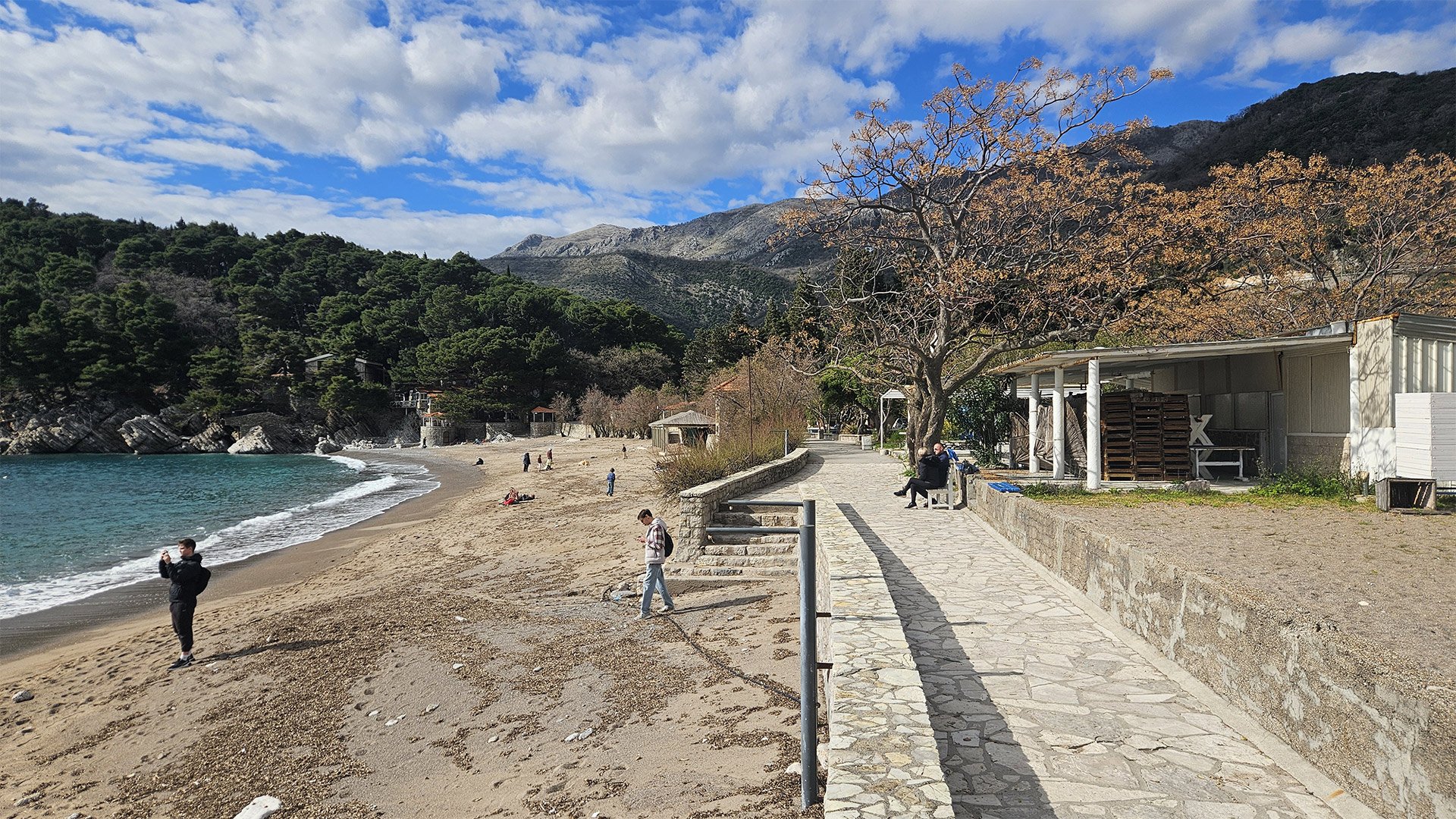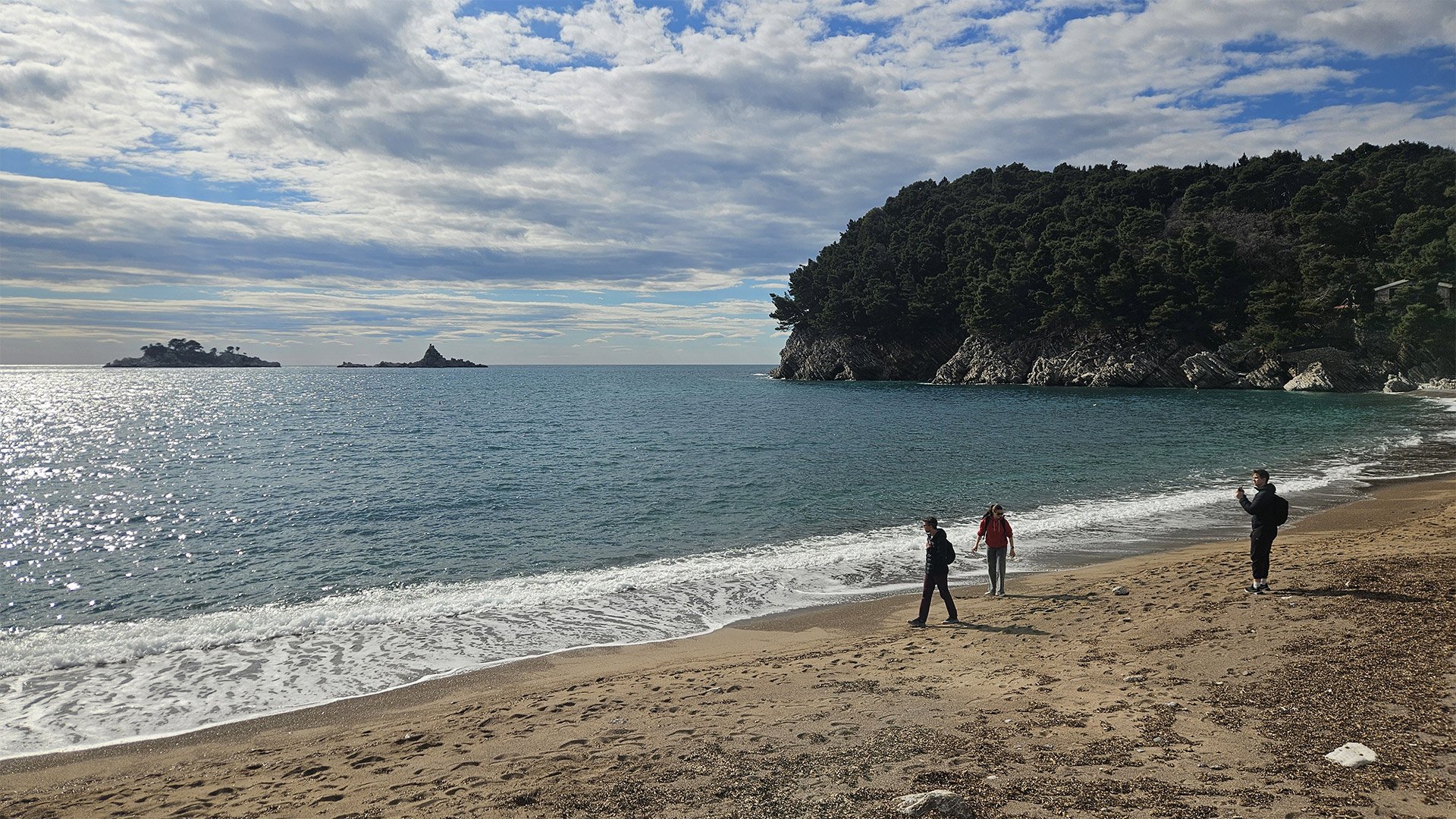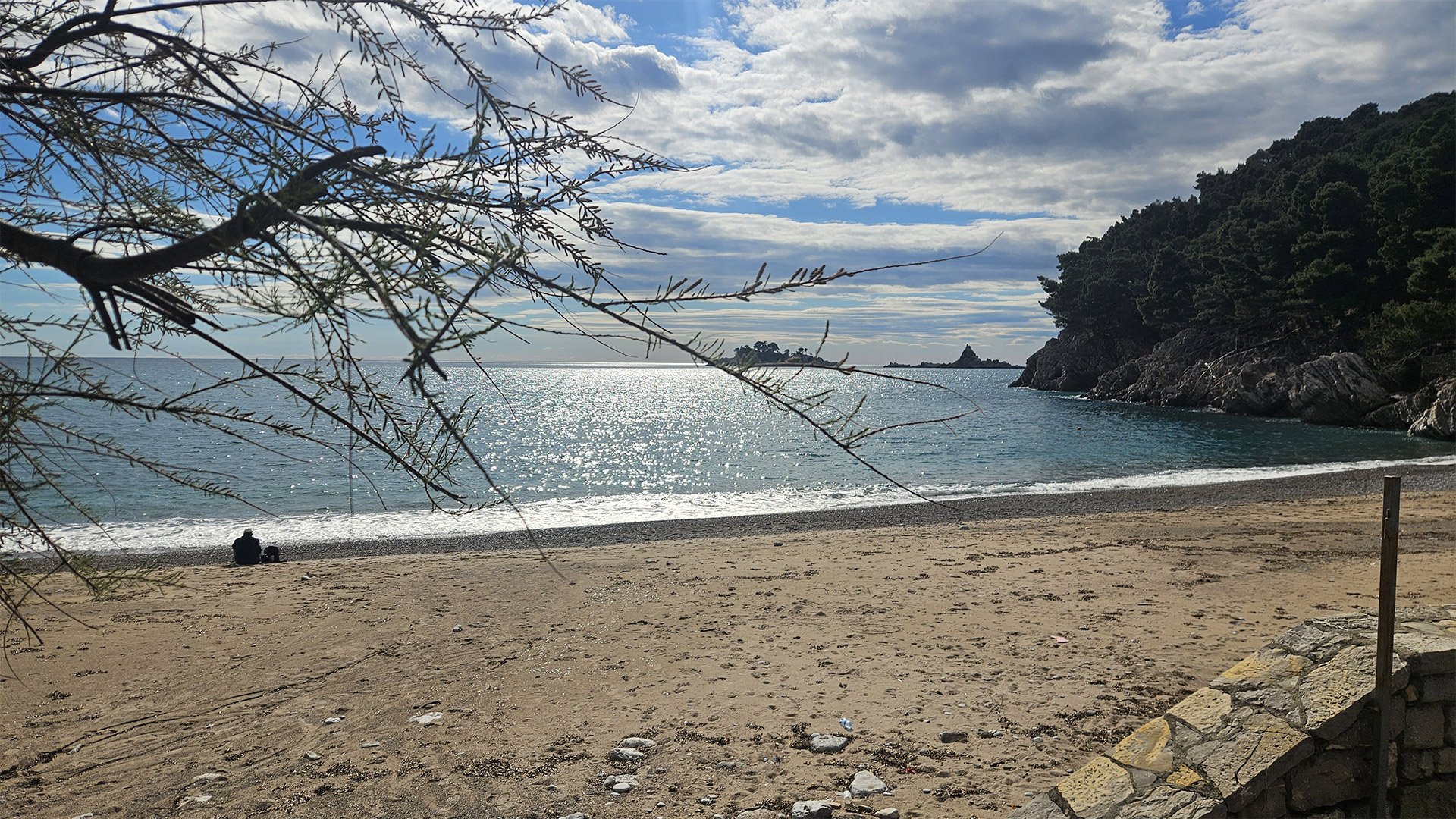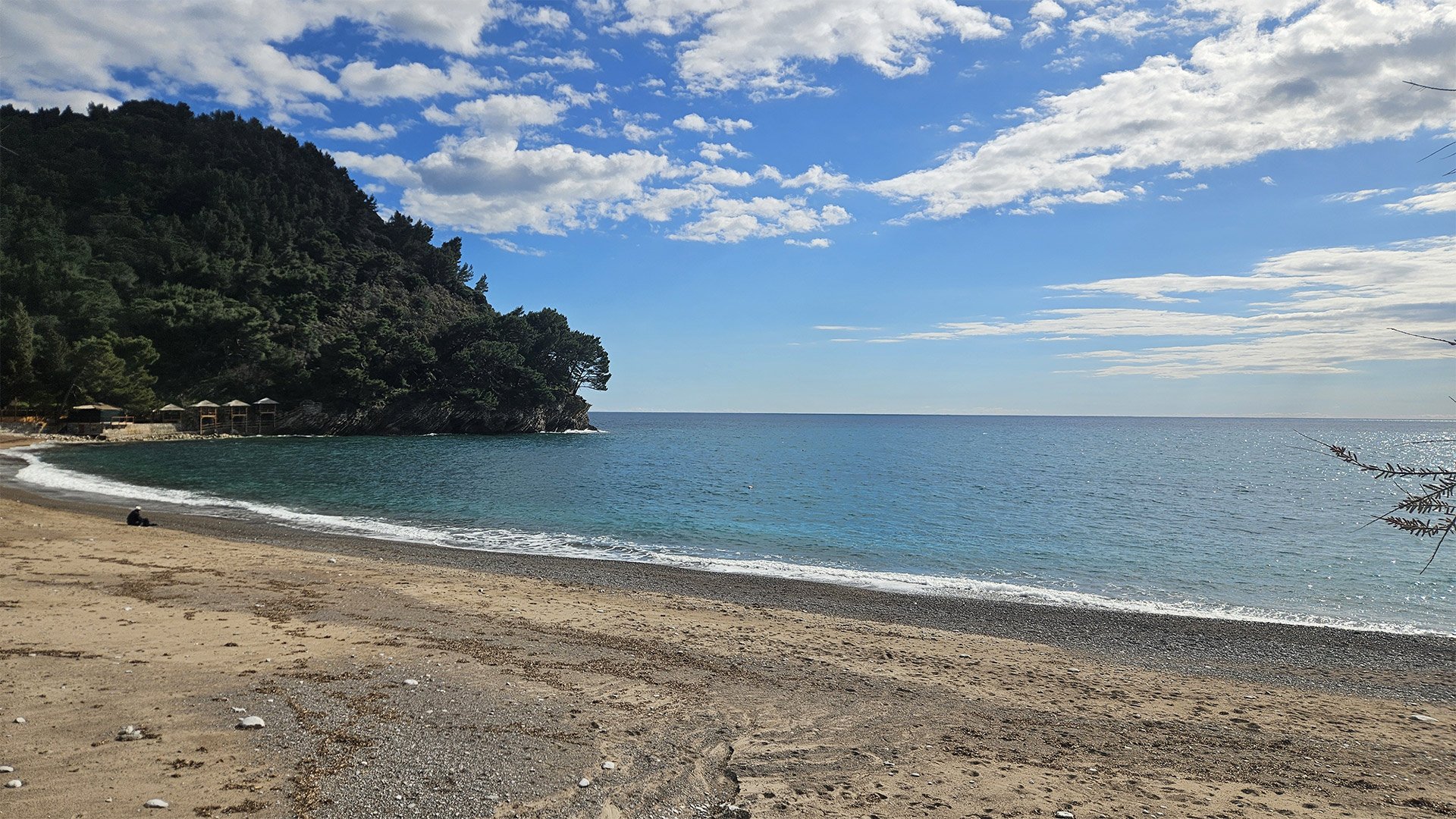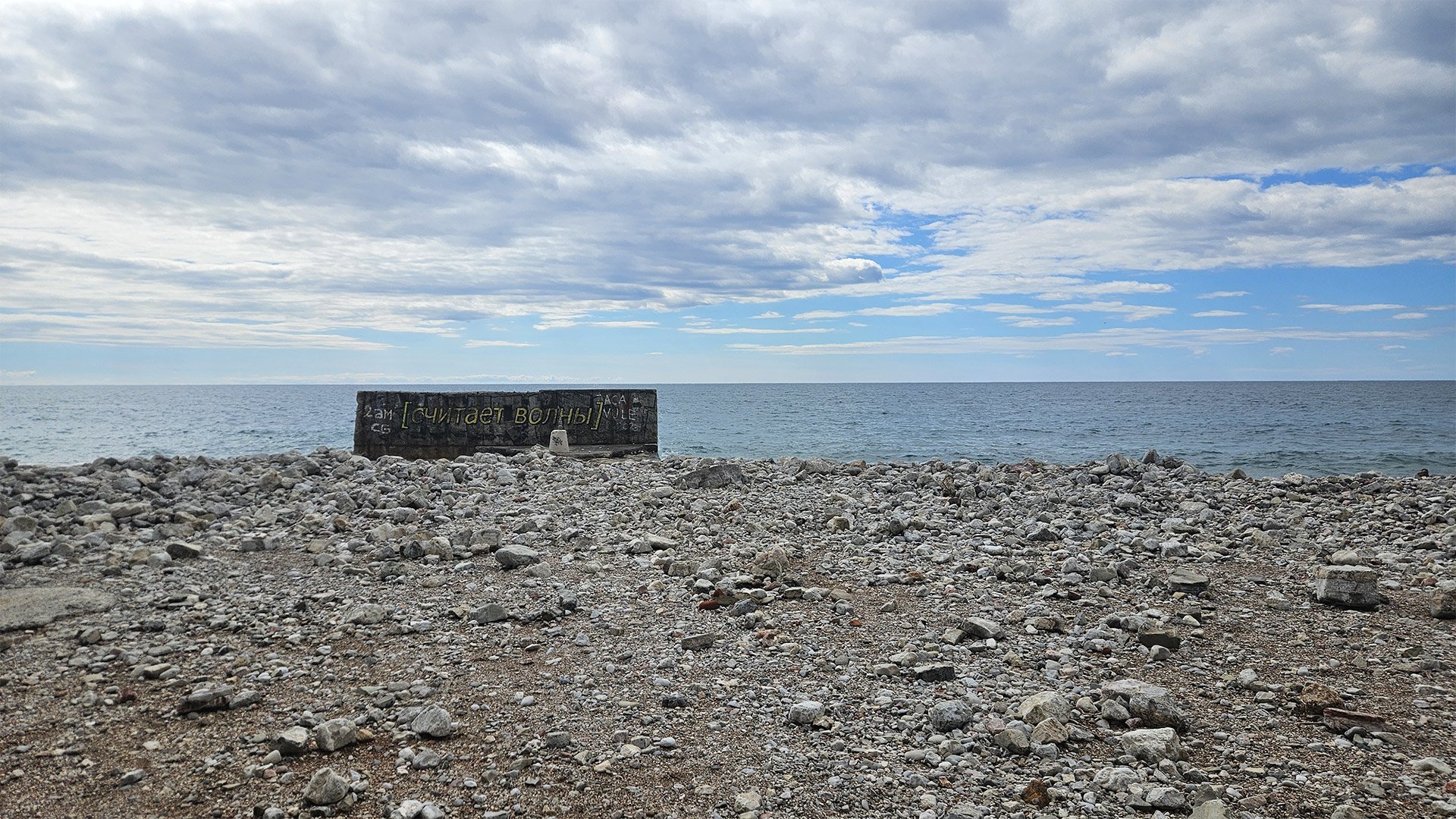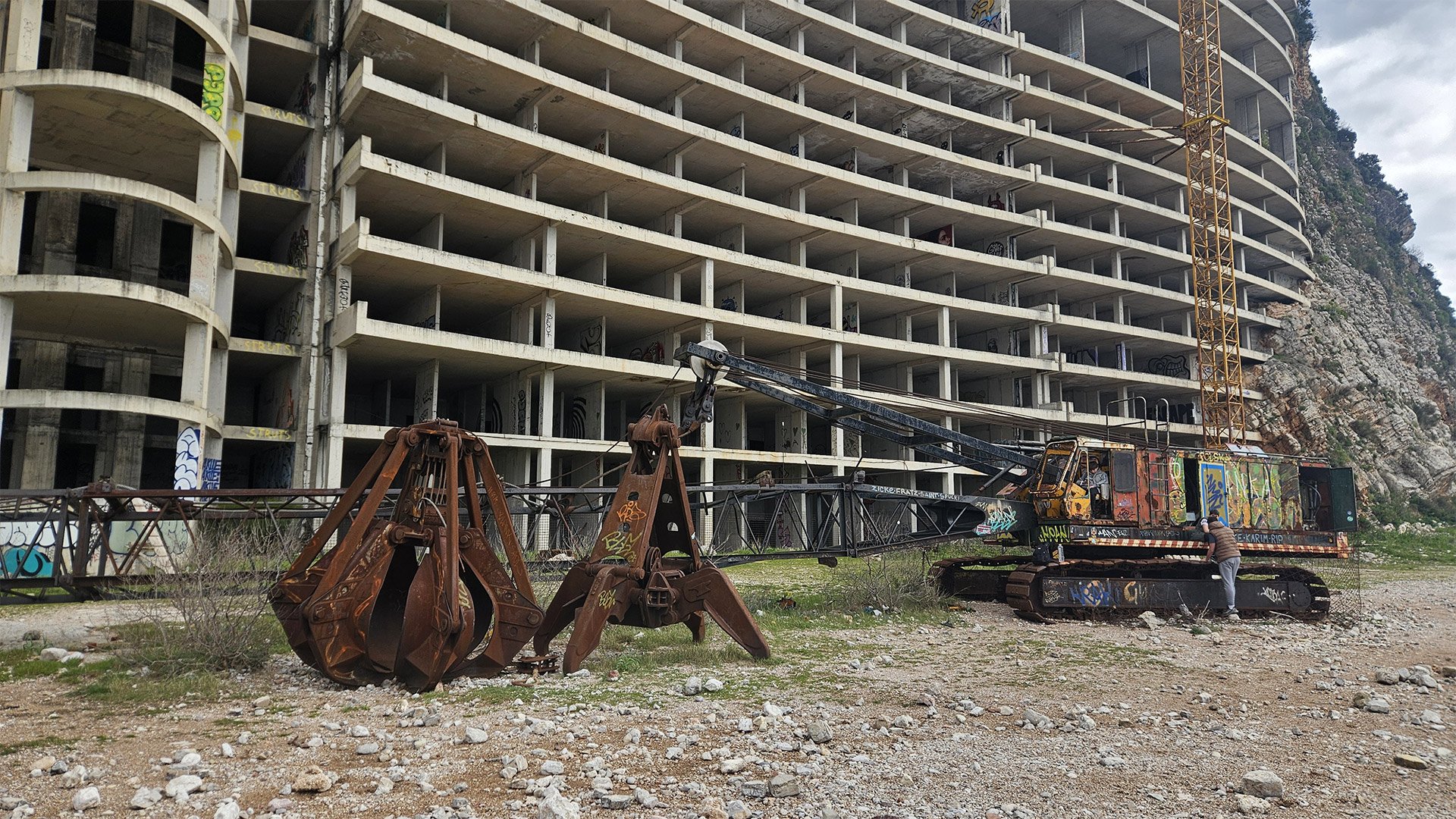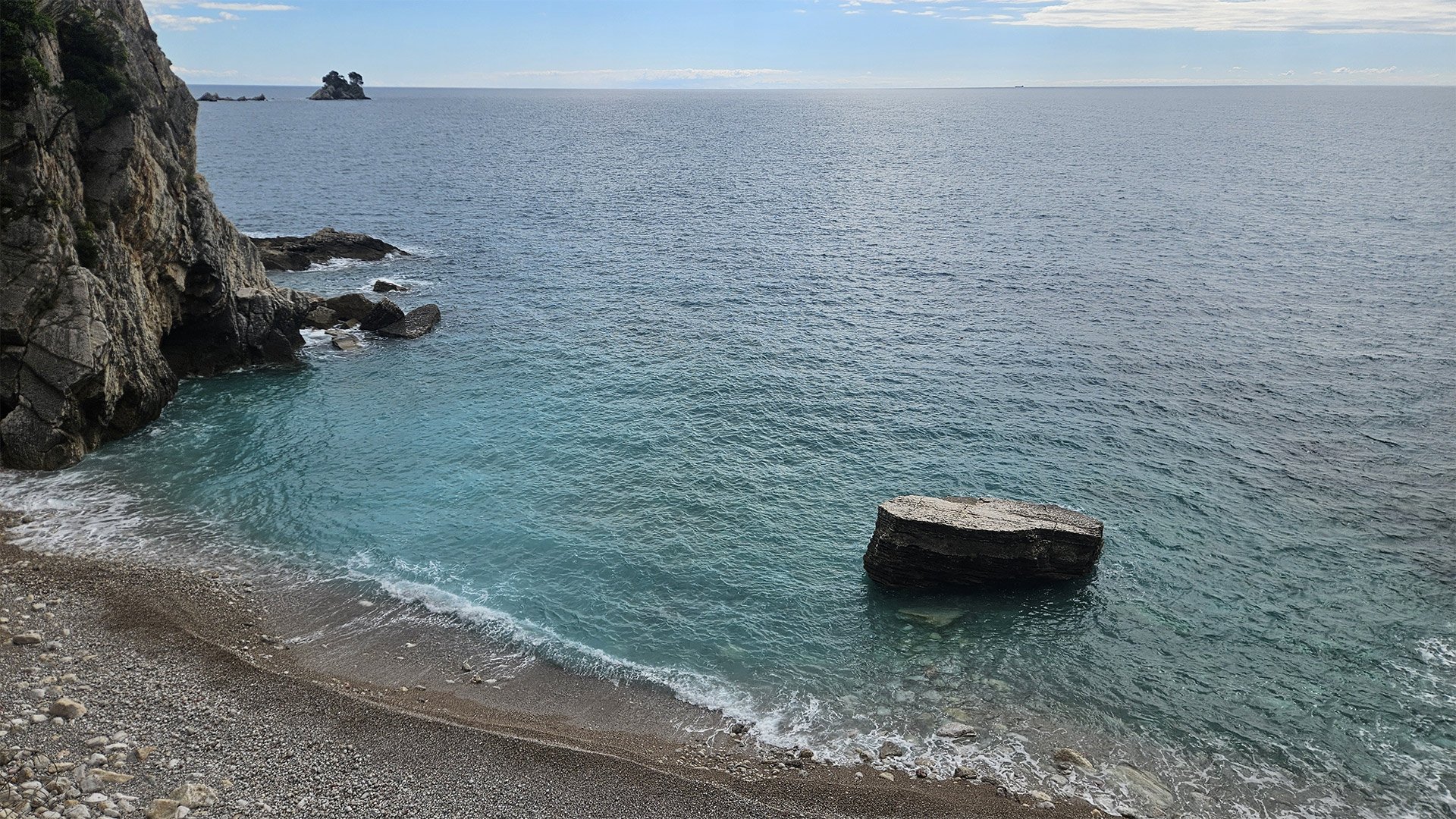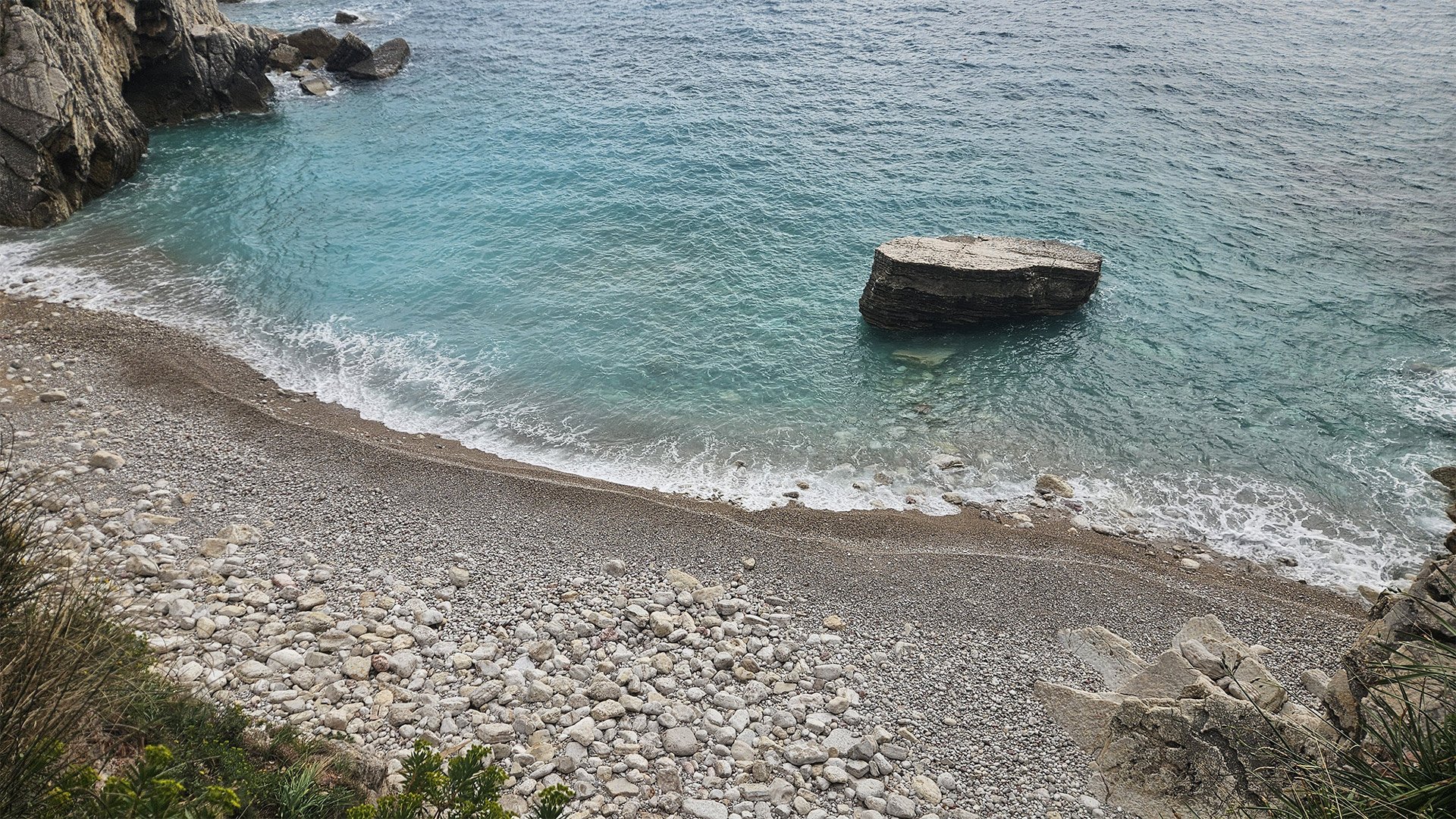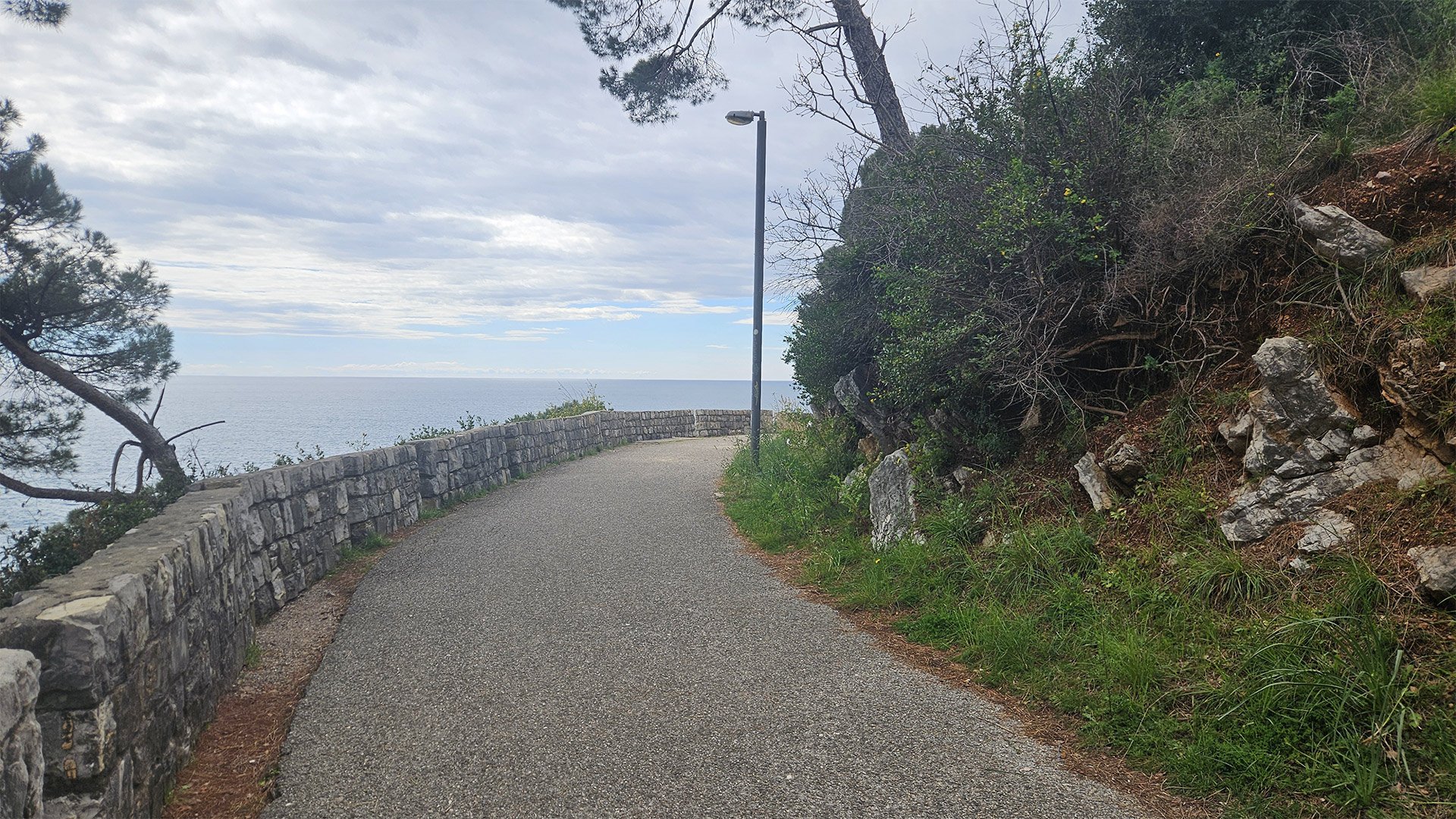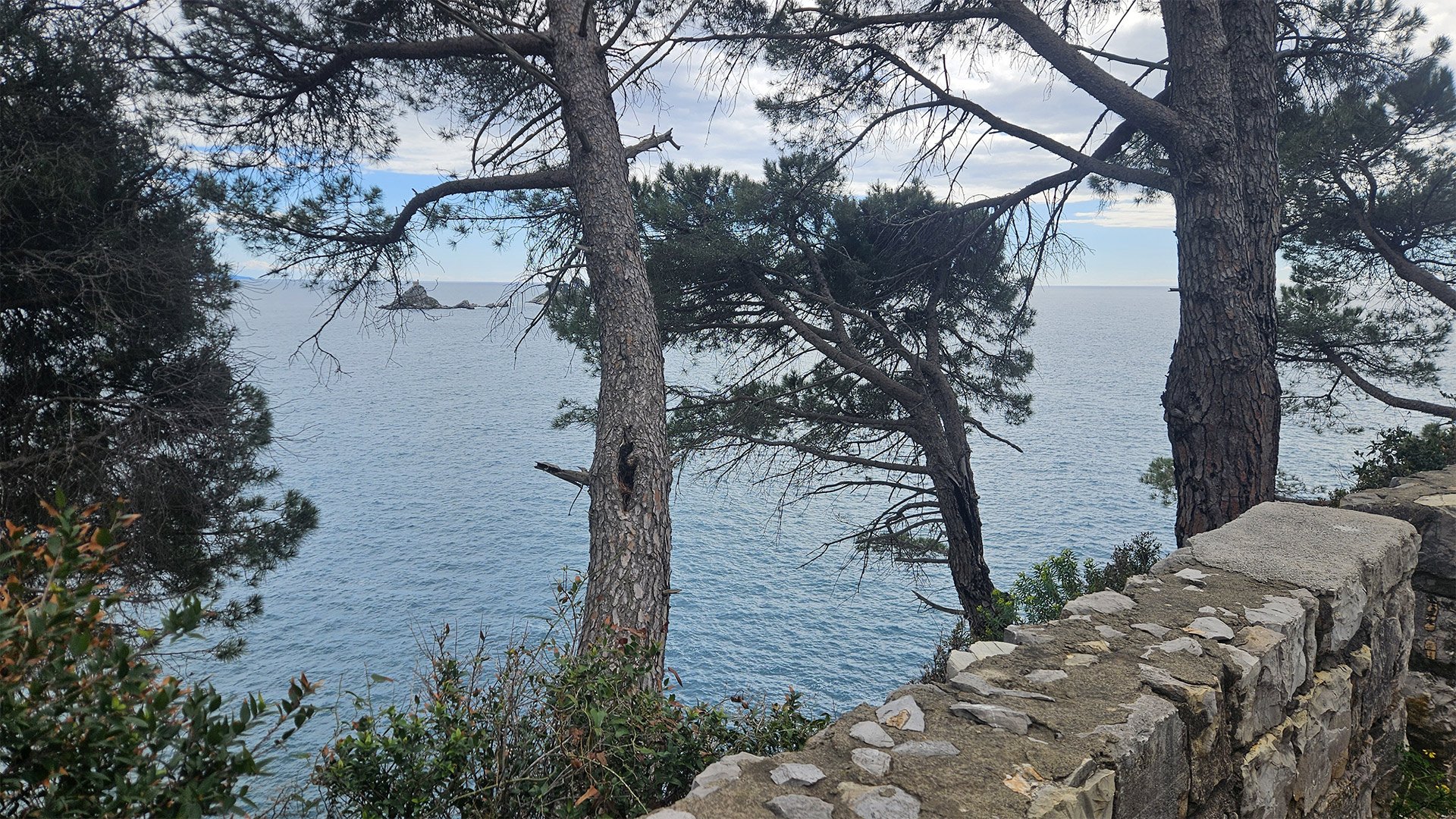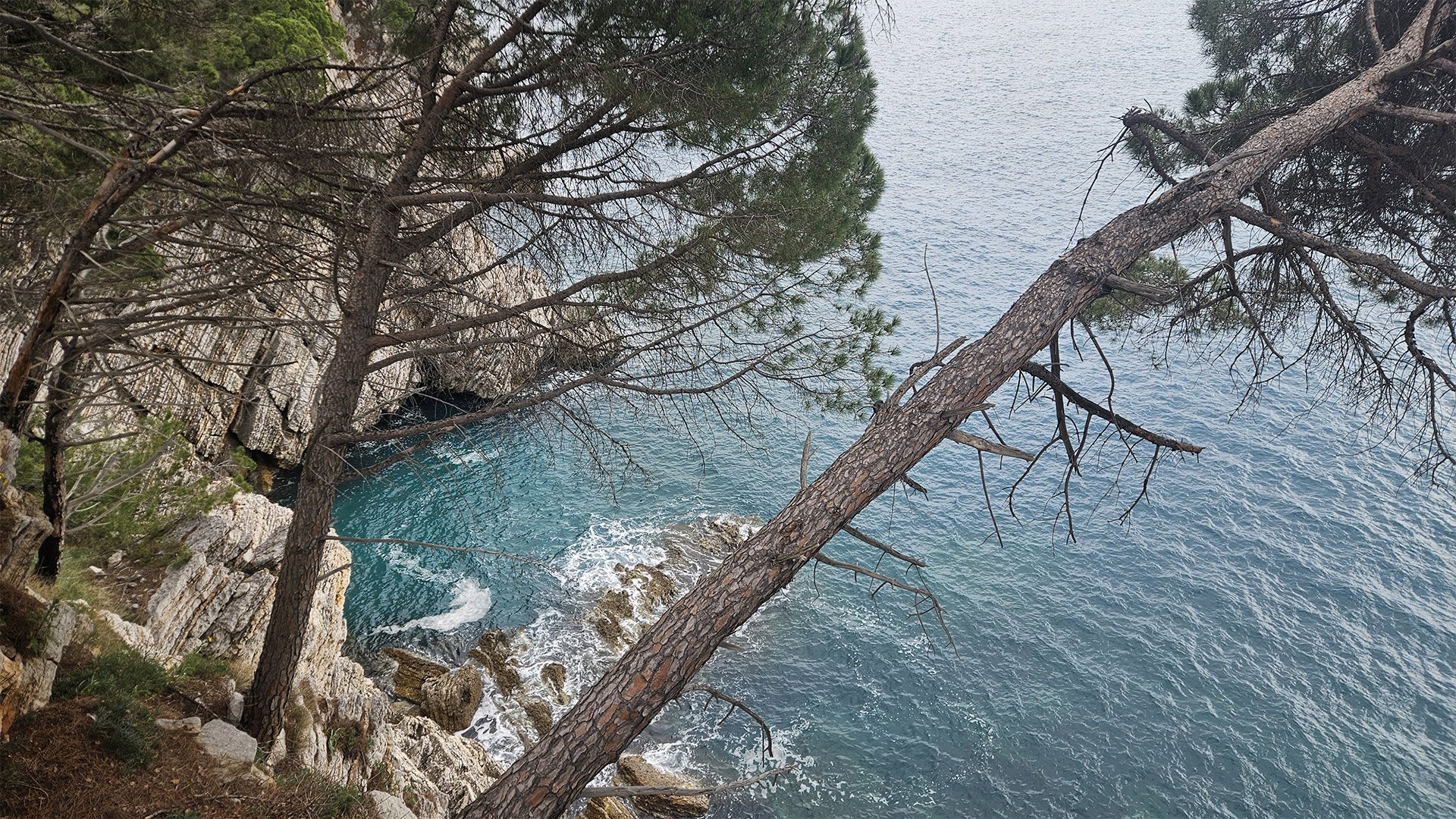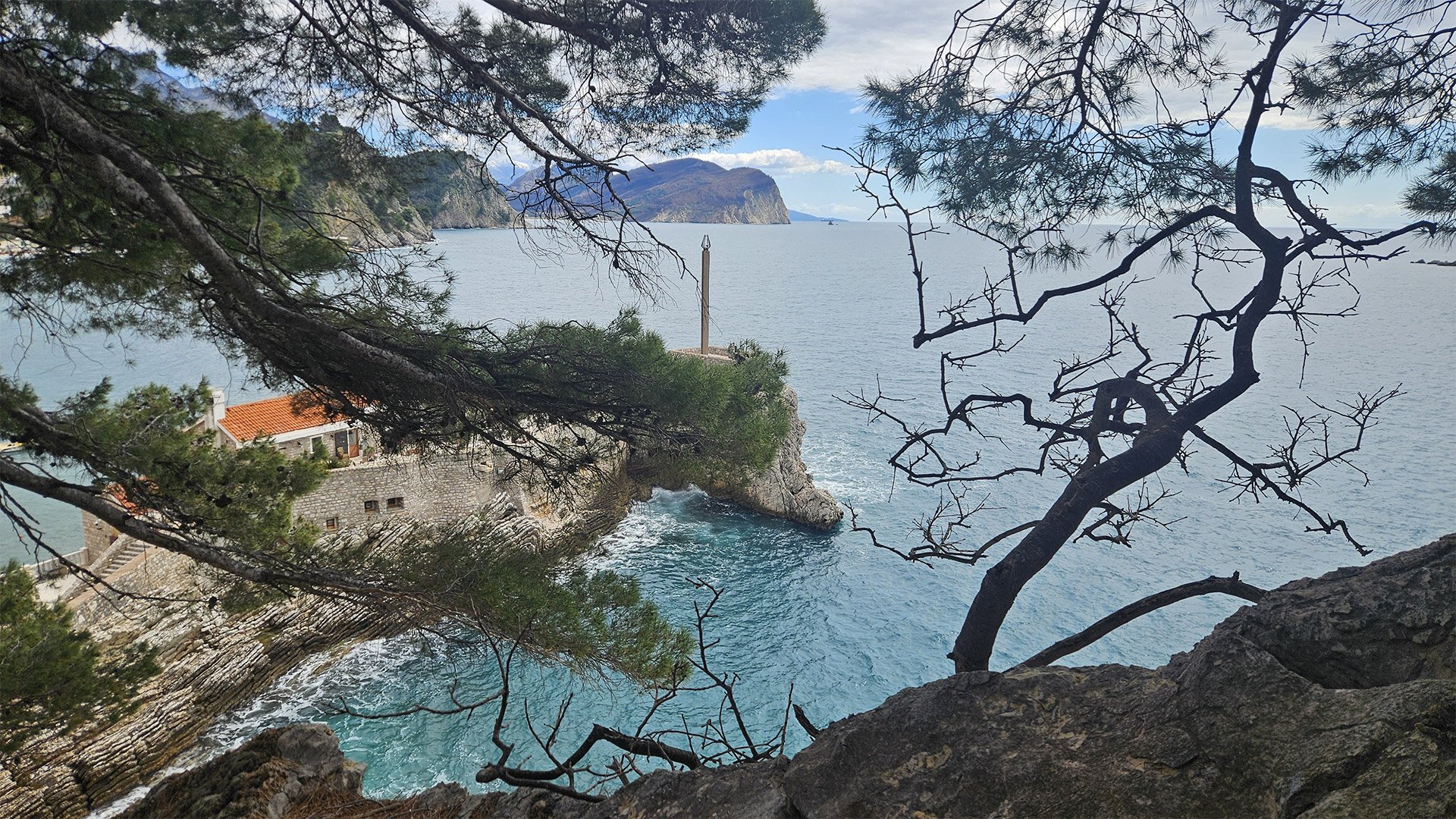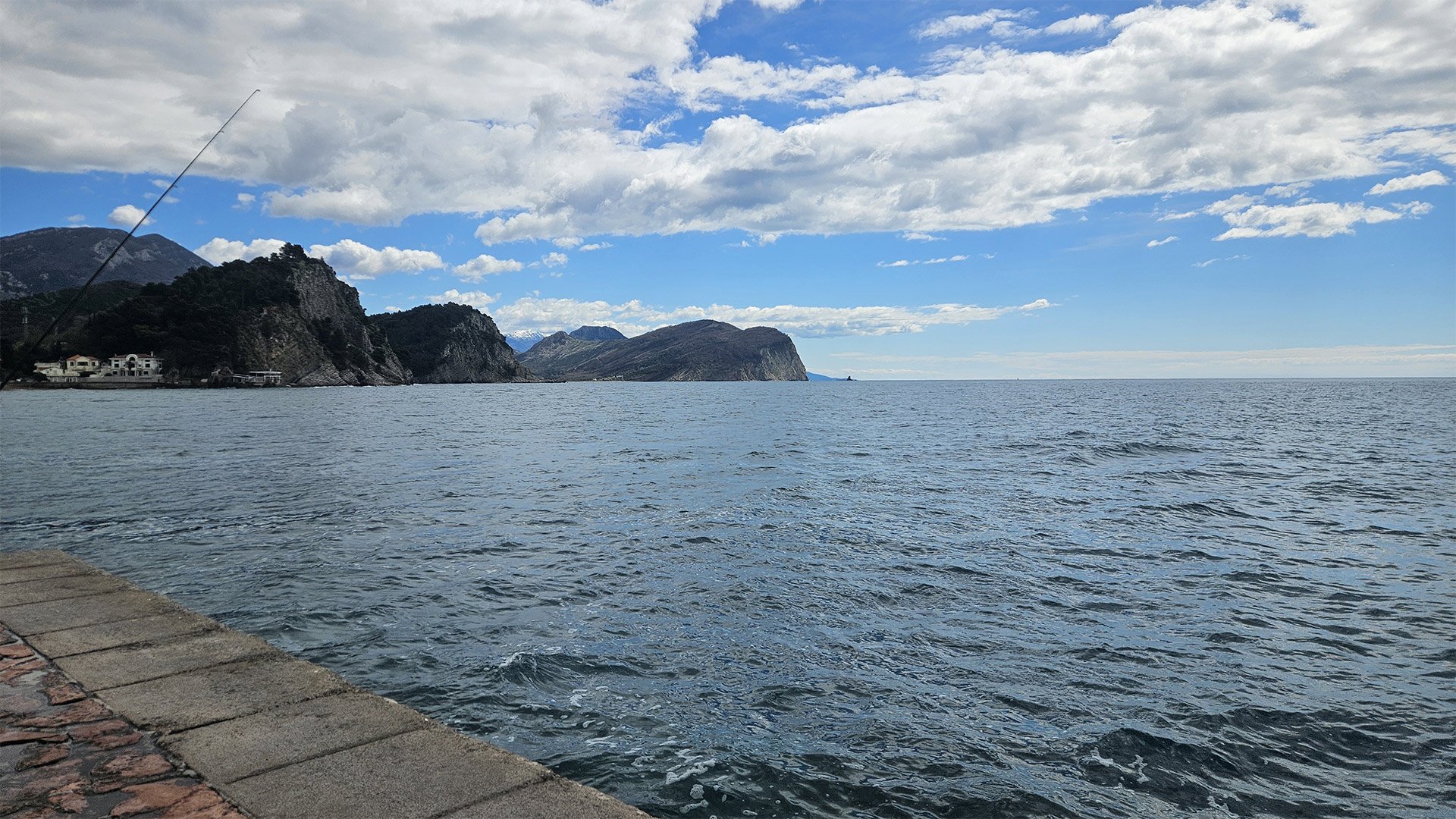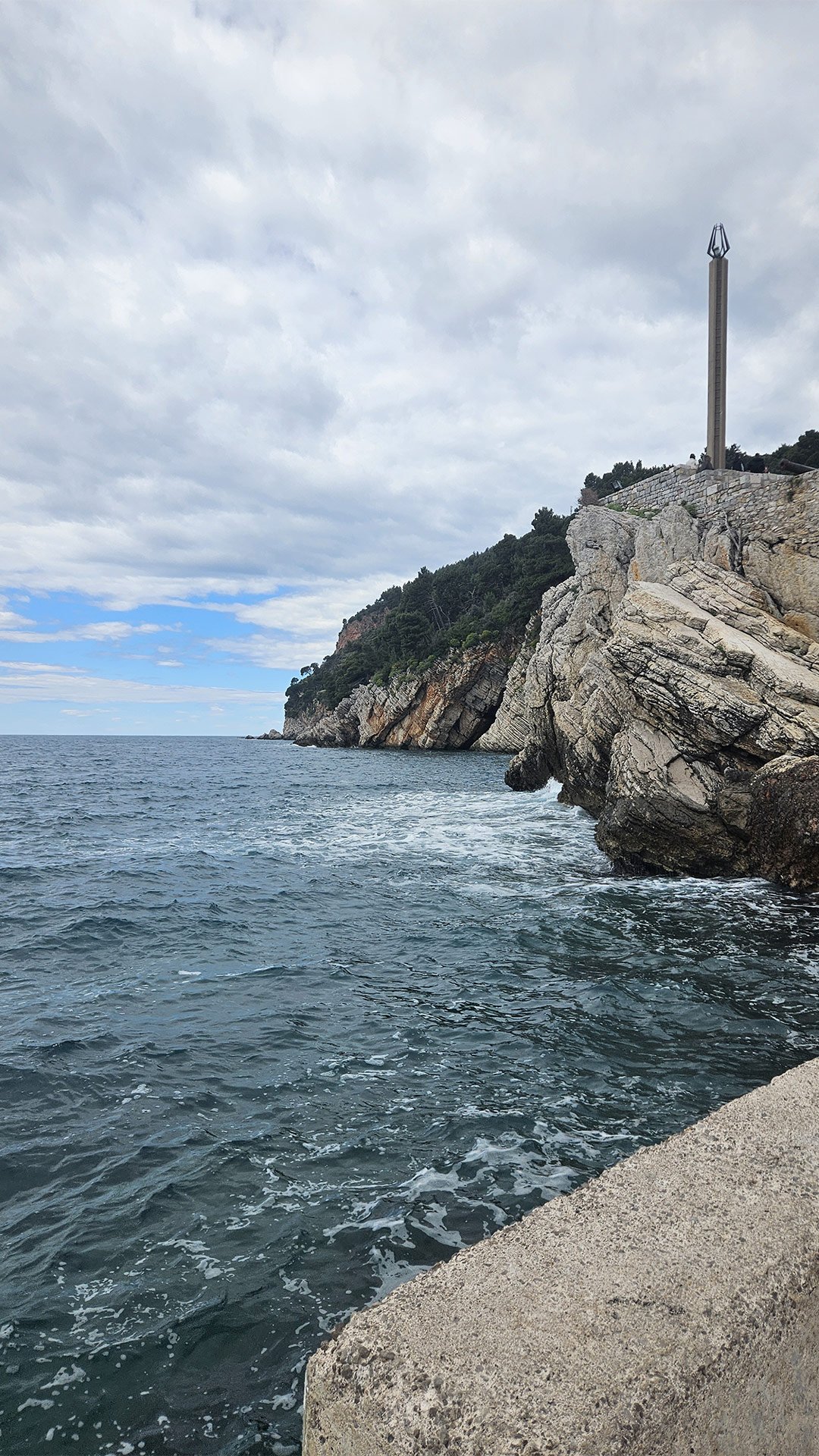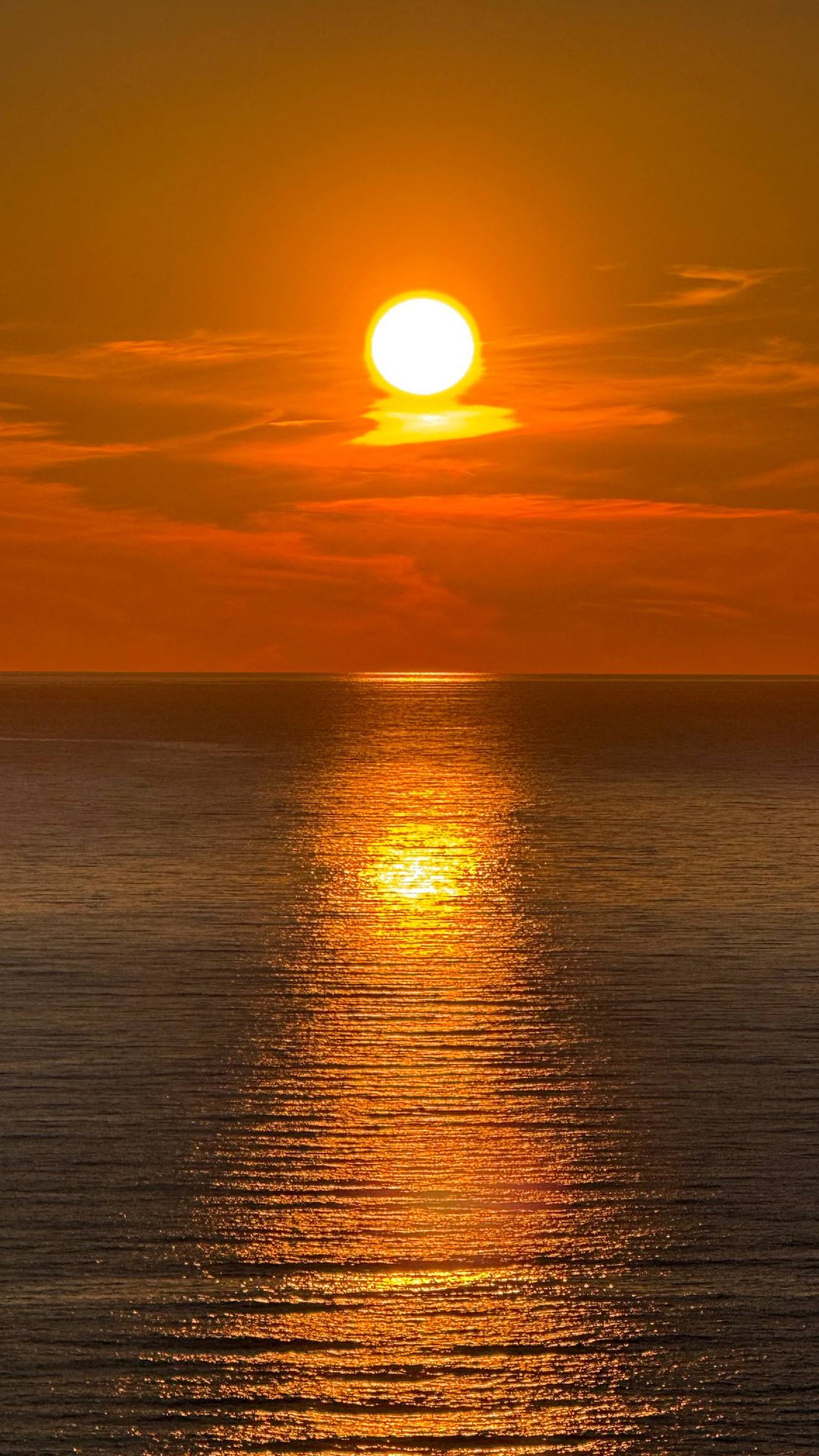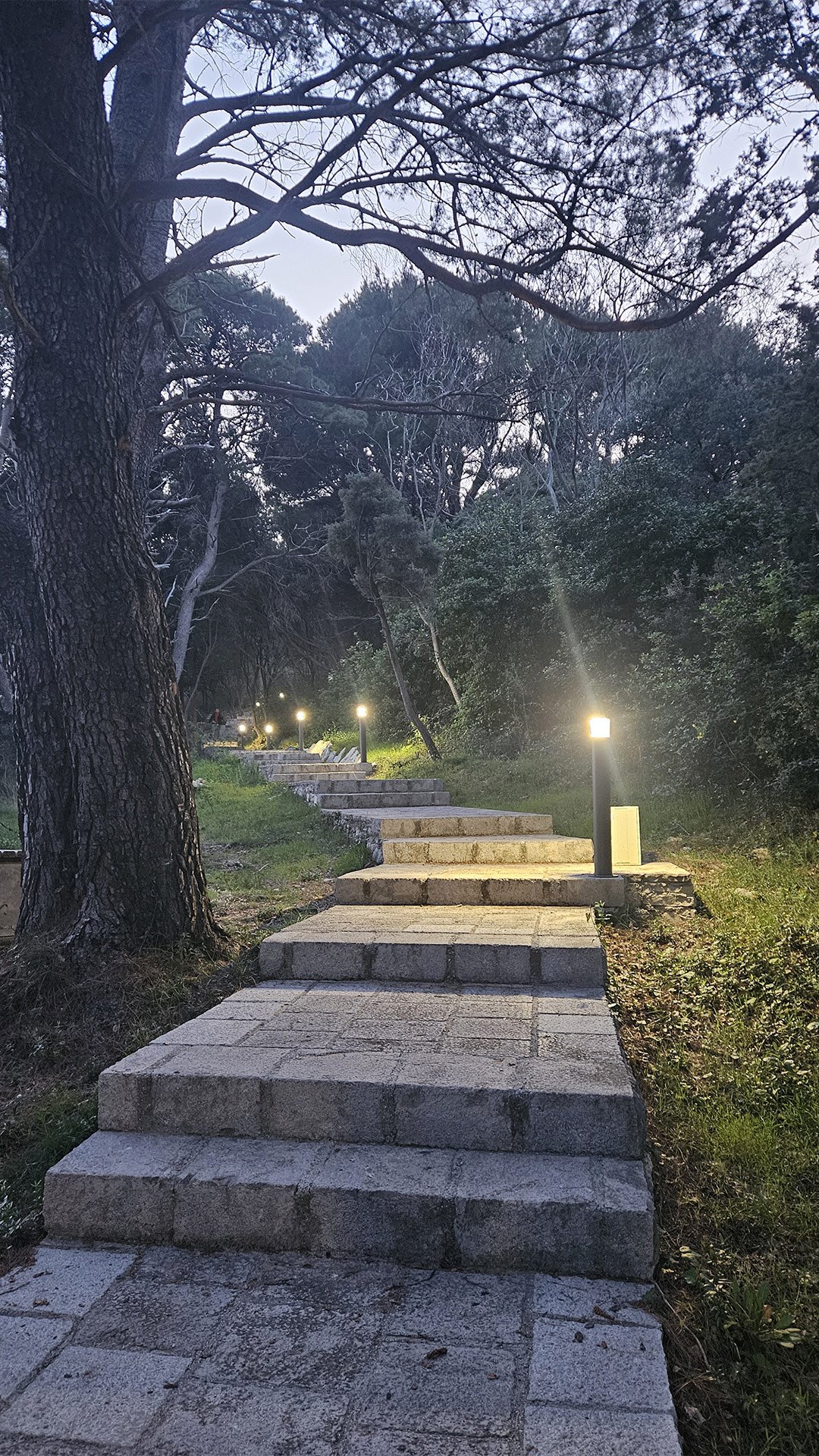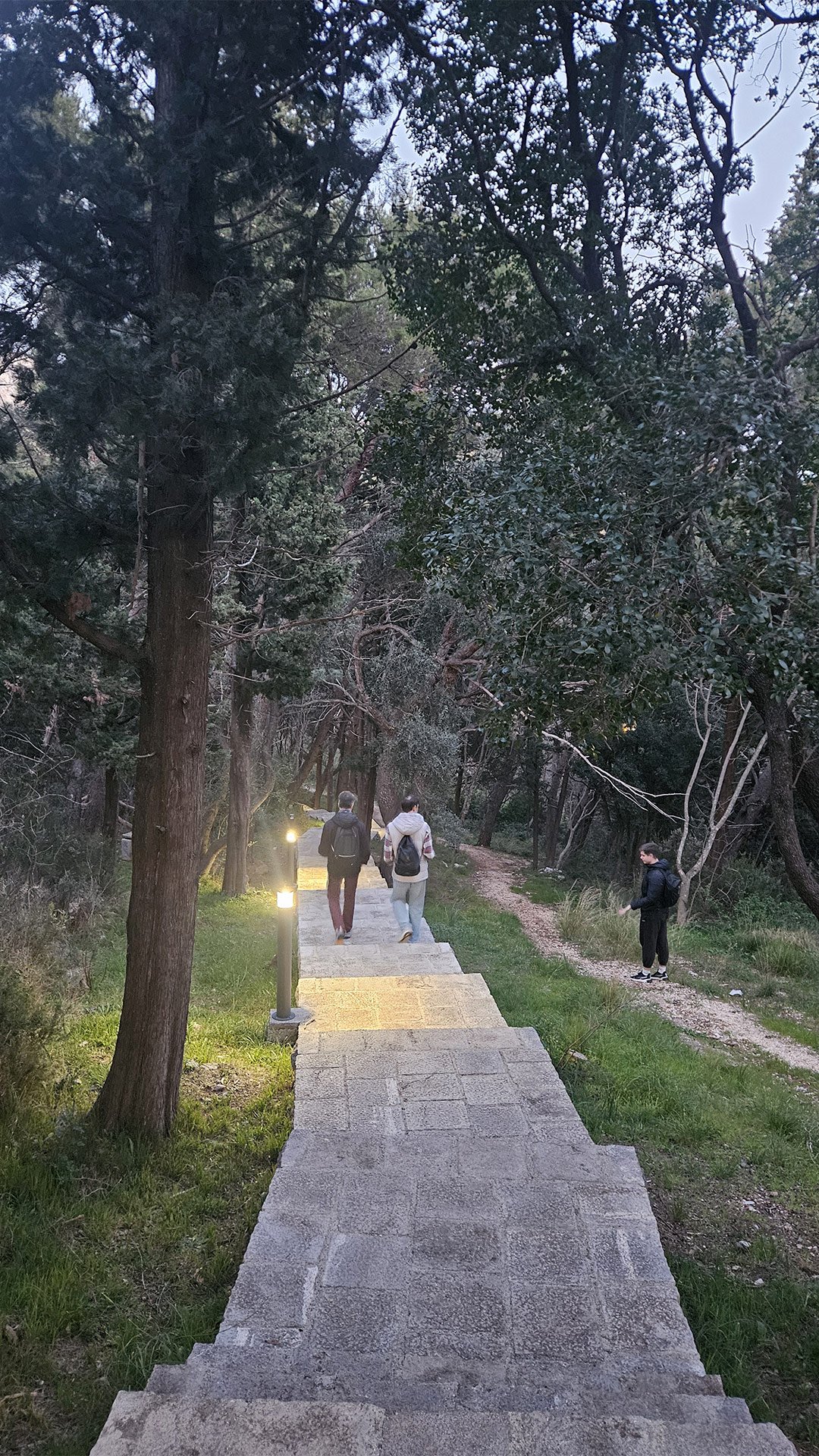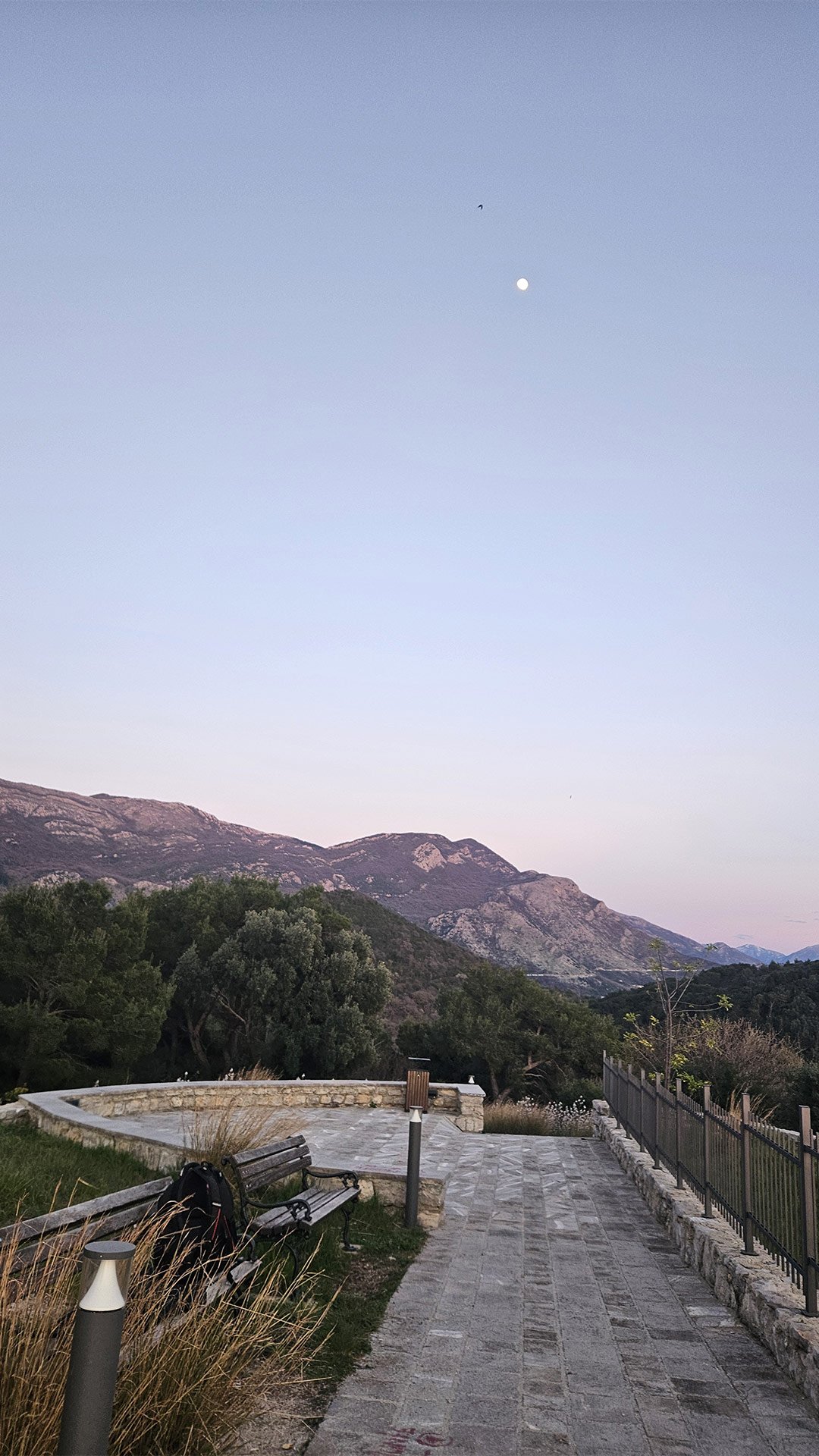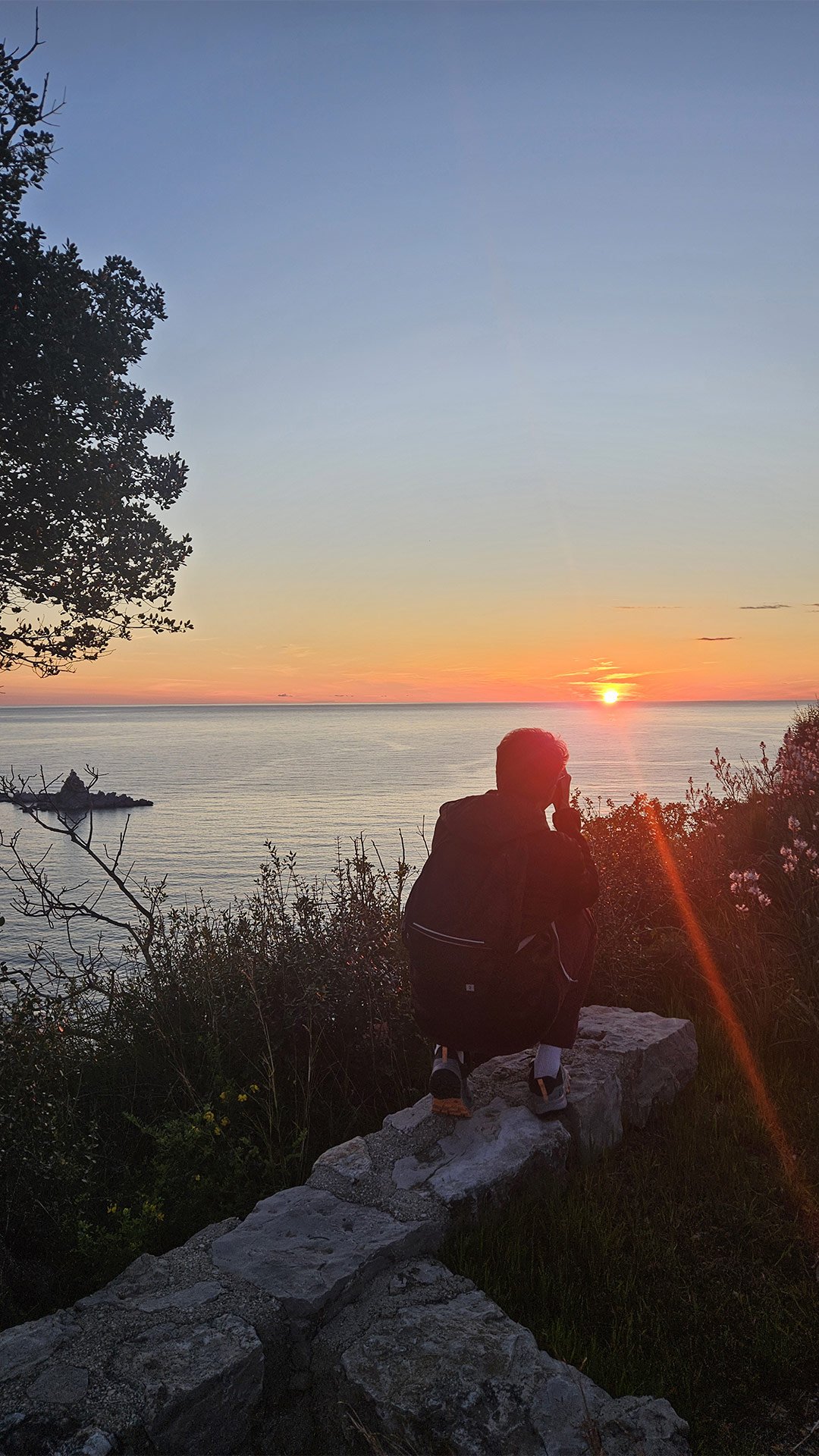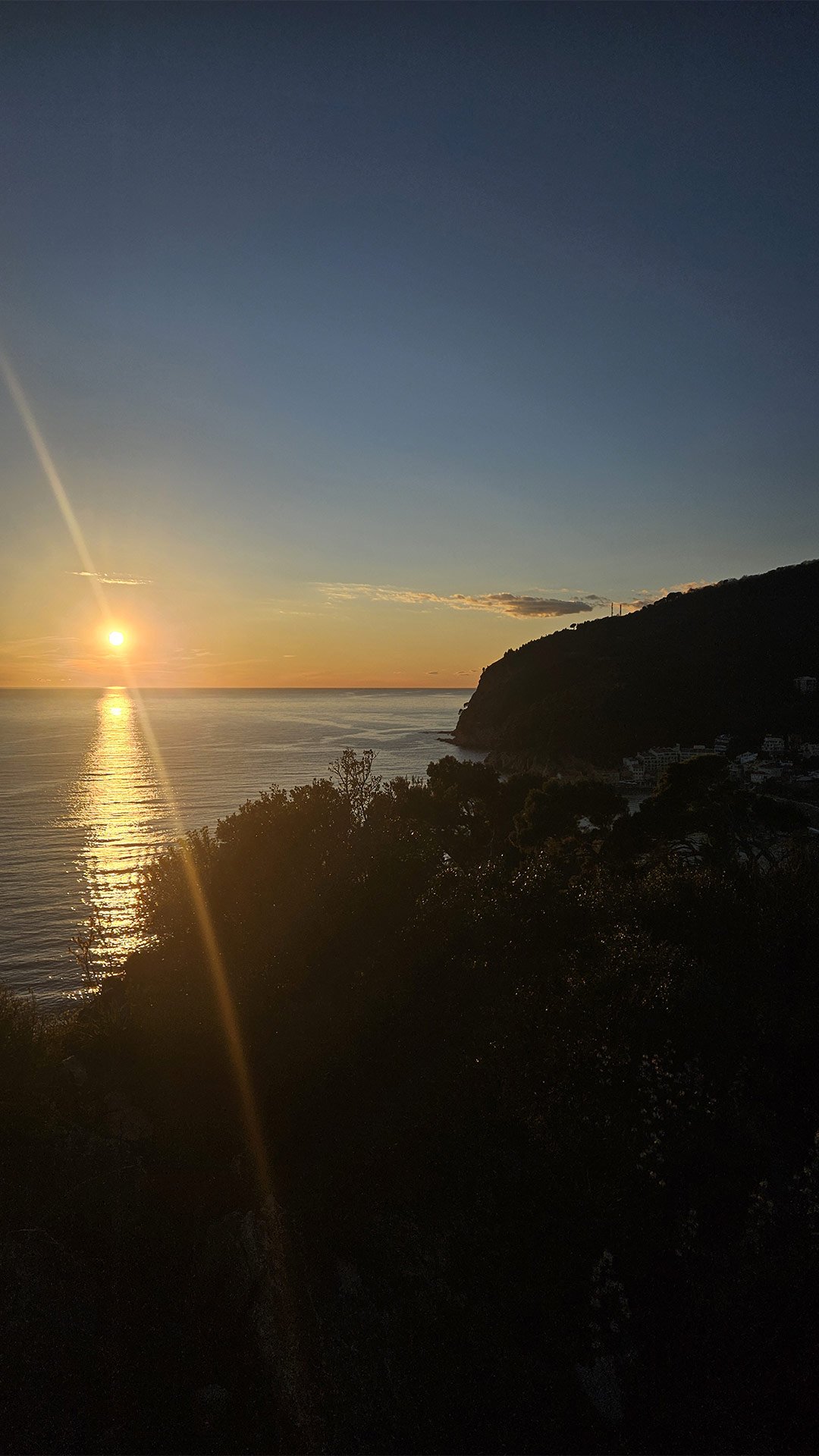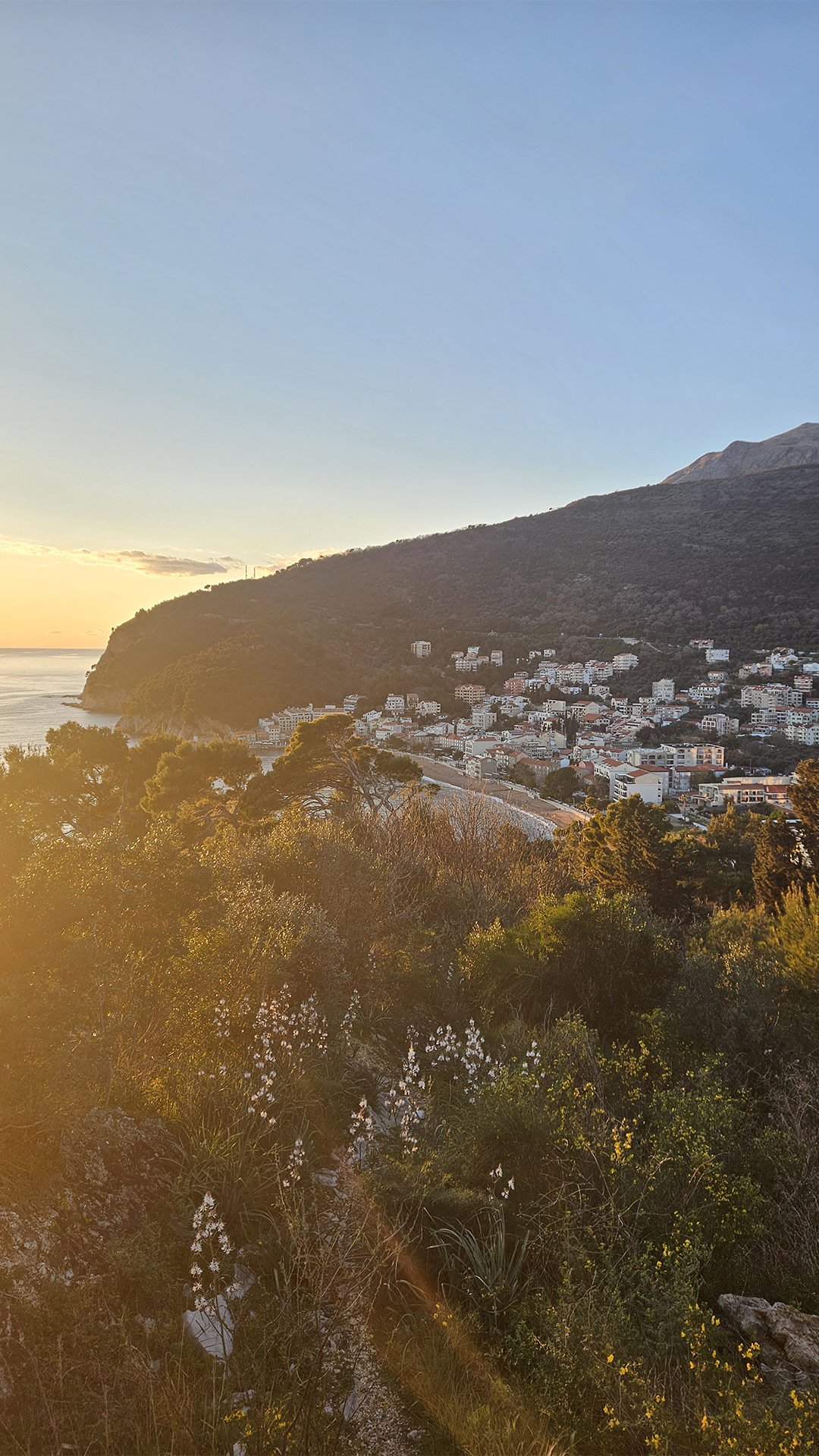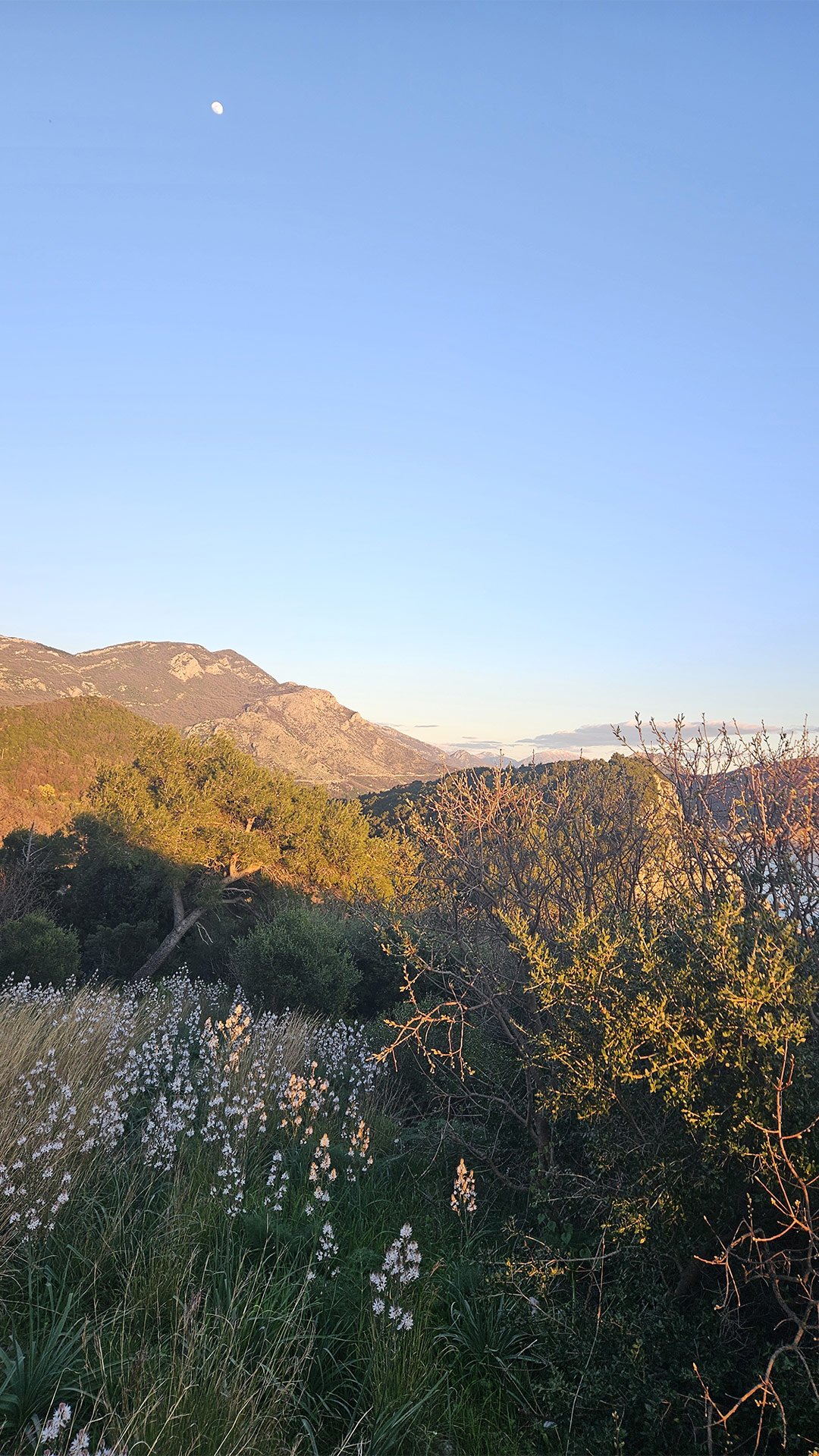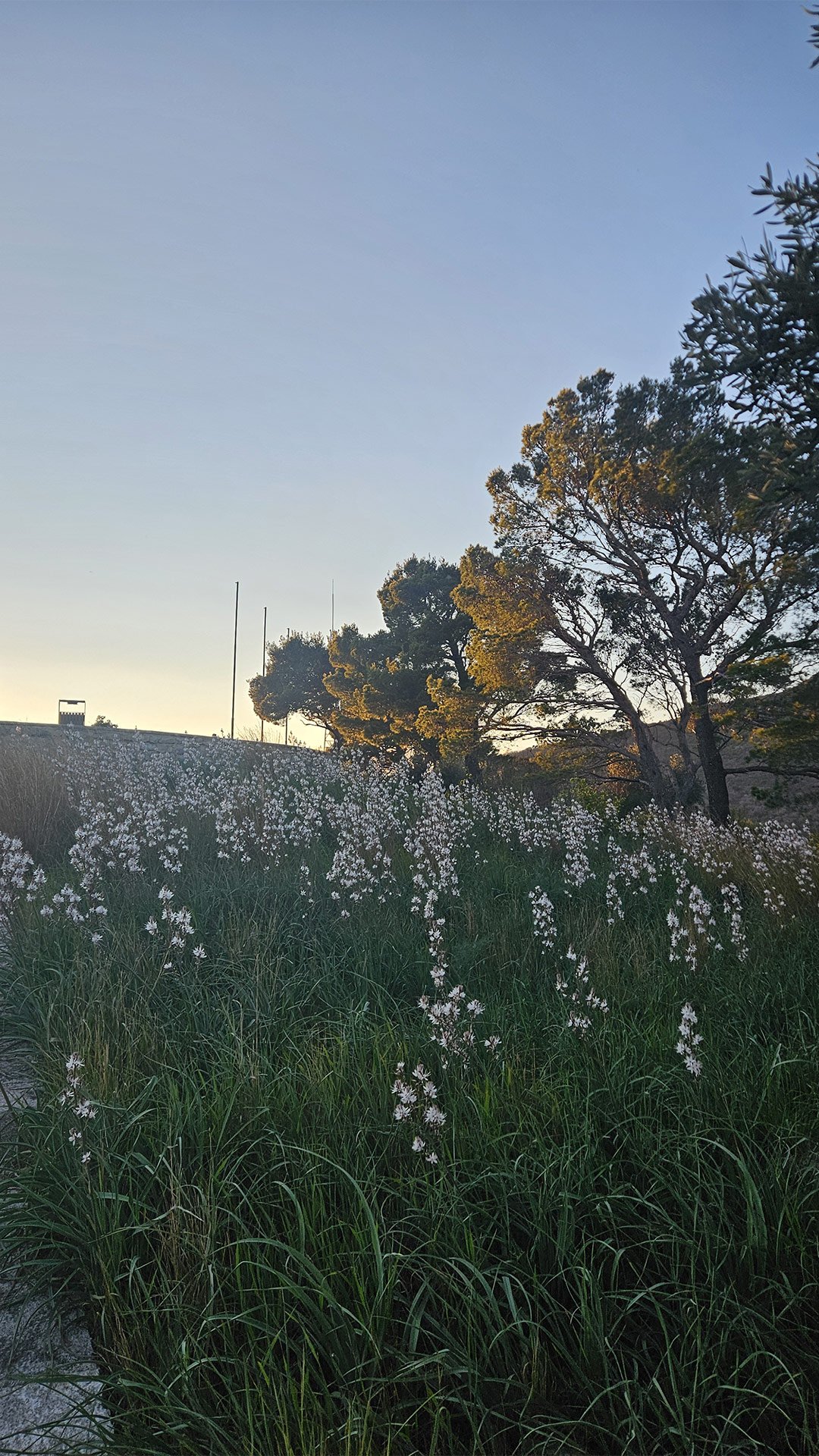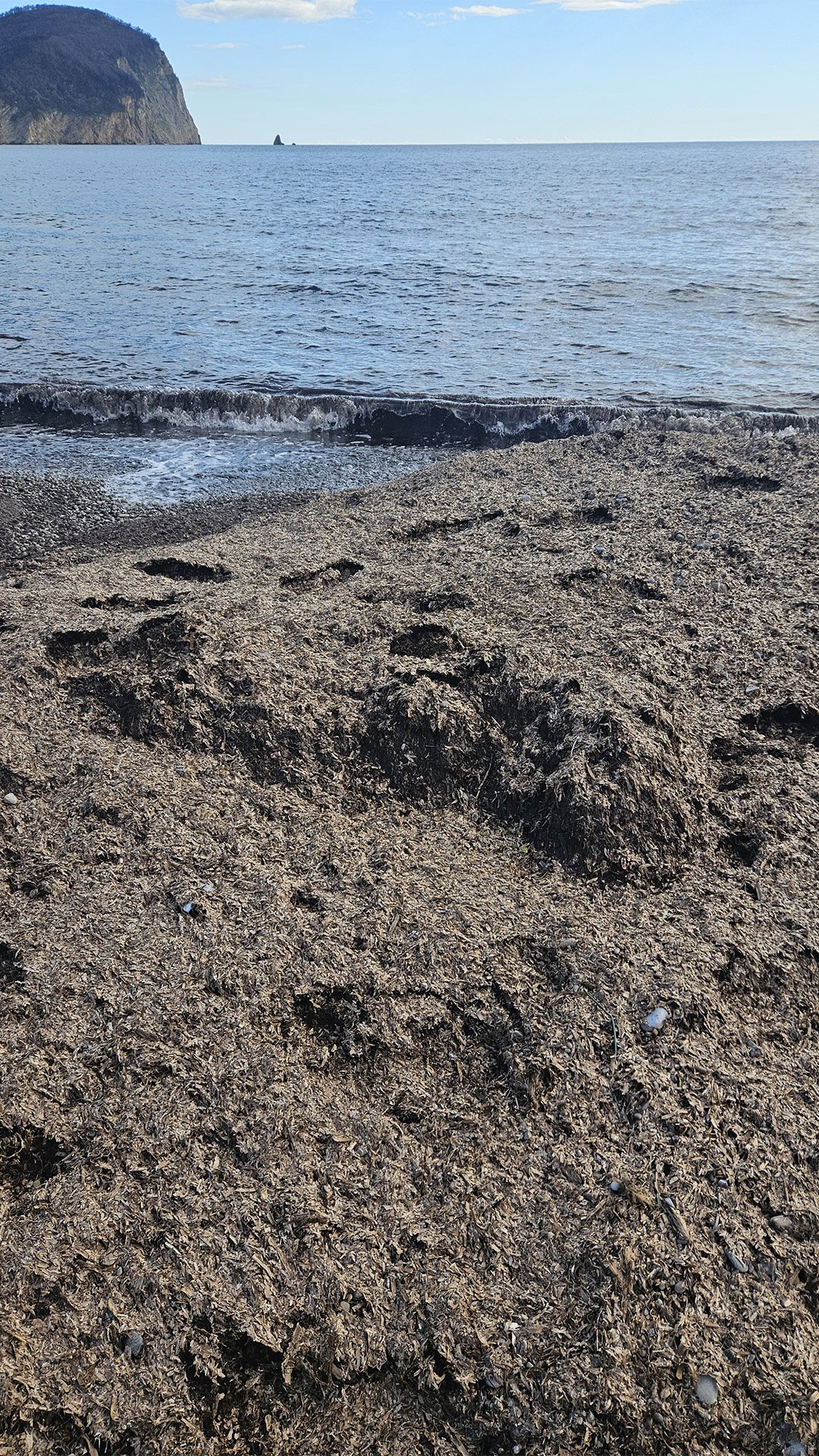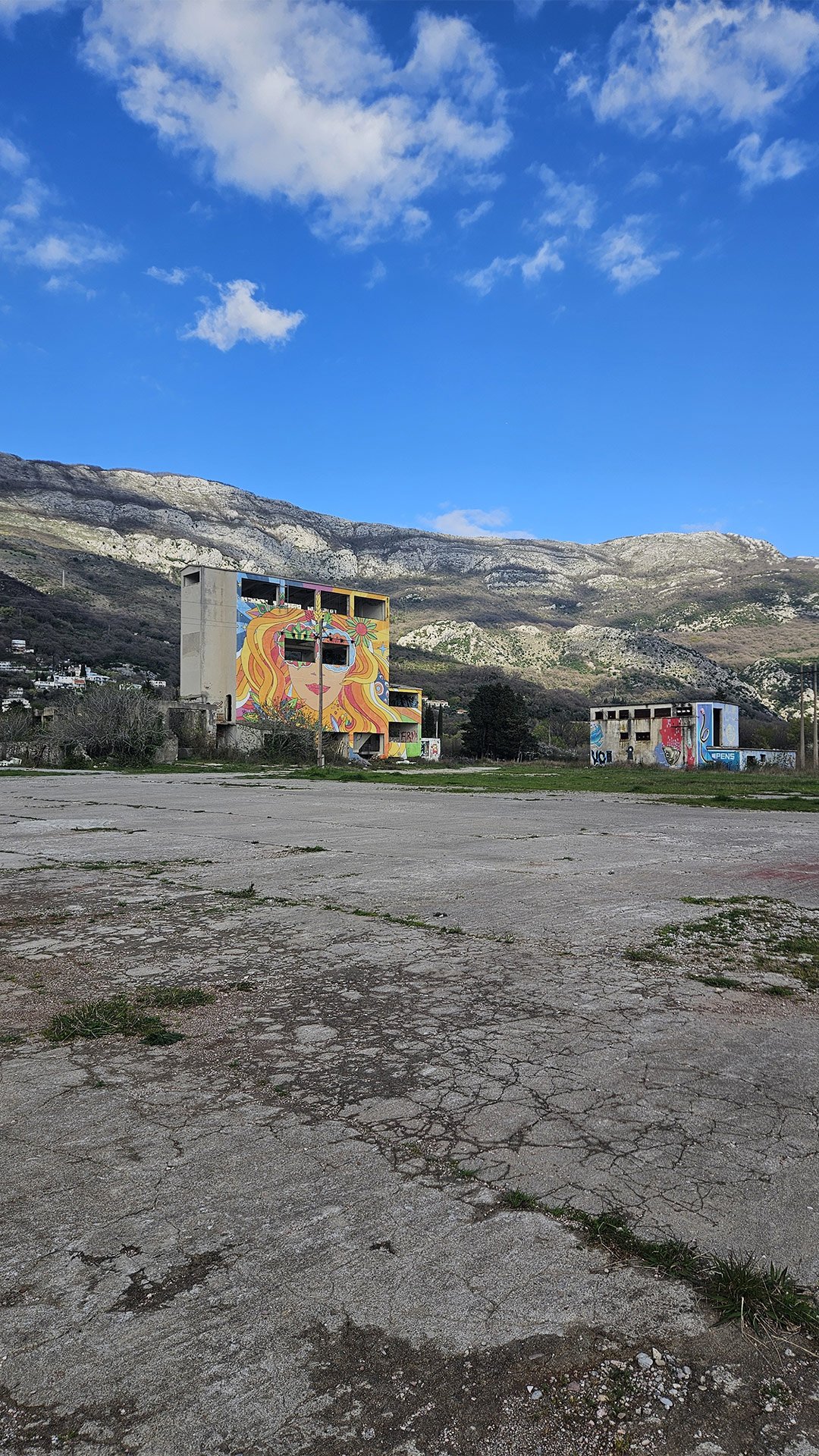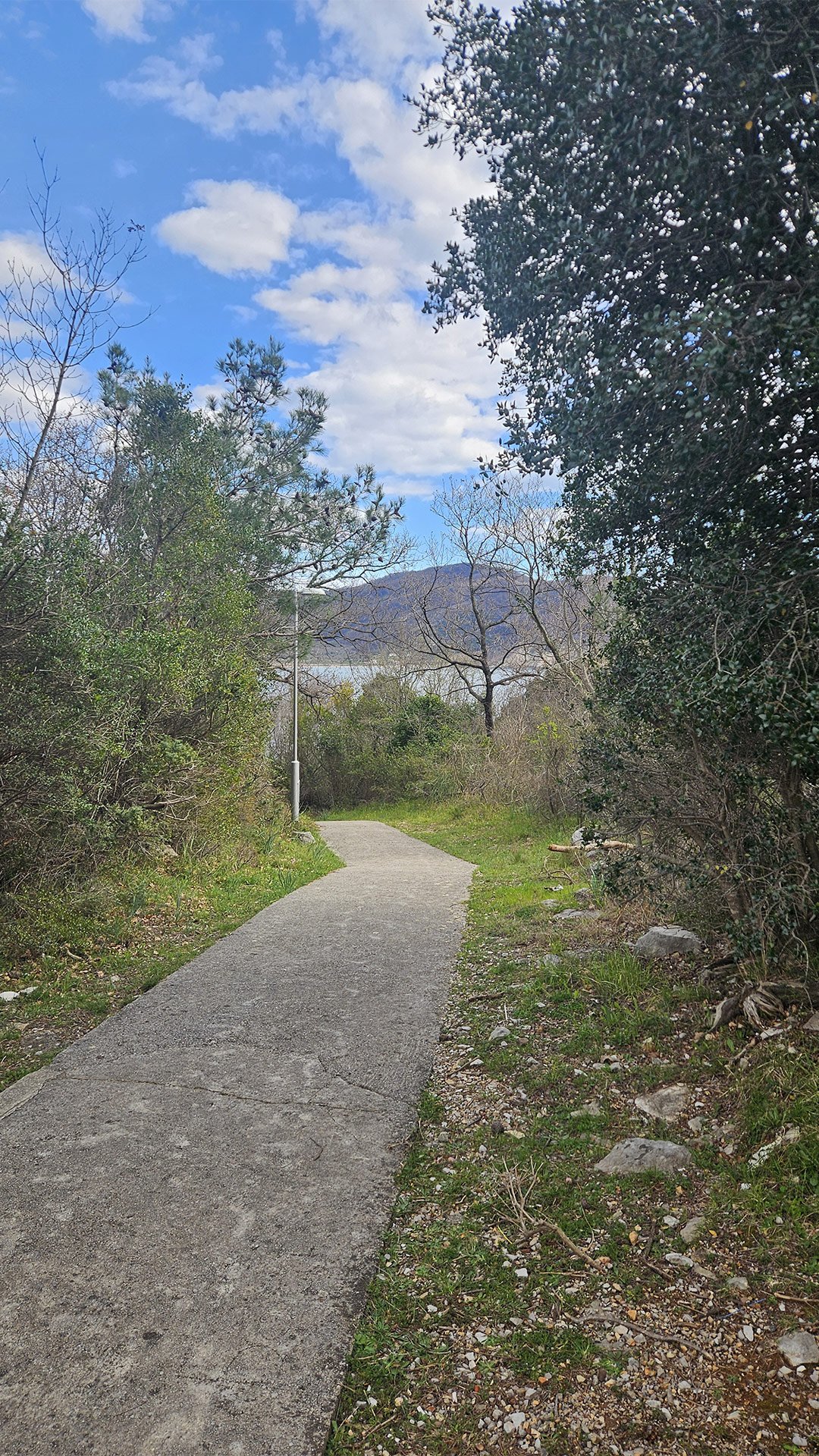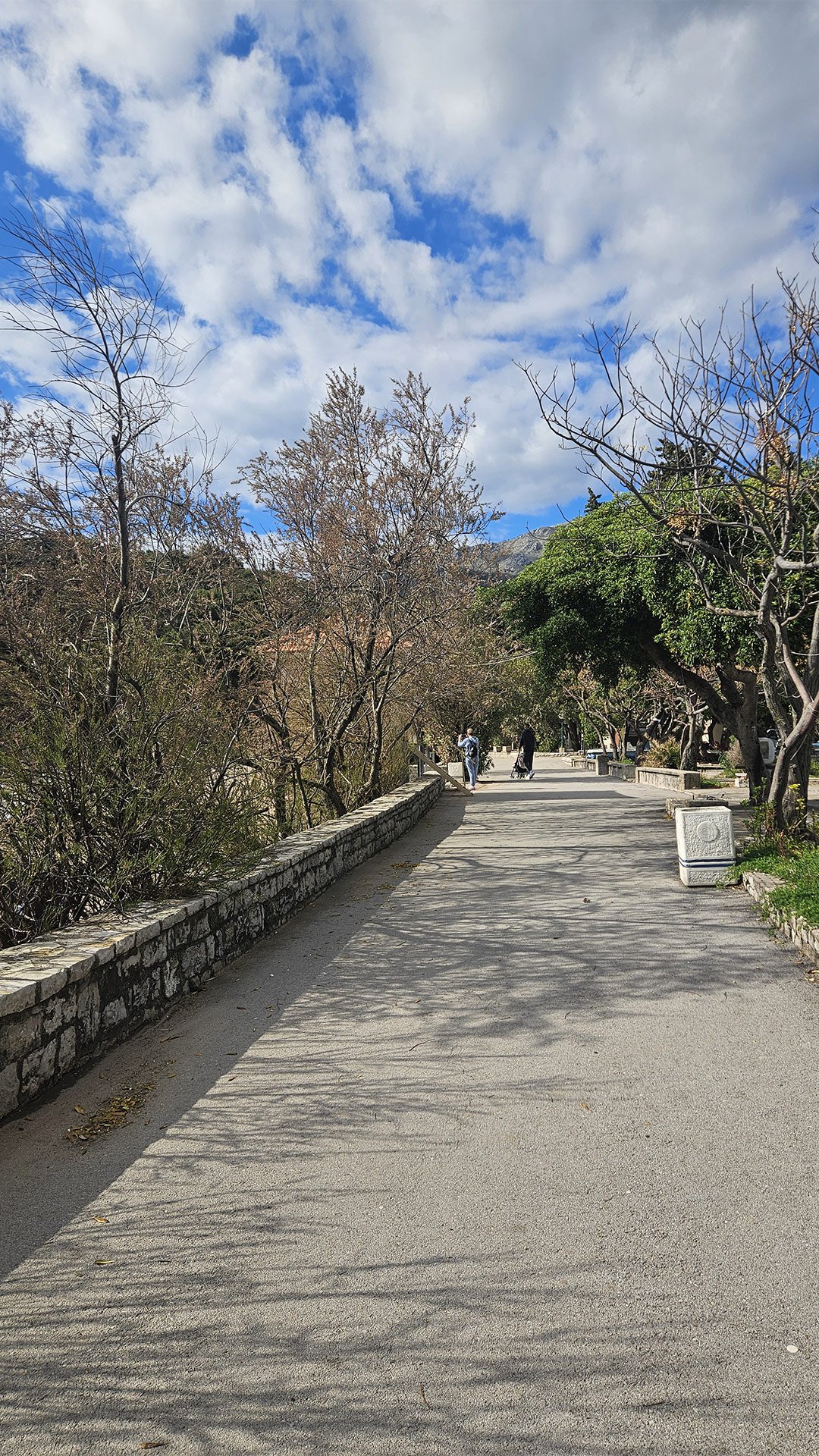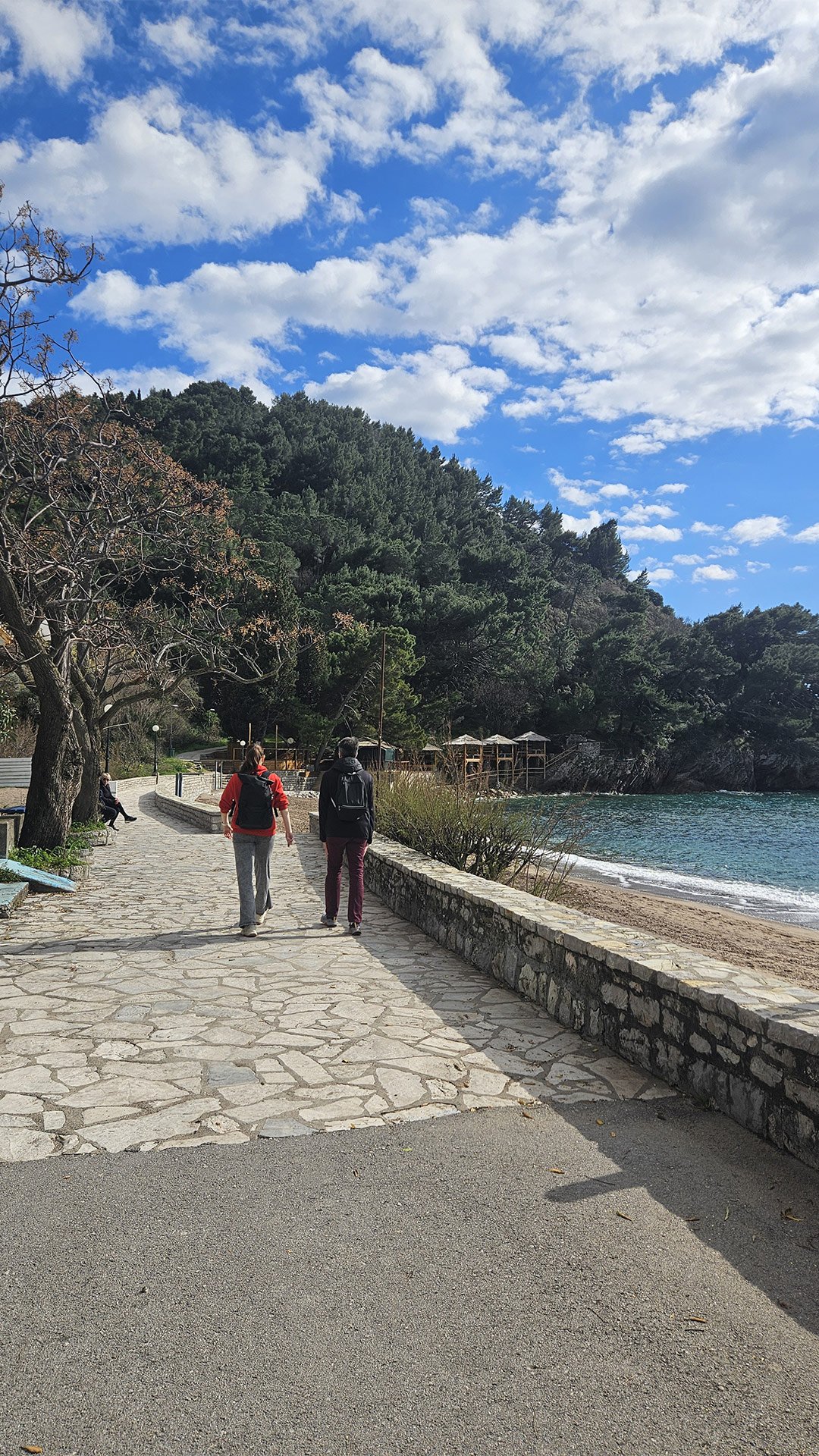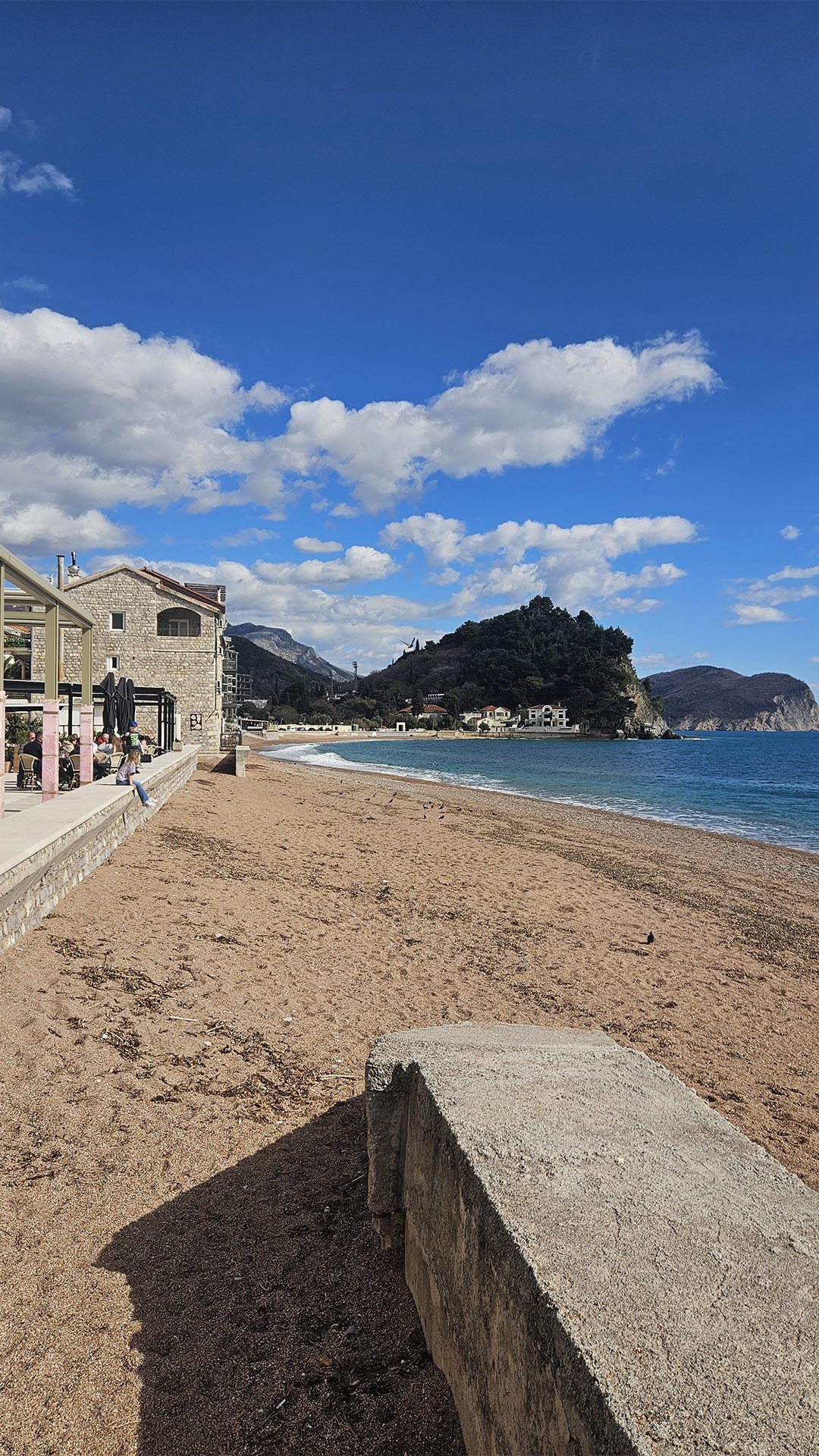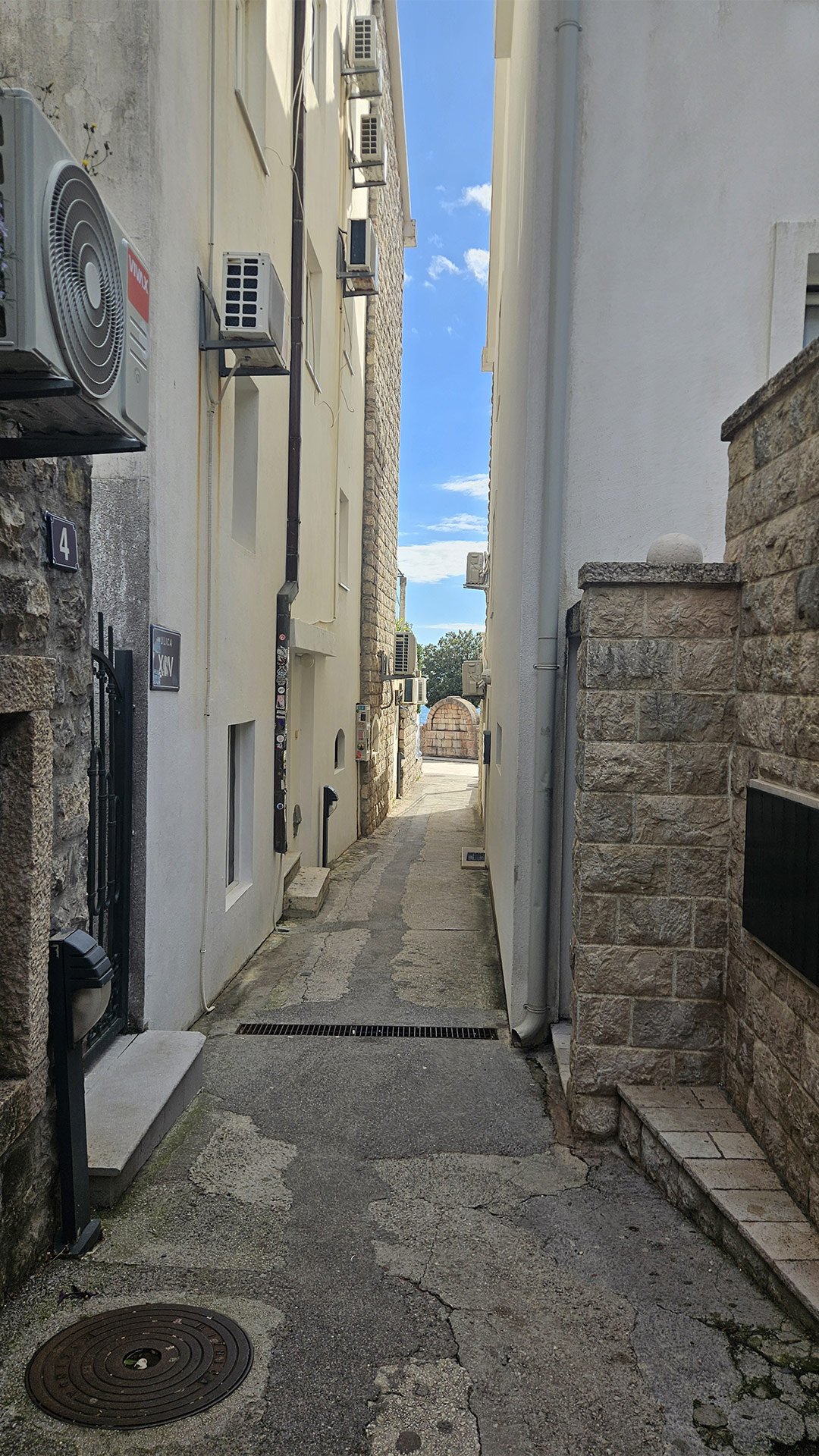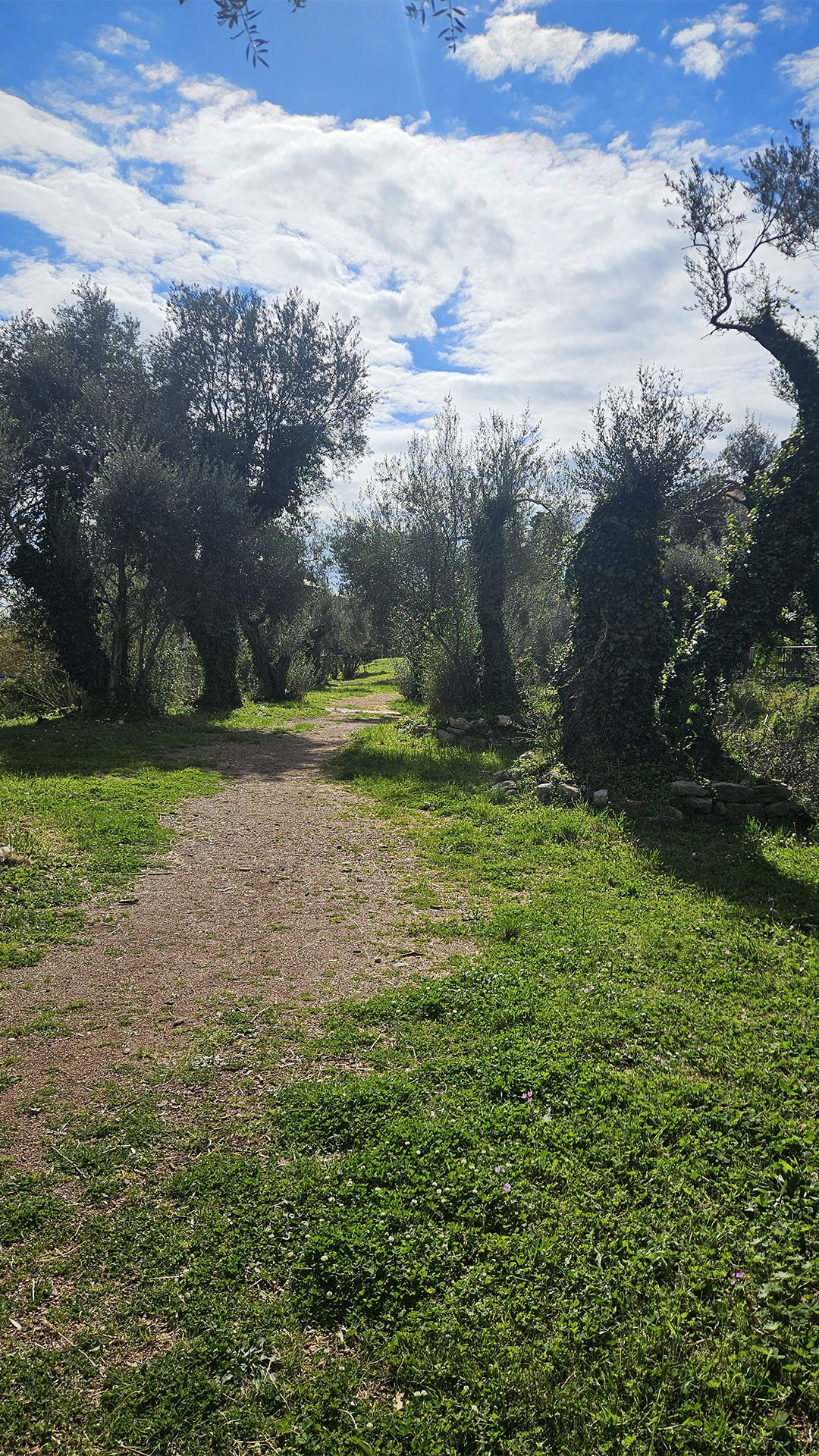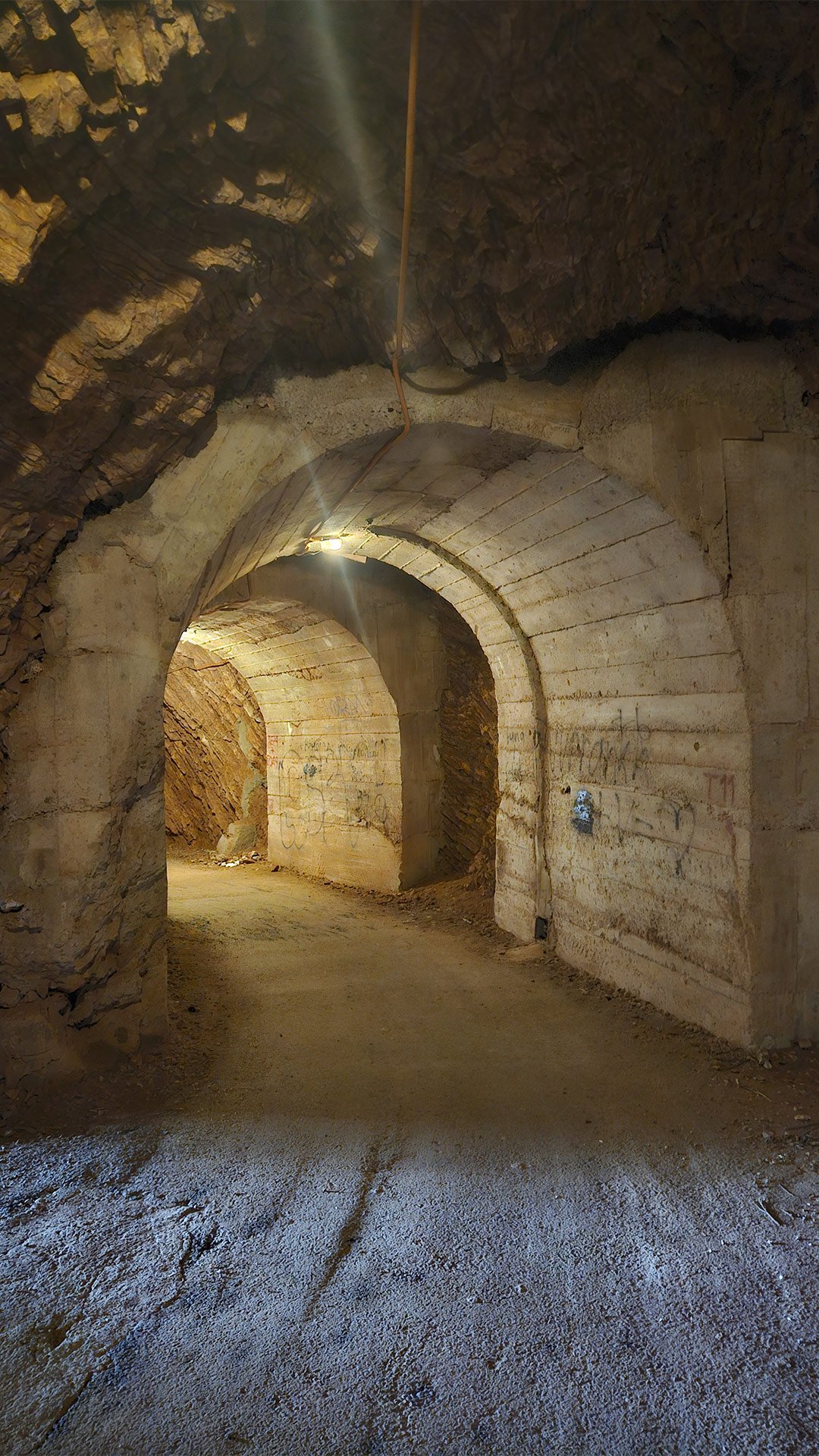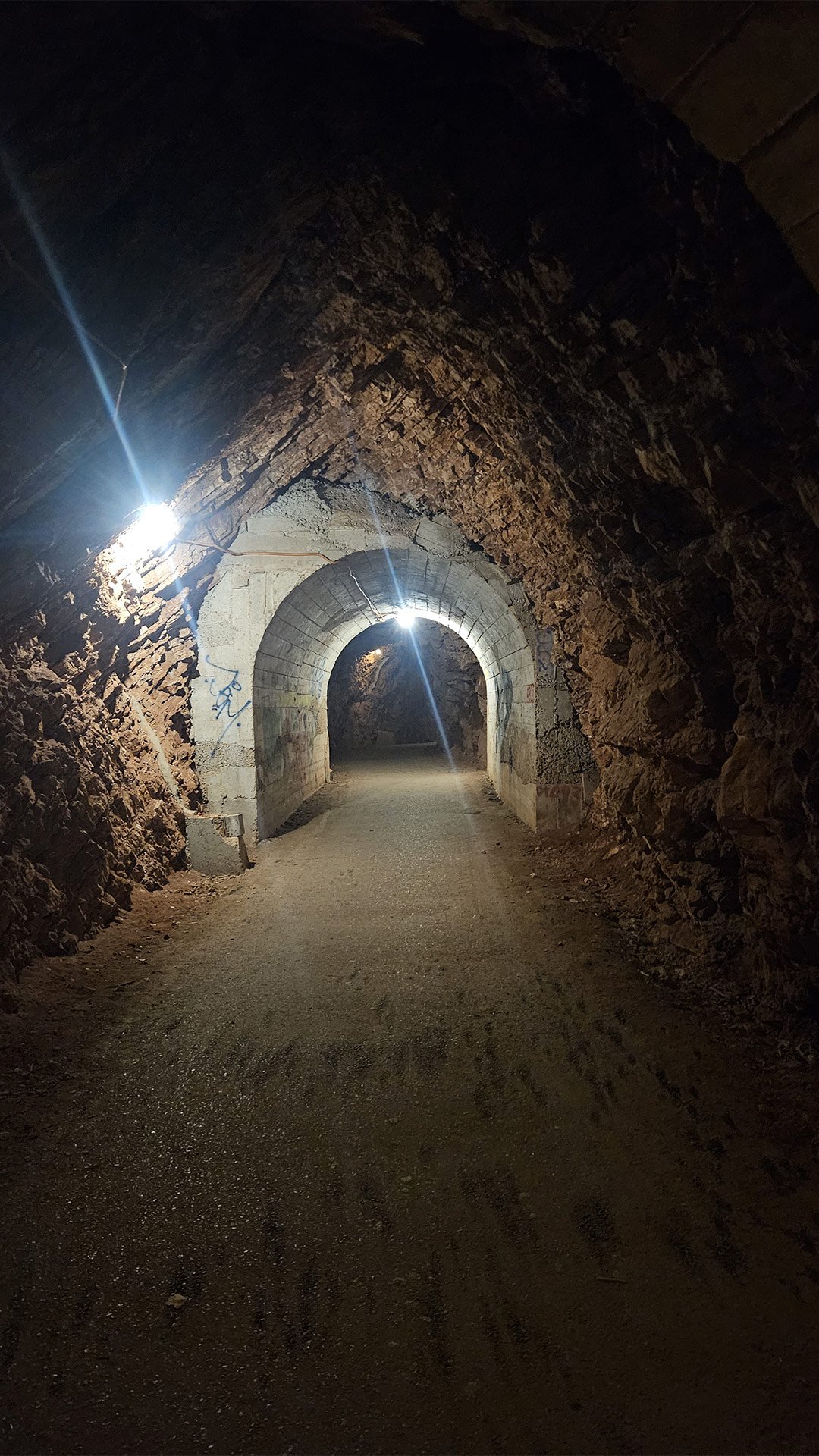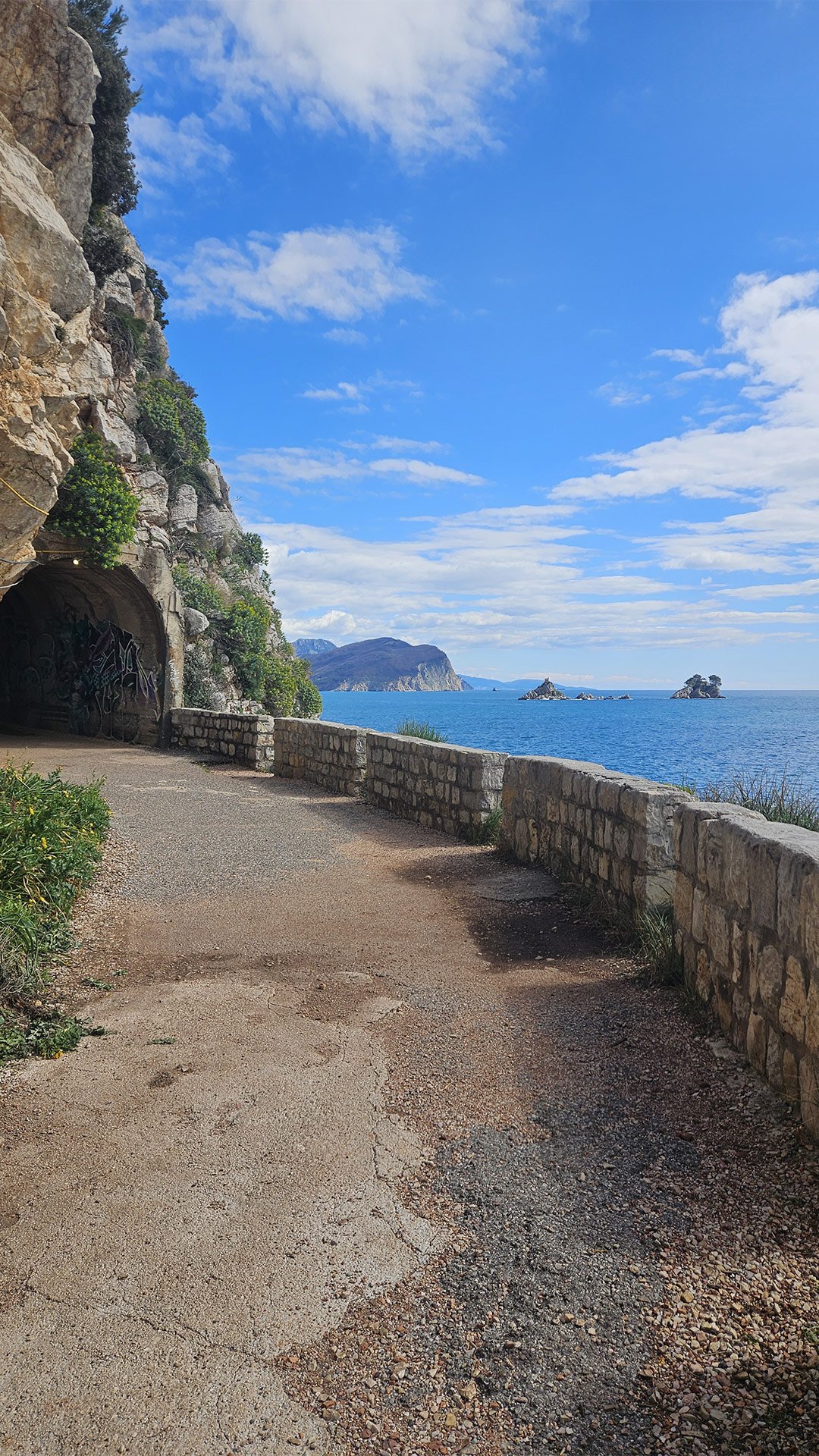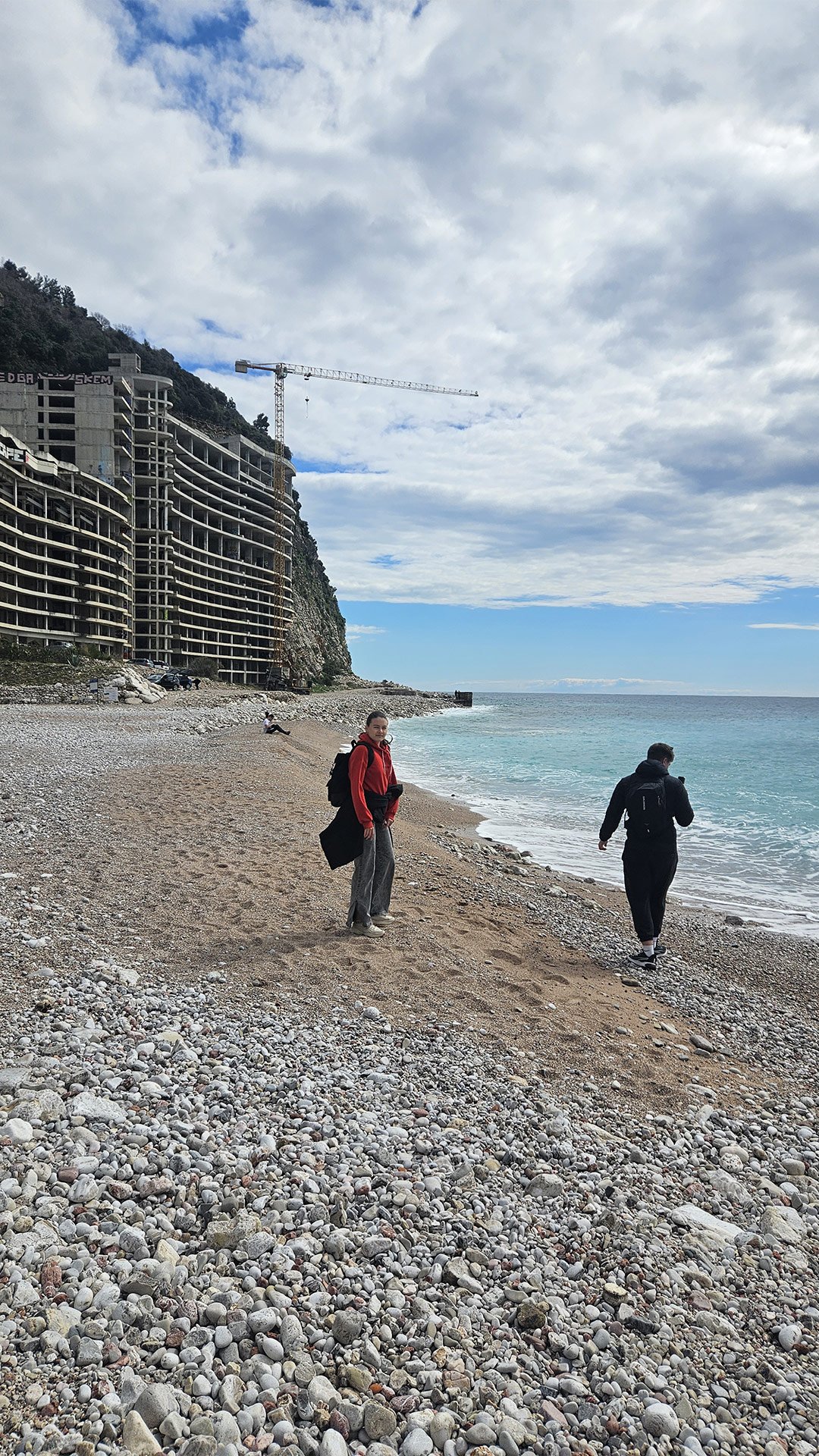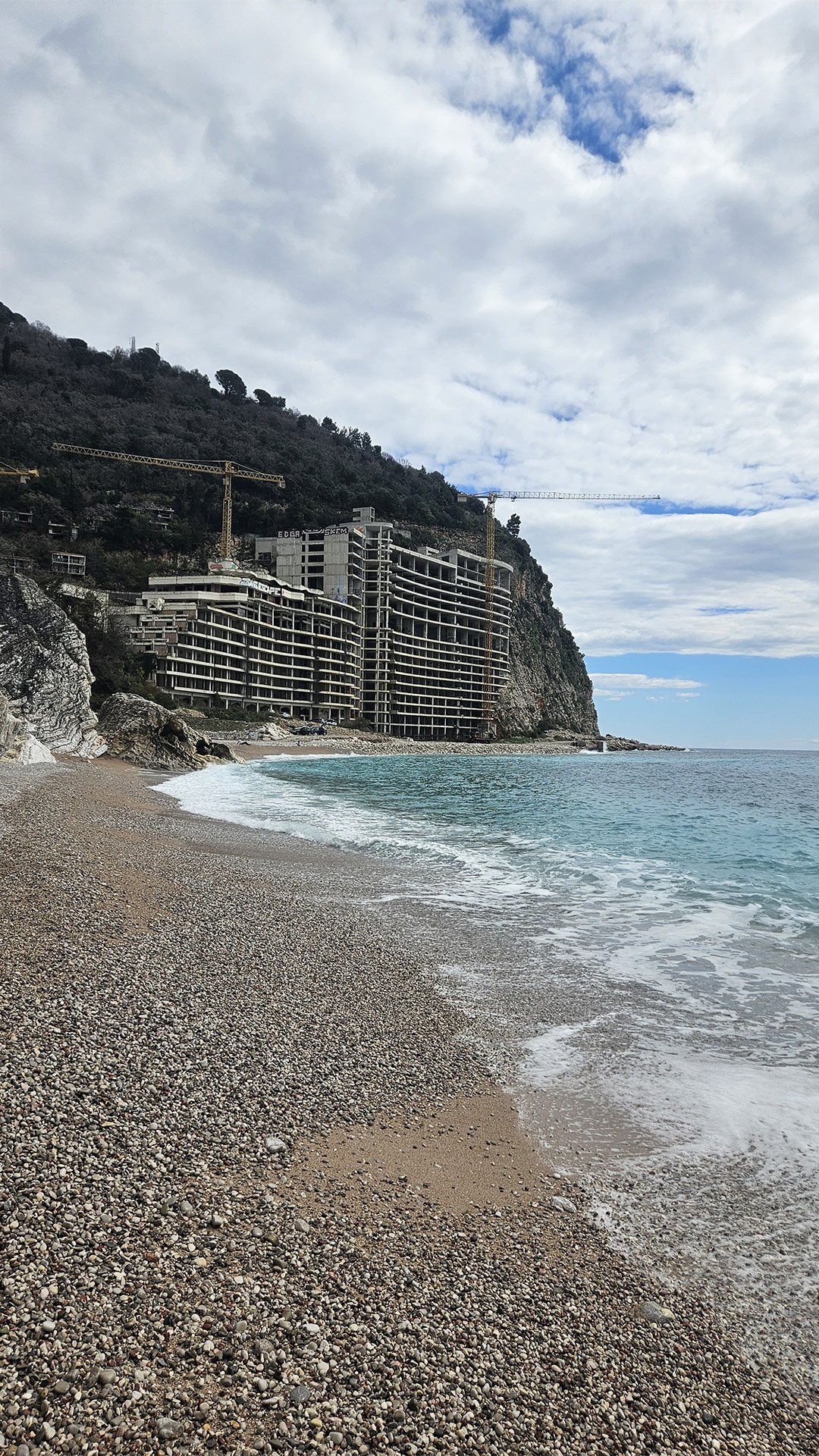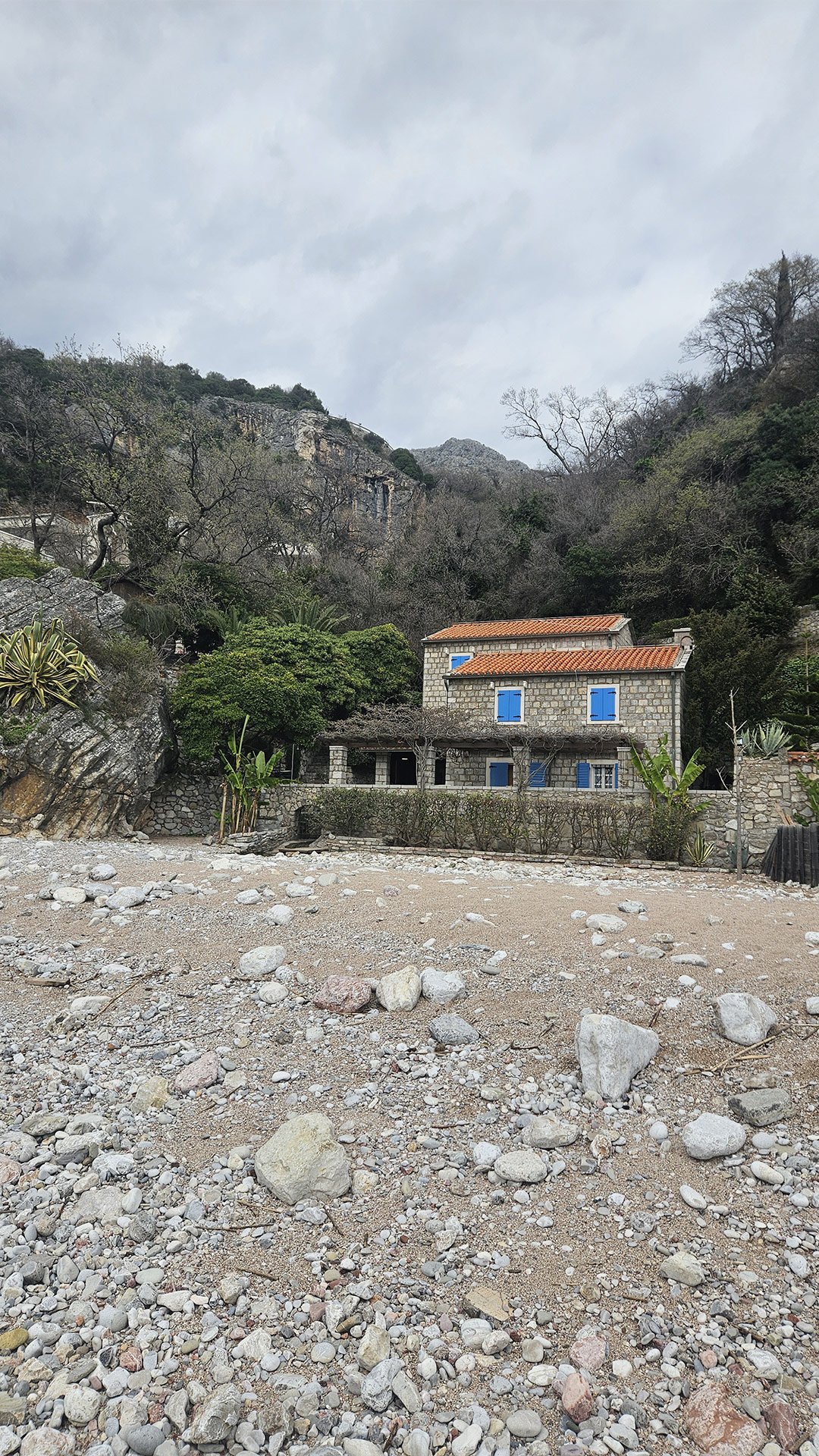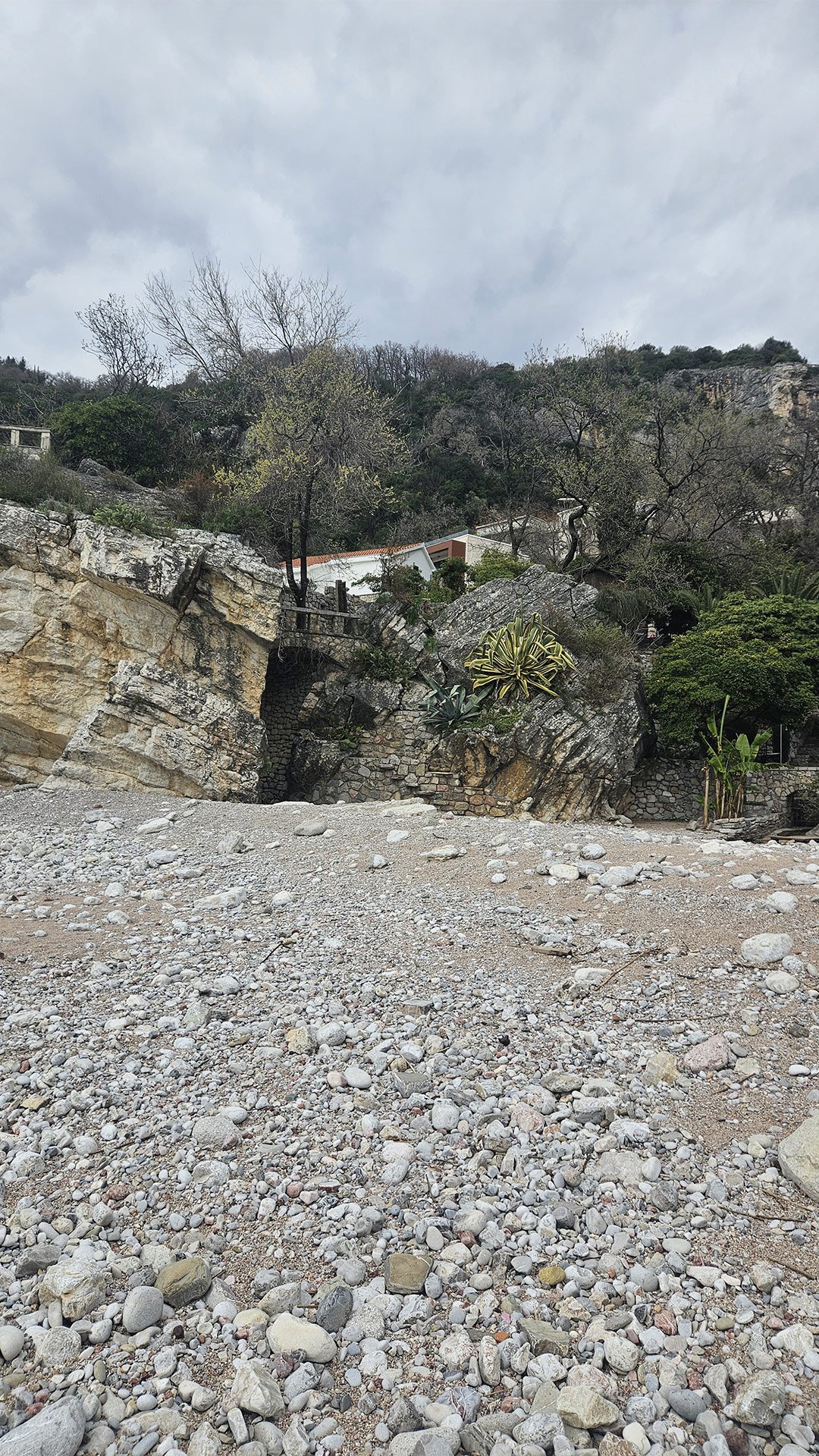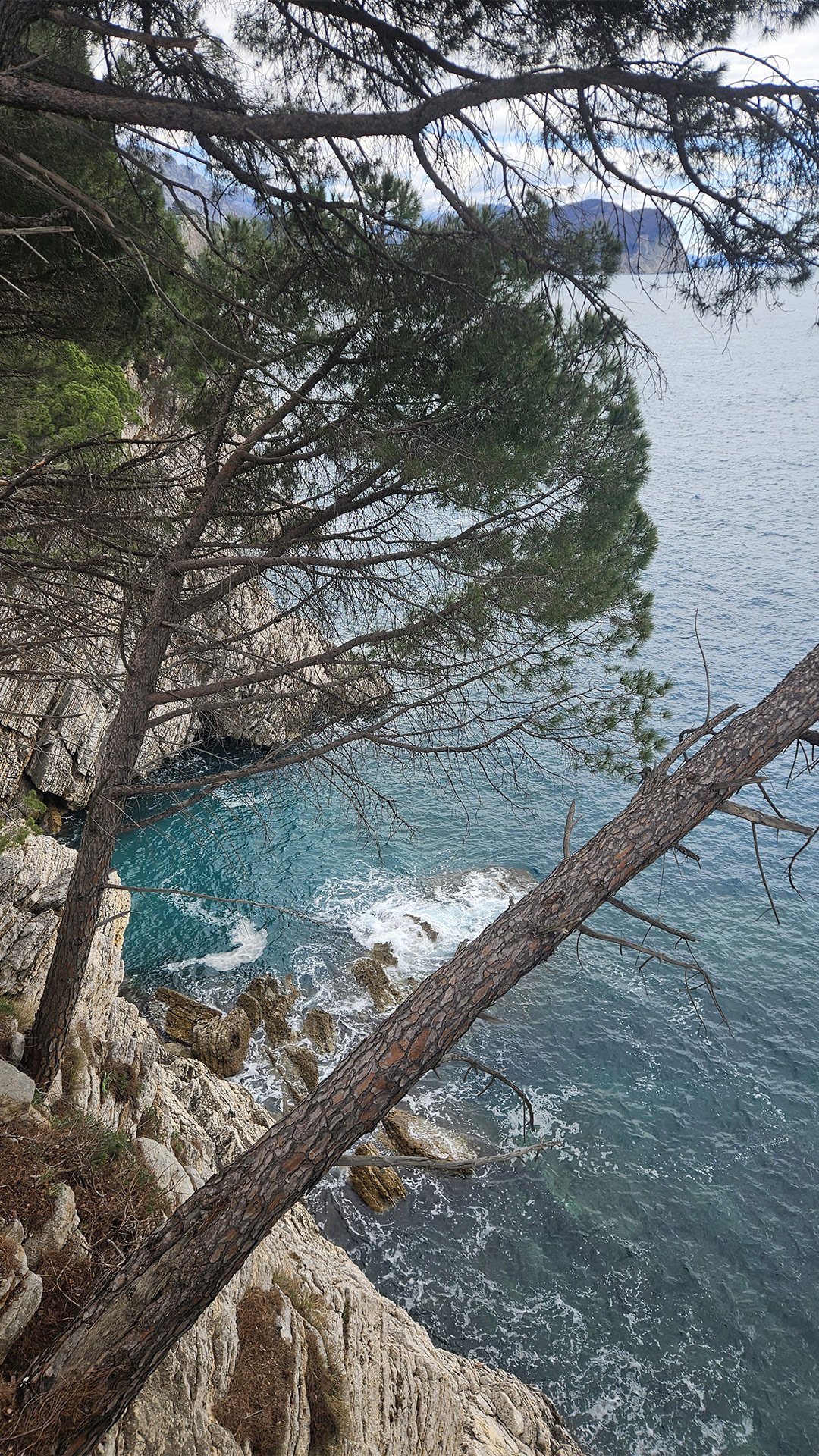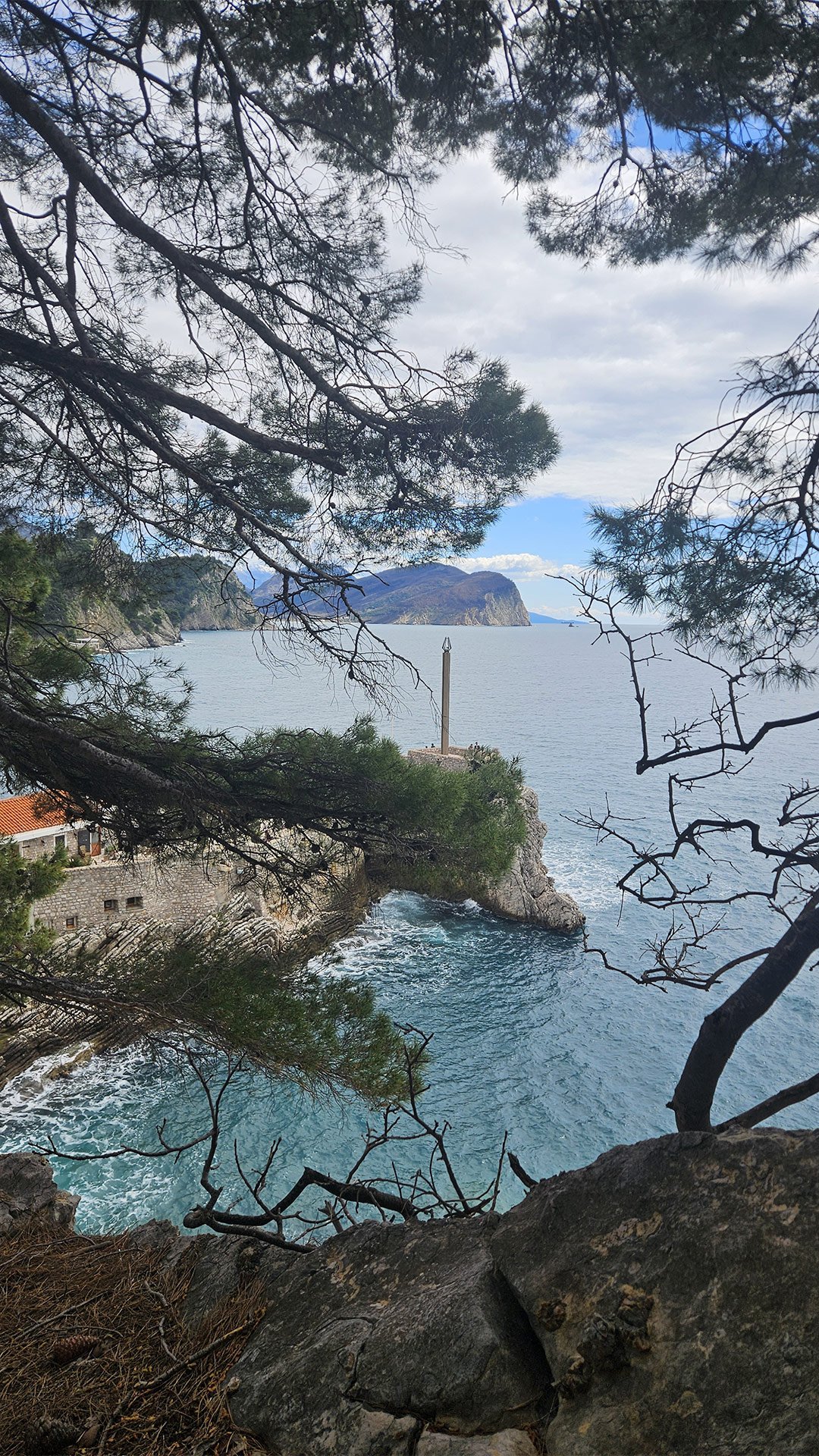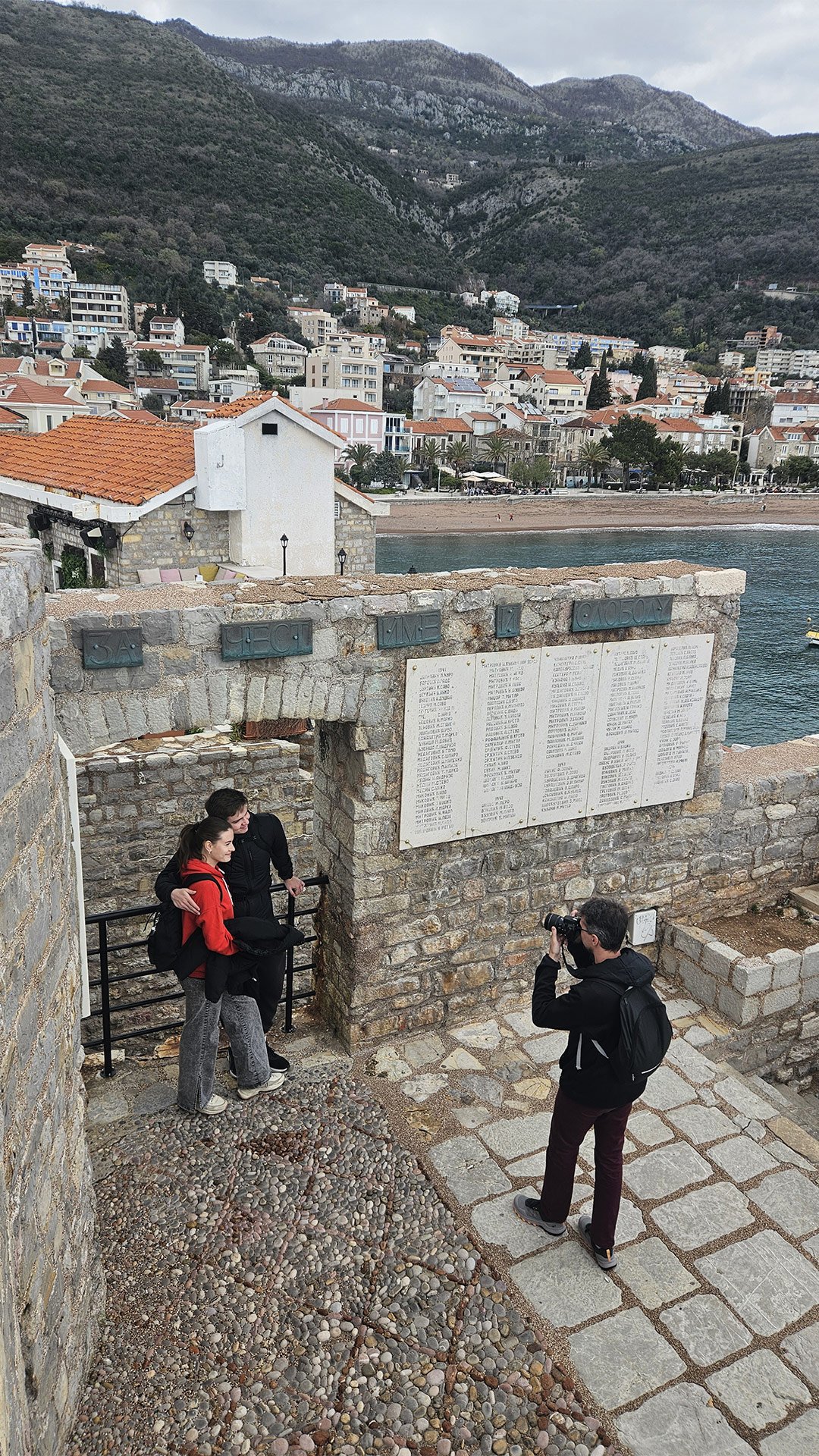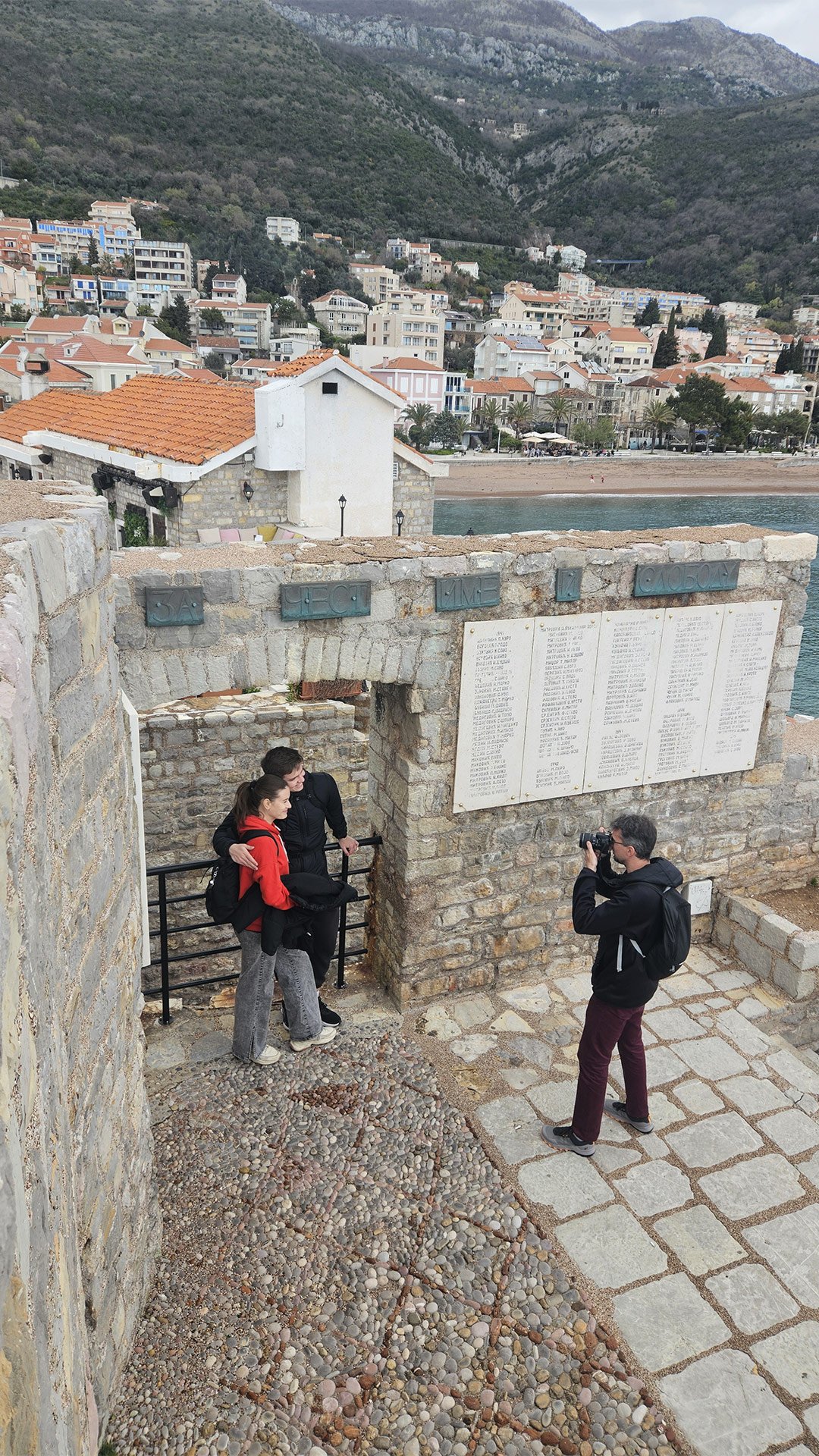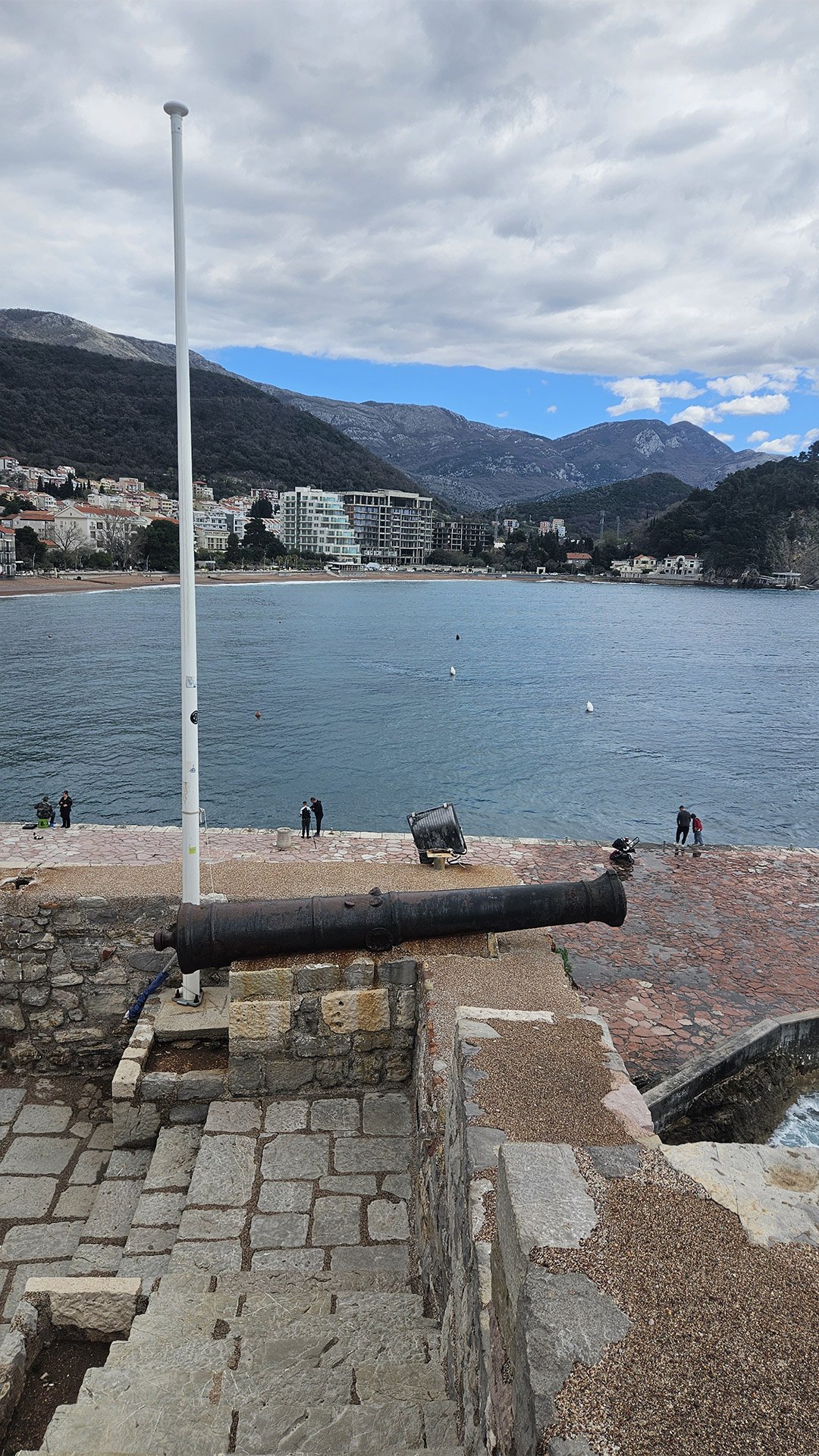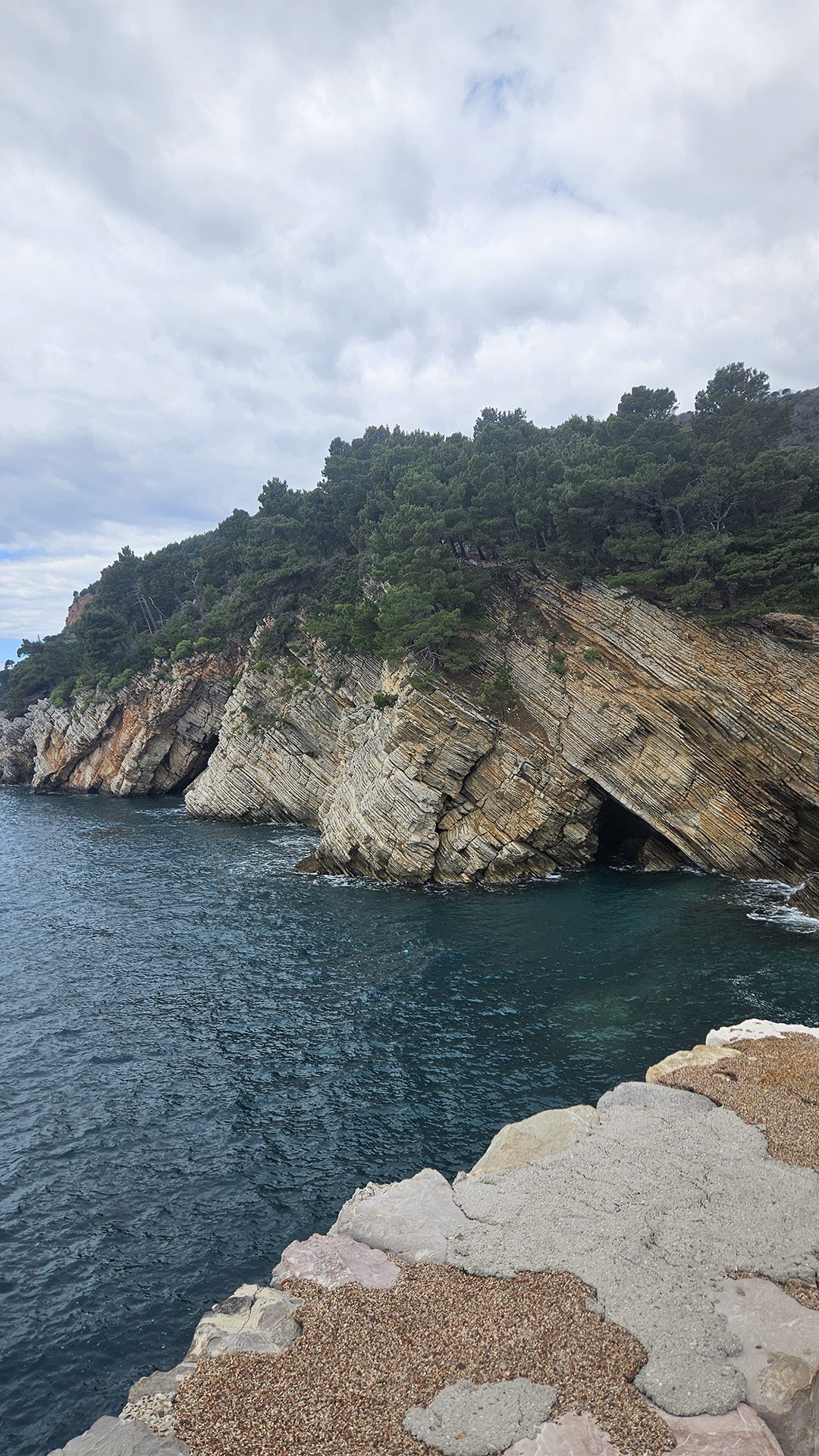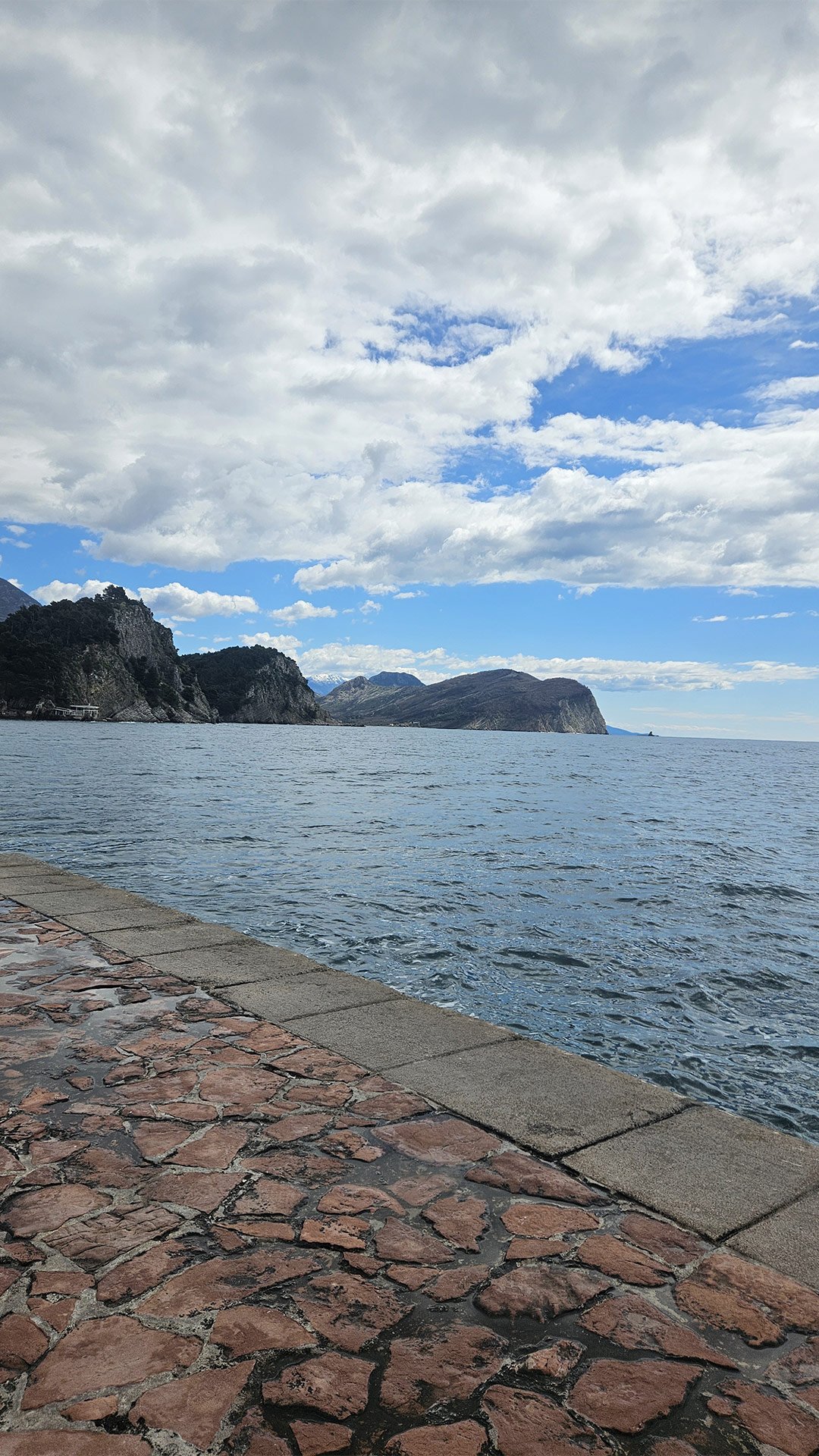


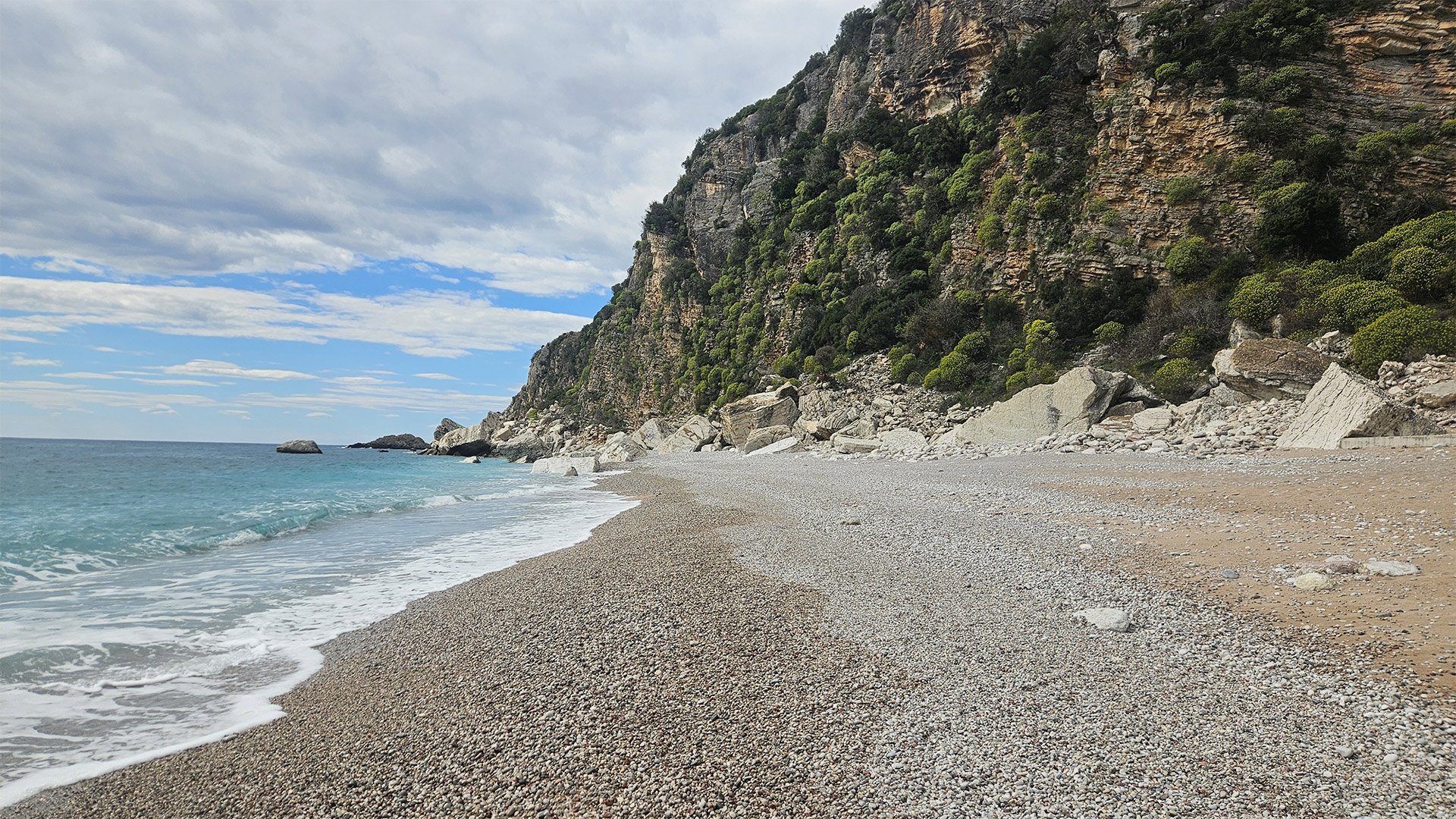
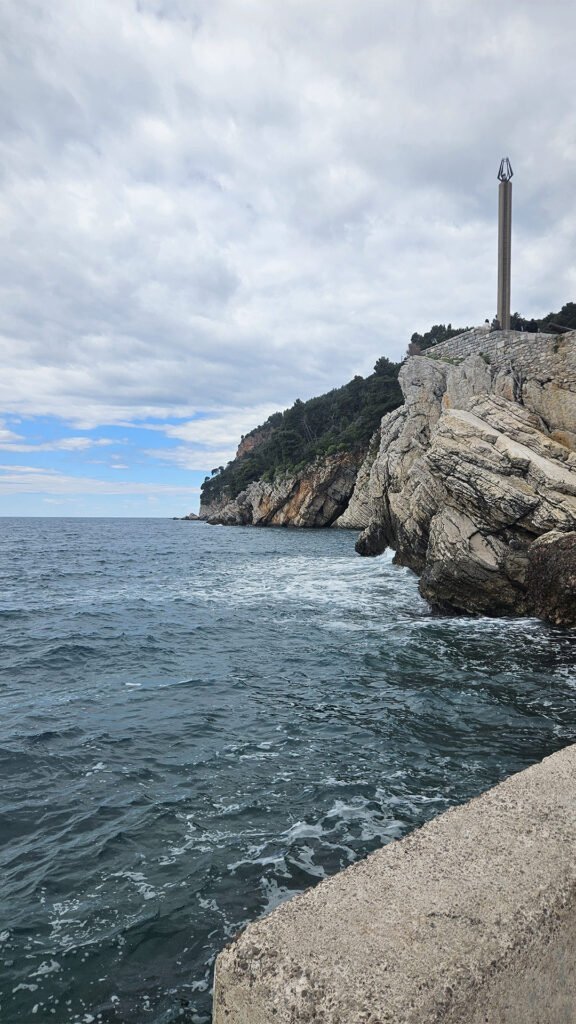
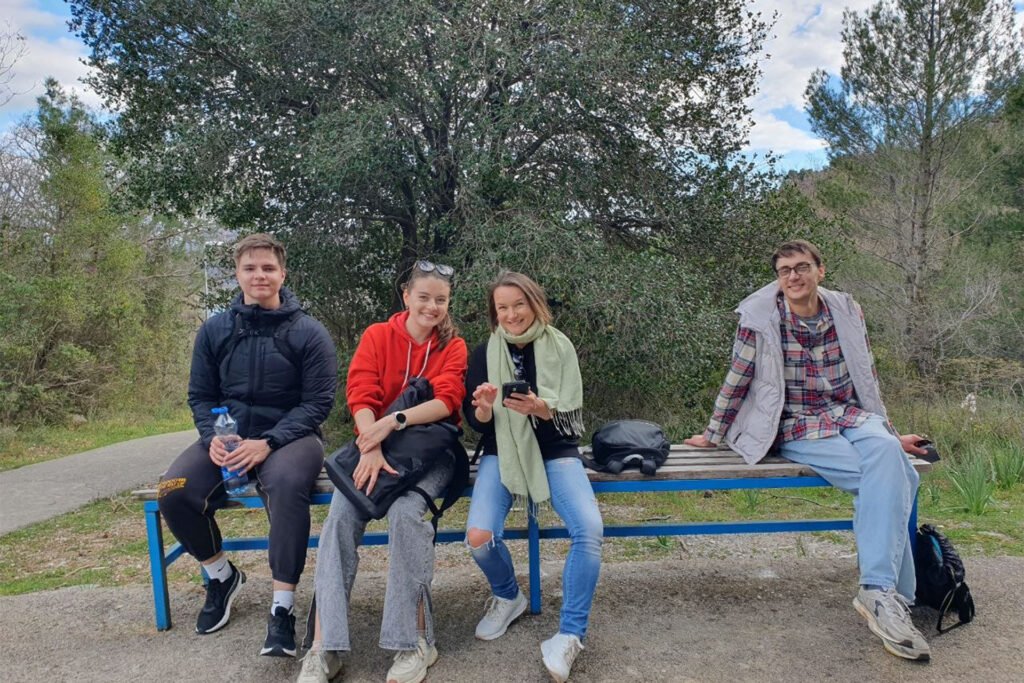
On March 29, 2026, our active group took a wonderful walk through the city of Petrovac in Opština Budva. We again strolled along the wonderful, well-equipped health trails, visited all the beaches, and had lunch at our favorite authentic restaurant, Pod Lozom. It was March, so the weather wasn’t particularly sunny. And now, while the beach season in Montenegro hasn’t yet begun—unfortunately, most beaches are still unopened—we want to show you the pristine beauty of the Petrovac coastline and introduce you to the history of this region. Petrovac na Moru is one of those Montenegrin coastal towns where history doesn’t feel like a museum set: it stands right by the pier in the form of the Kastio fortress, is evident in the late antique mosaics of the Mirište district, resonates in the tales of sailors near the islet of Sveta Nedelja, and literally lies beneath your feet on the beaches with reddish sand and pebbles. Today, Petrovac is part of the Budva municipality, but its atmosphere is noticeably different from bustling Budva: there’s less of a resort rush here and more of an old seaside rhythm—a promenade, fishing boats, pine trees, stone houses, a small harbor, and a line of coves from Perazić Do to Buljarica.
A key feature of this part of the coast is the combination of natural and cultural values. The central section of the Montenegrin coast around Petrovac is included in the Katić Nature Park: it encompasses the marine and coastal zone from Cape Skočidevojka to Cape Štrbina, including the beaches of Perazića Do, Petrovac Beach, Lučice, and Buljarica, as well as the islands of Katić and Sveta Nedelja, approximately 800 meters from the town beach. The park covers approximately 2,744 hectares; its conservation objectives include, among other things, Posidonia oceanica seagrass meadows, coral communities, caves, and Mediterranean coastal habitats.
Petrovac’s Historical Layer: From Ancient Villas to Kastel Lastva
Petrovac should not be thought of simply as a “beach village.” The archaeological layer here is very old. The Budva Municipal Cultural Development Program indicates that during Roman times, wealthy rural estates of the villa rustica type existed in the area of today’s Petrovac, in the area of Mirište, and also in Buljarica. This is an important detail: the coast was not only a place of rest and trade, but also an area of agriculture, vineyards, olive groves, sea routes, and villas associated with the ancient Adriatic economy.
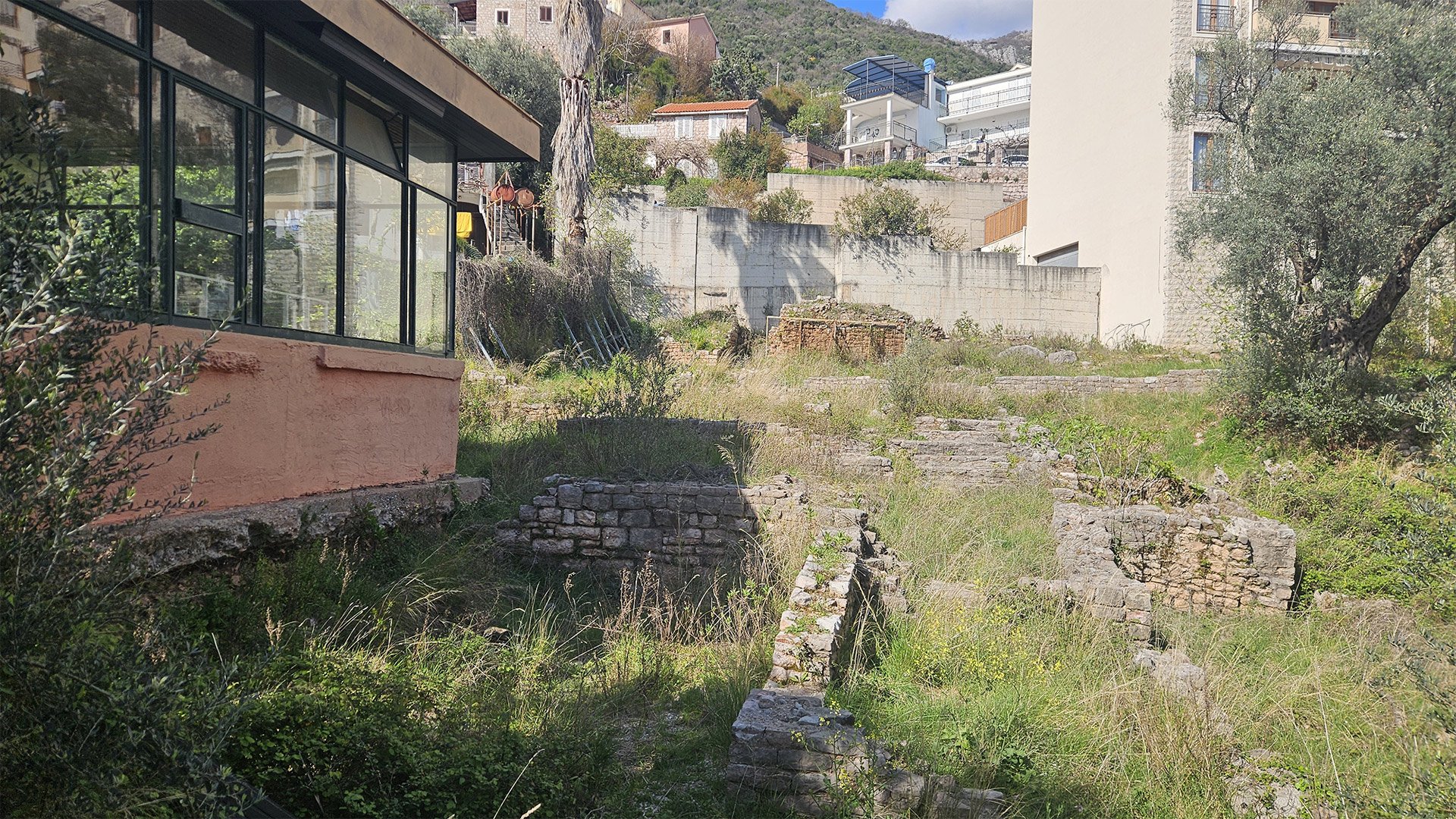
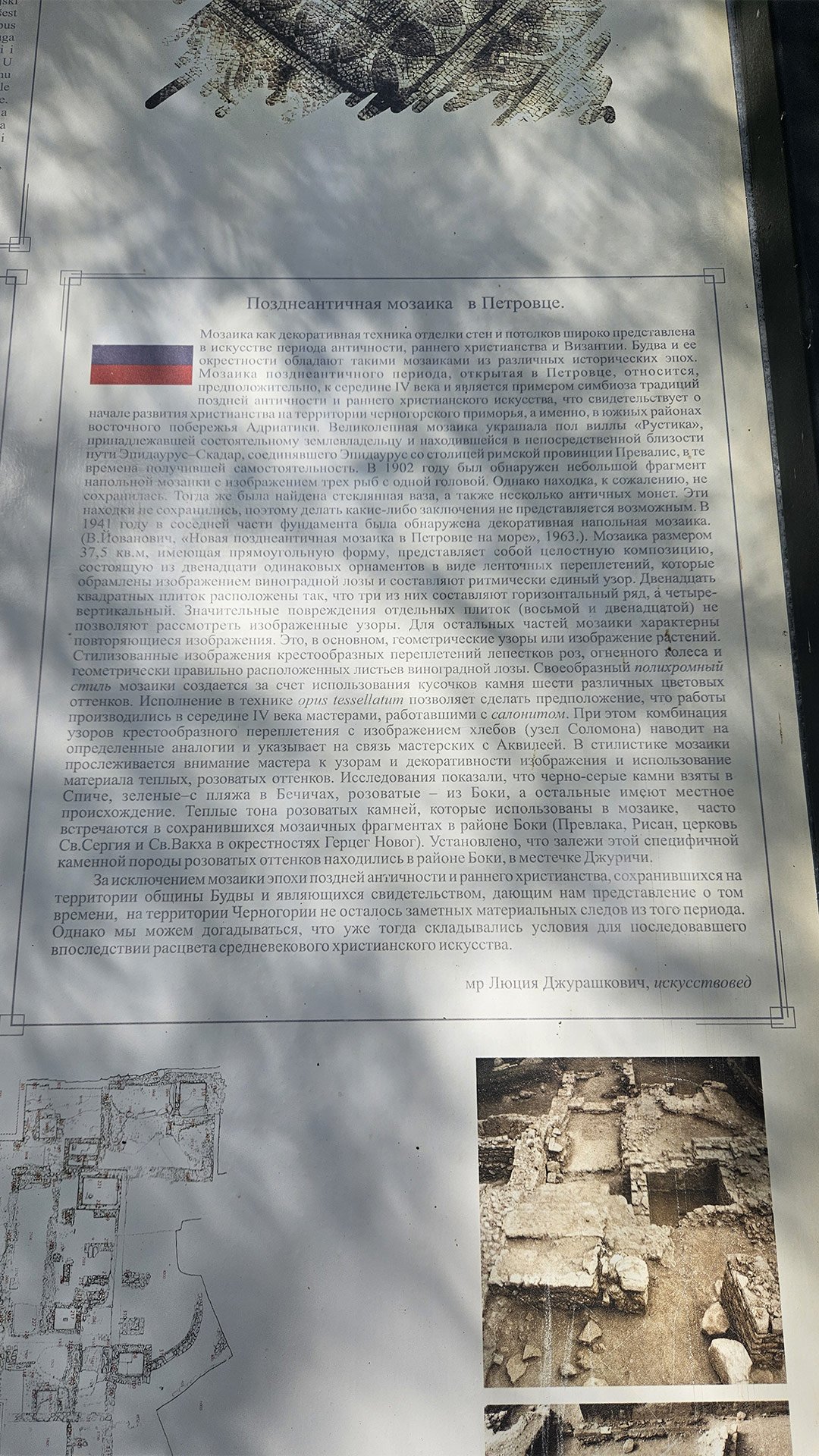
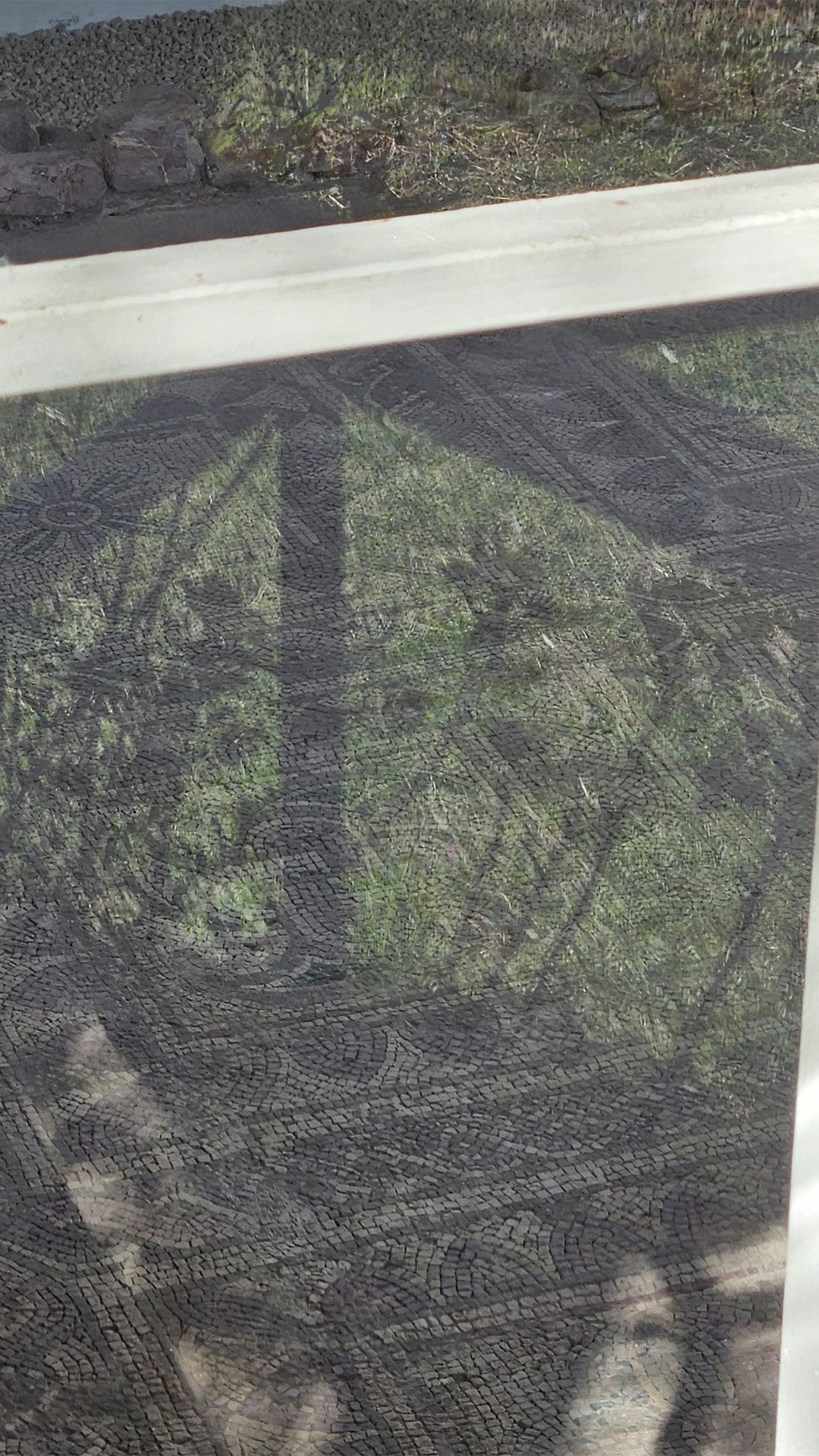
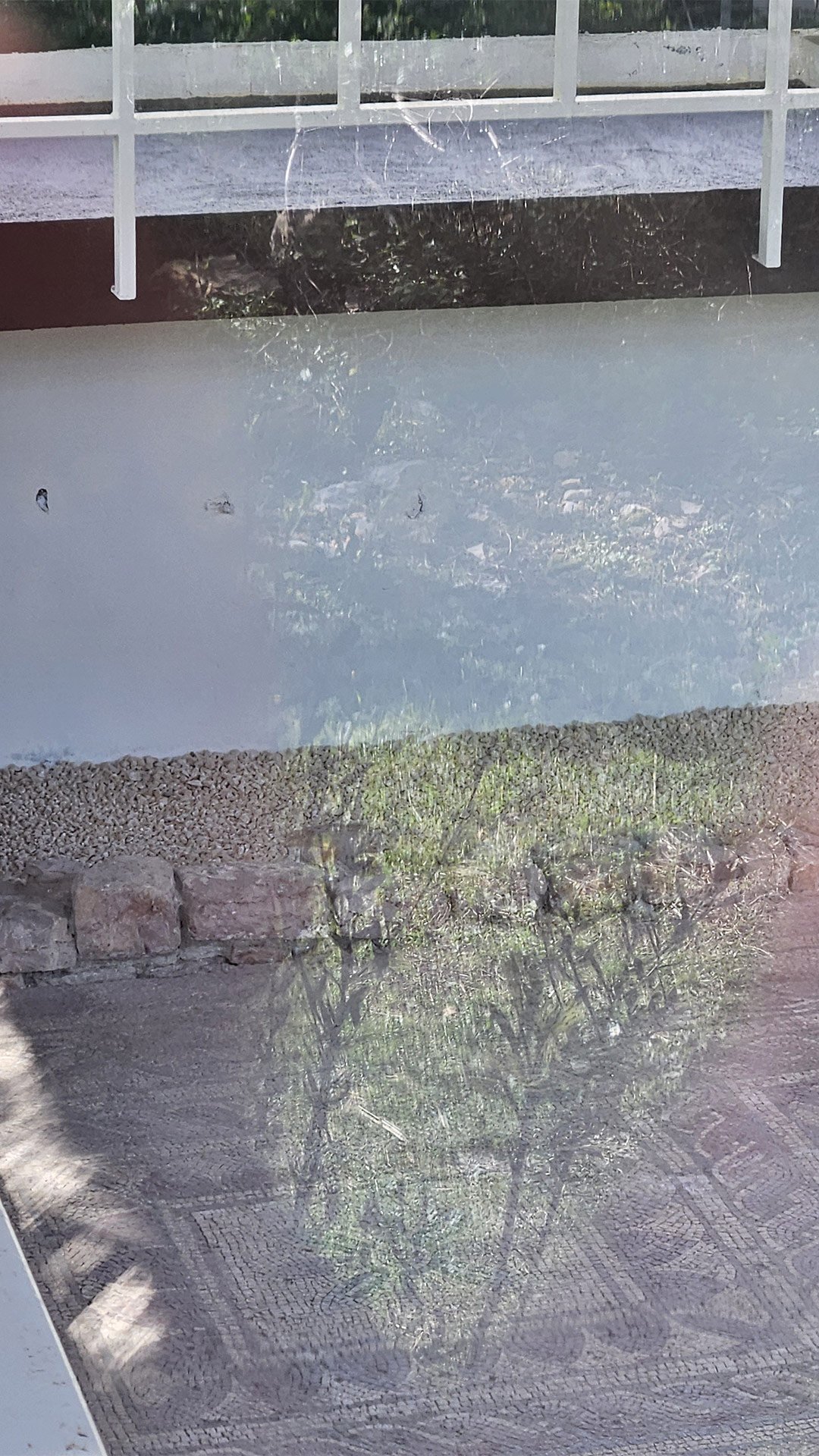
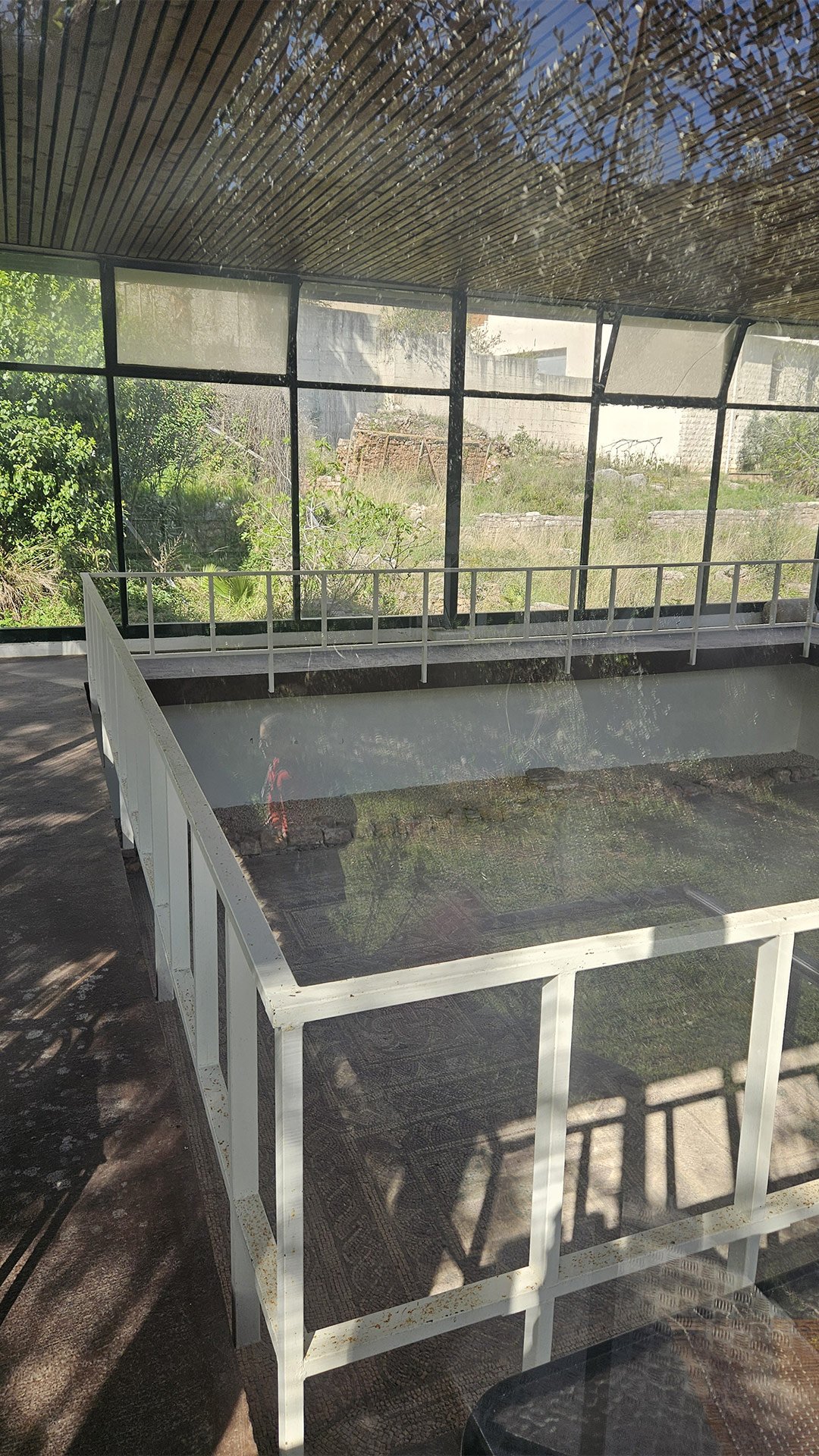
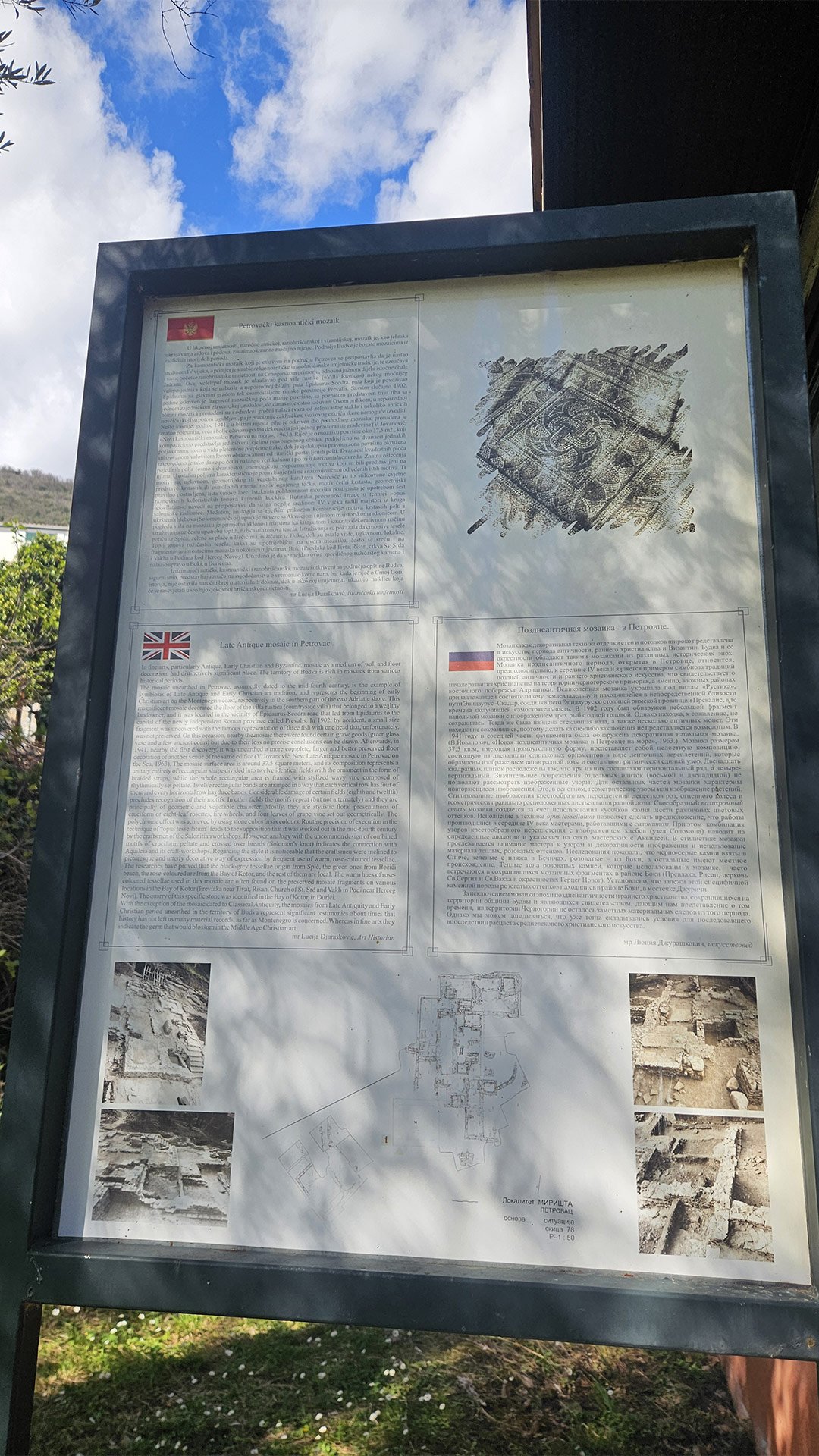
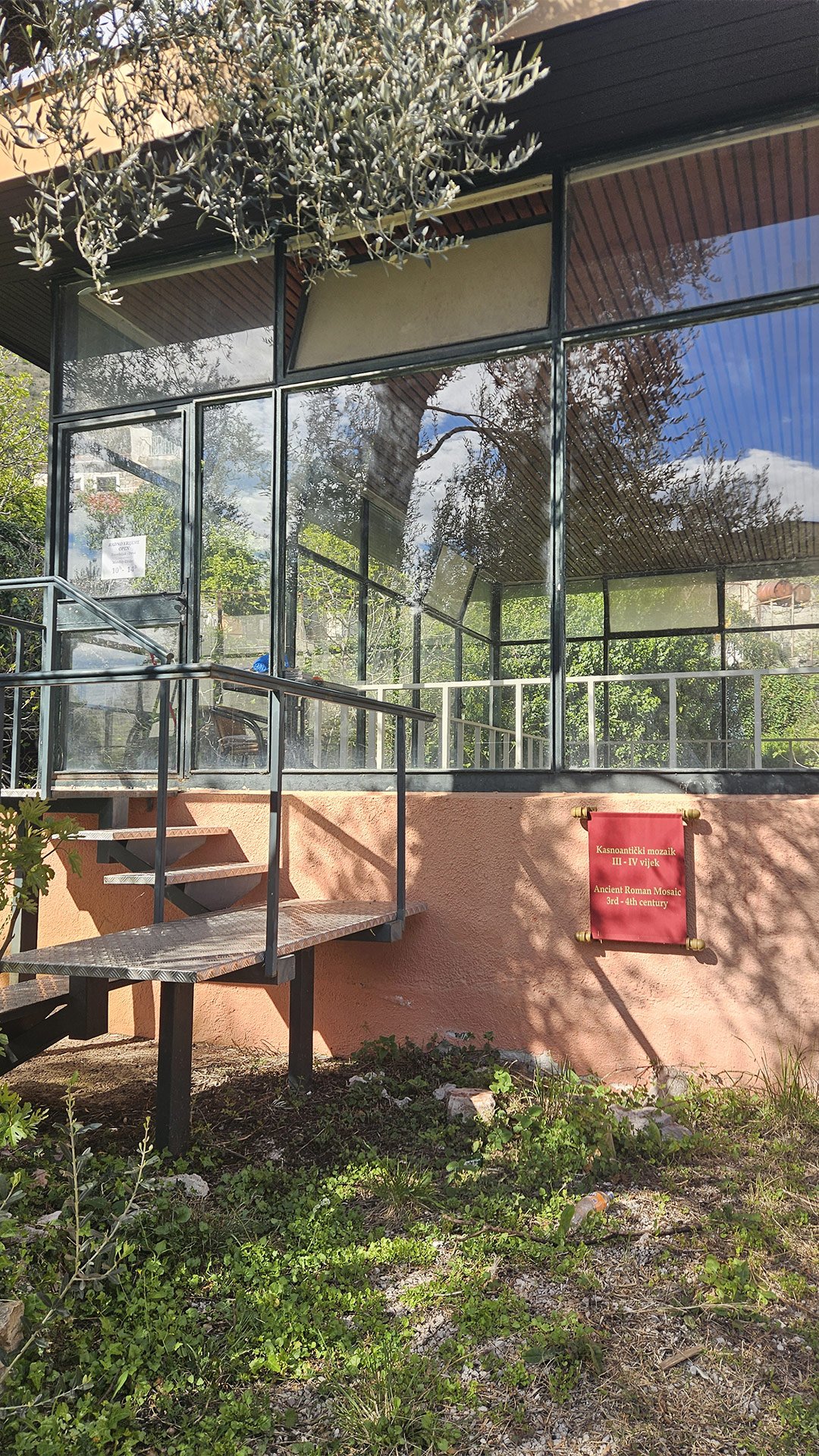
The most obvious trace of antiquity are the Roman mosaics of Petrovac. A late-antique Roman mosaic floor was discovered in the village of Mirište in 1902, and another was discovered later. The Budva Tourism Organization most likely dates them to the 3rd–4th centuries CE. One motif is particularly striking: three fish with a common head; another is a rectangular composition of 12 fields. However, the official statement notes that archaeological research there has not yet been completed, and the protection and presentation of the monument remain inadequate.
The medieval history of Petrovac is associated with the old name Lastva, later Kastel-Lastva. A municipal document in Budva states that Lastva, or today’s Petrovac na Moru, was first mentioned in a charter by King Milutin from the early 14th century. It also states that, according to tradition, the ecclesiastical cores of the future monastic complexes of Gradište, Reževići, Praskvica, and Podlastva emerged during the medieval period.
Then came the Venetian era. Paštrovići—the historical coastal region and community to which this part of the coast belonged—voluntarily submitted to Venetian rule in 1423, and Lastva and its commune approximately two decades later. In the 16th century, according to local tradition and Venetian coastal defense logic, the Lazaretto and the fortress of Kastello/Kastio were built over Petrovac Bay.
Kastio and Lazaret: Petrovac’s Stone Signature
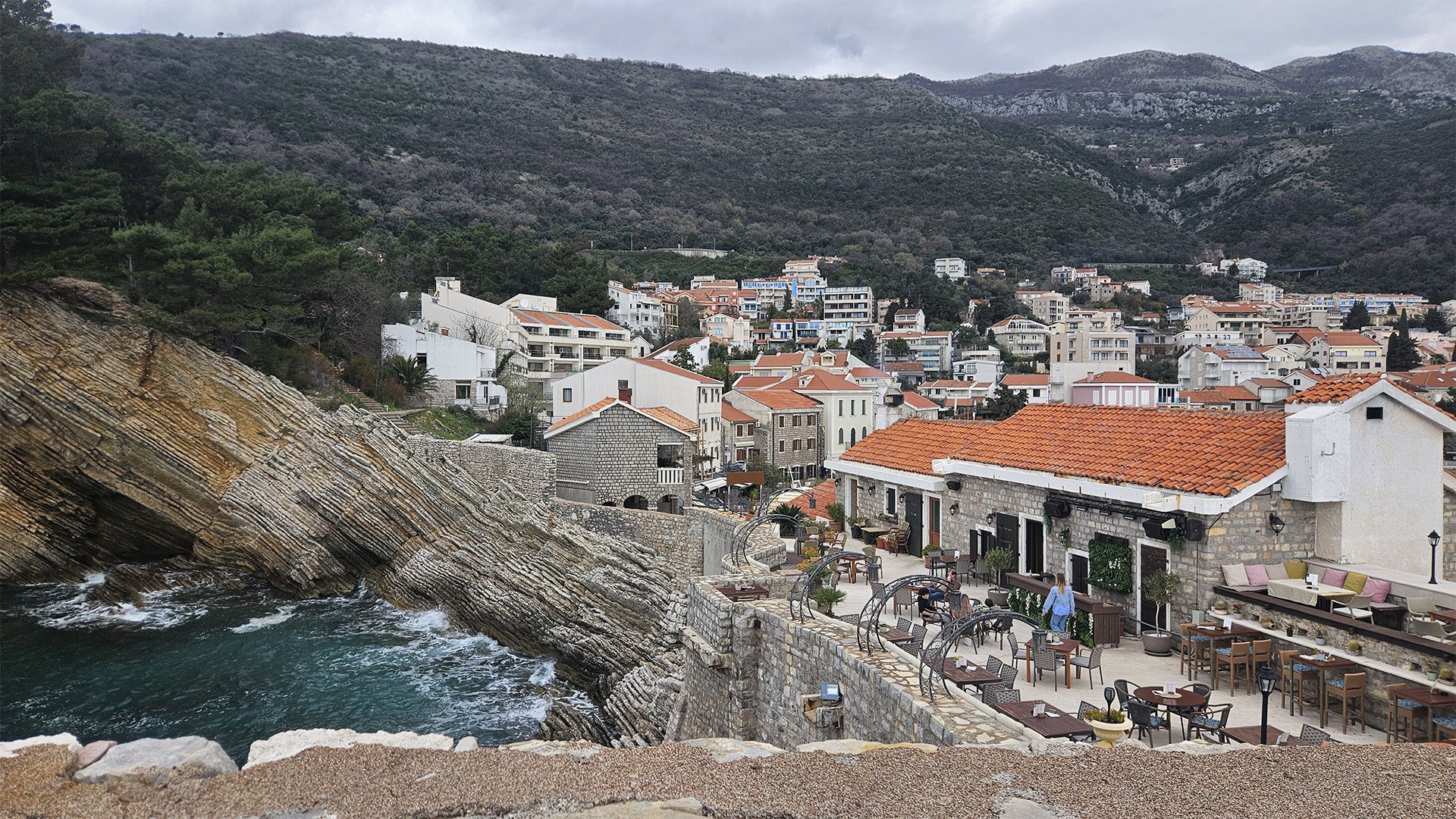
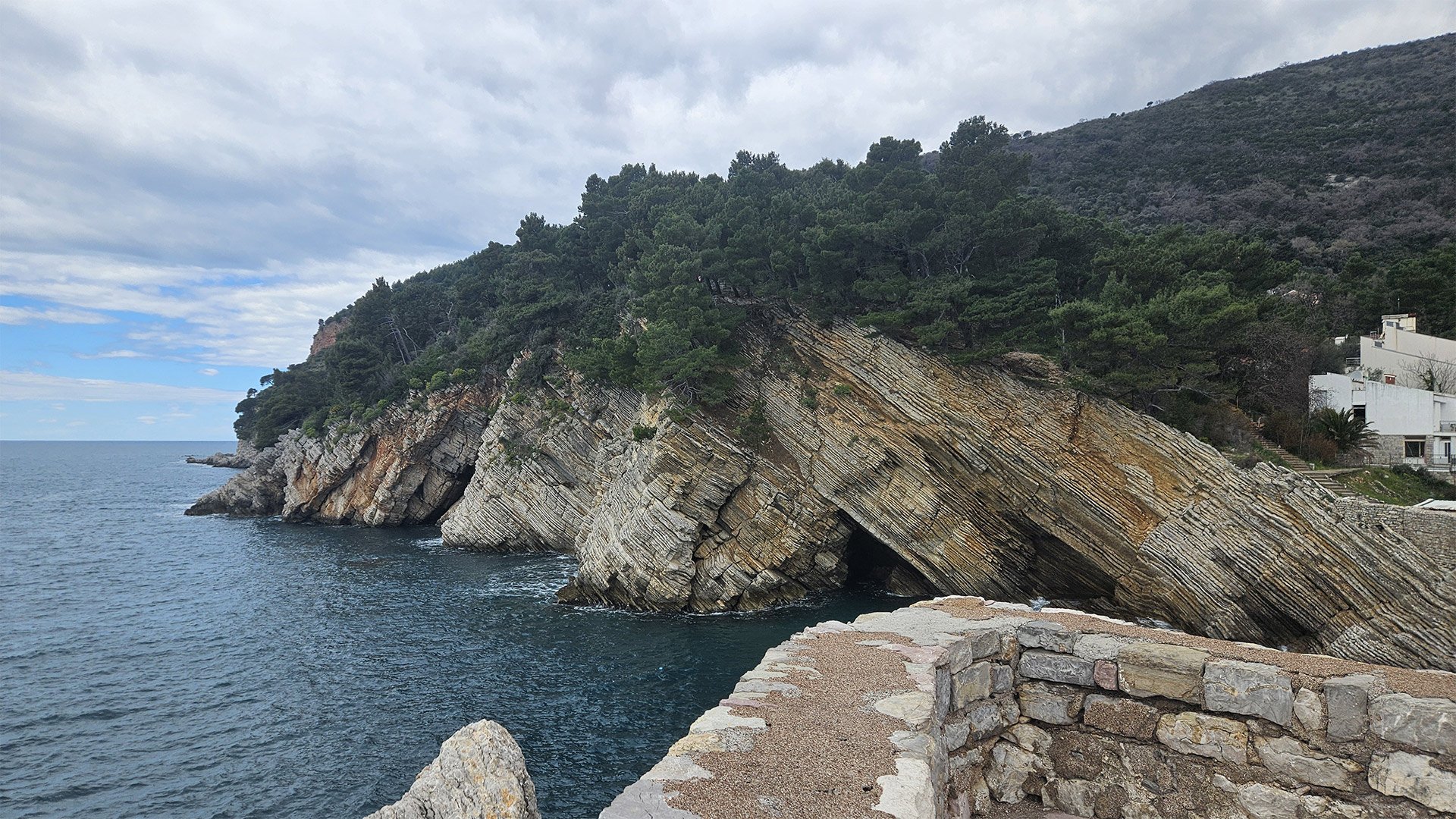
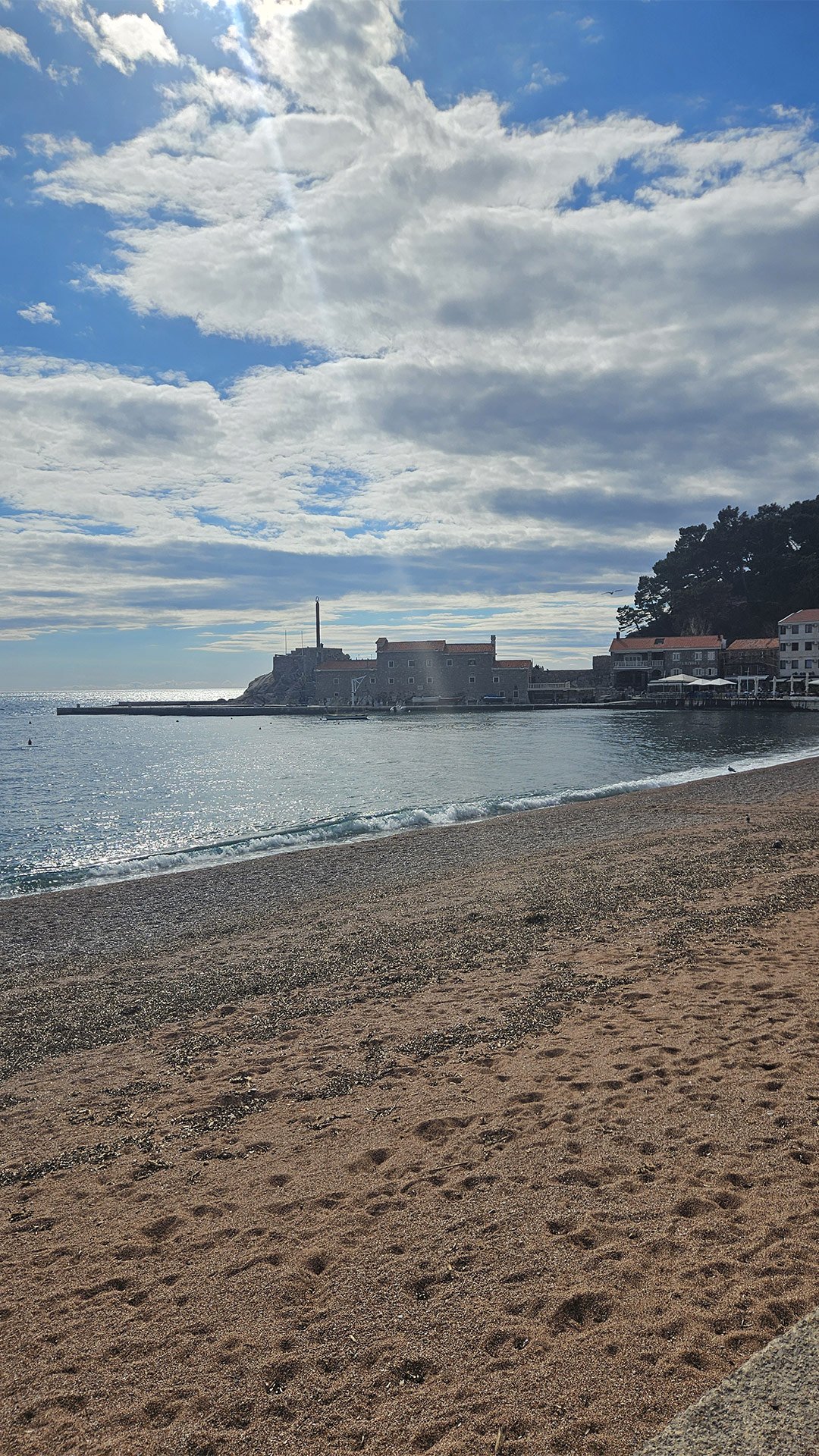
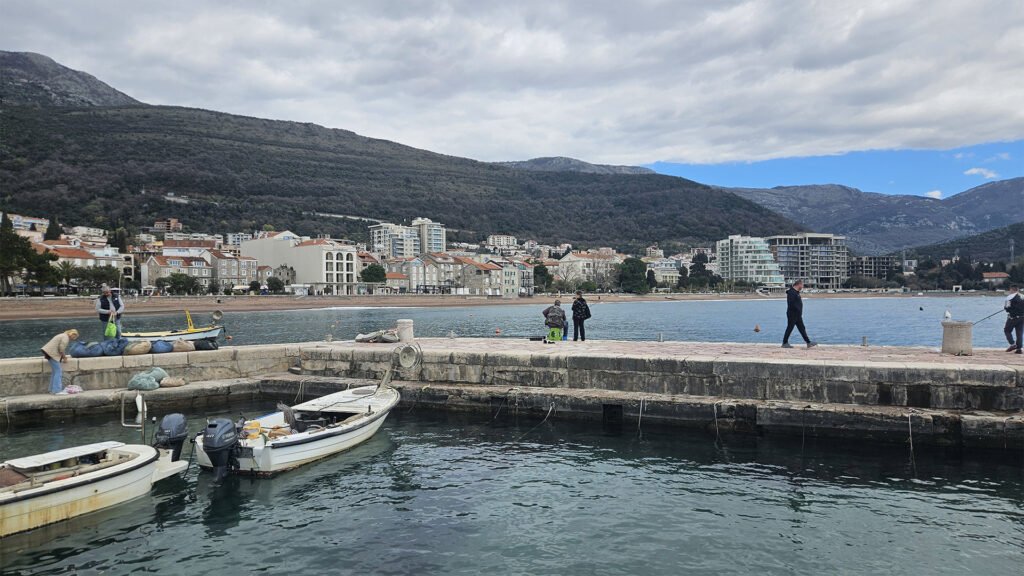
The Kastio Fortress is the city’s main historical silhouette. It stands above today’s marina, in the western part of the bay, and it gave the old settlement its name, Kastel Lastva. According to the Budva Tourist Board, the Venetians built the fortress in the 16th century; it housed a permanent Venetian garrison, as well as warehouses for wine and other goods shipped by sea. Nearby stood the Lazaret, a sanitary building that primarily served as a quarantine during epidemics.
This is a very Adriatic story: the city defended itself not only from pirates and military threats, but also from diseases brought by sea along with trade. Mostly the walls remain of the old structures, but their significance for the landscape has not diminished: Kastio and Lazaret frame Petrovac Bay and separate it from Tuljanova Pećina (Tulen’s Cave). This once-abandoned site has long since been revived by the addition of a marina and restaurants; the tourist organization notes that in early September, the fortress turns into a jazz stage.
The Red Commune, the Reading Room, and Cultural Memory
Petrovac also has an unexpected political and cultural legacy. The “Red Commune” building houses a cultural center, the Marko K. Gregovic Gallery, a library, and a museum dedicated to revolutionary history. Budva’s official website notes that the Museum of the Revolution commemorates the communist victory in the 1920 elections, and the municipal cultural program calls Petrovac the first communist municipality on the Adriatic, during the period 1920–1921.
There is also a softer, more educational approach. The Budva Public Library writes that the first reading room in Paštrovići was founded in 1890 in Kastel Lastva, today’s Petrovac, under the name “Serbian Reading Room.” Her society built its own building in 1906, but it was destroyed by the 1979 earthquake; the current library operates in the historic “Crvena Komuna” building.
Katić and Sveta Nedelja Islands: A Sailor’s Legend
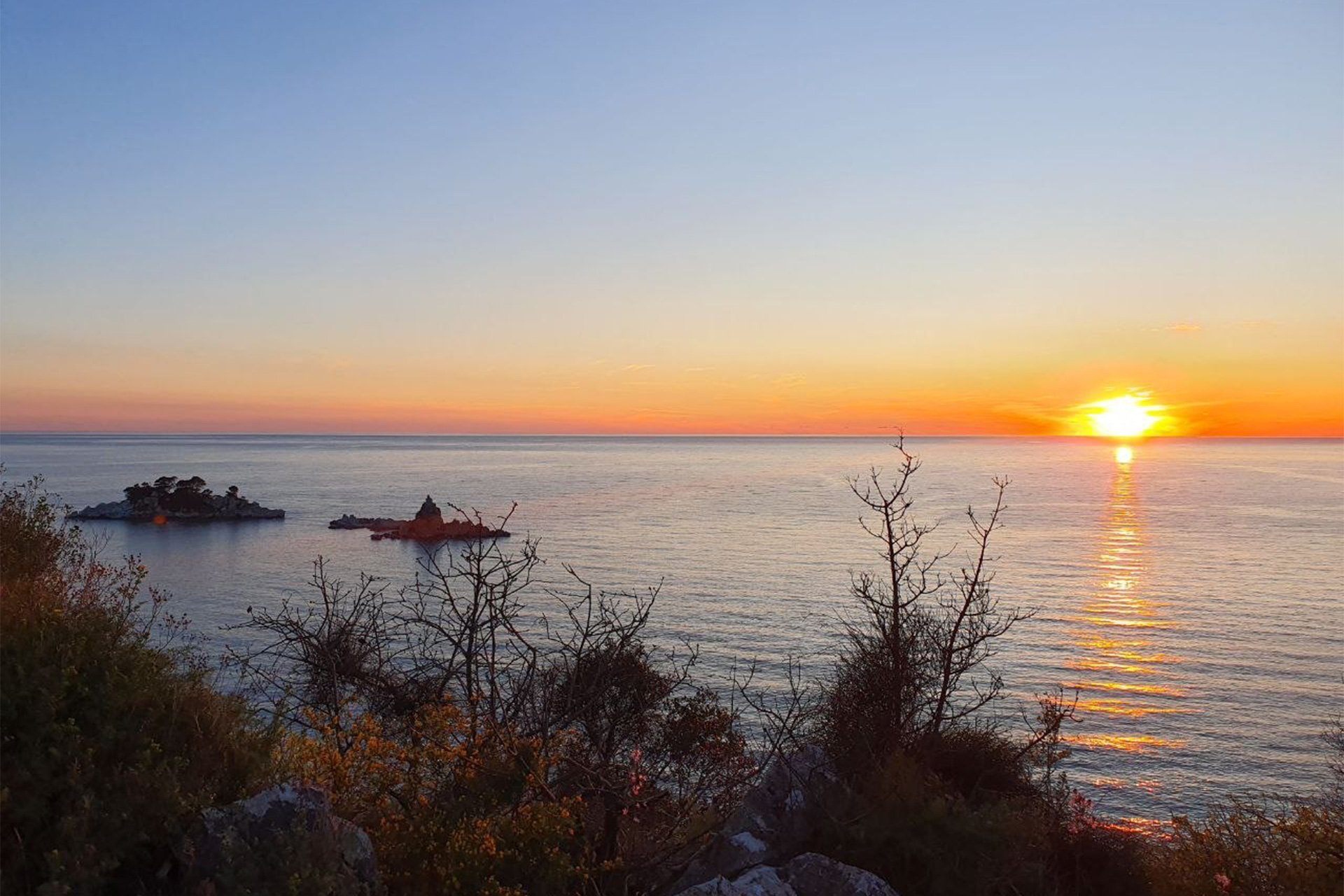
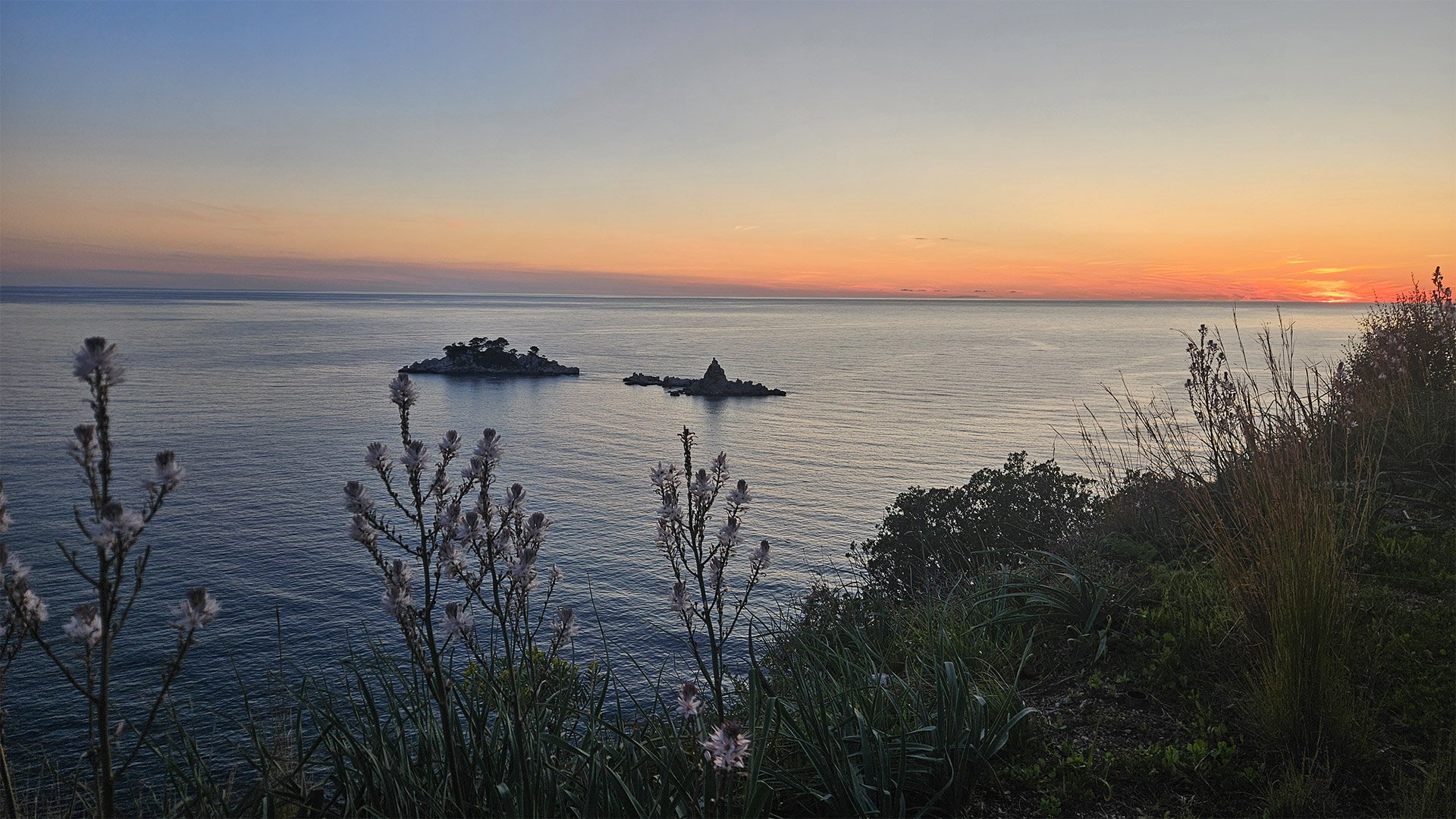
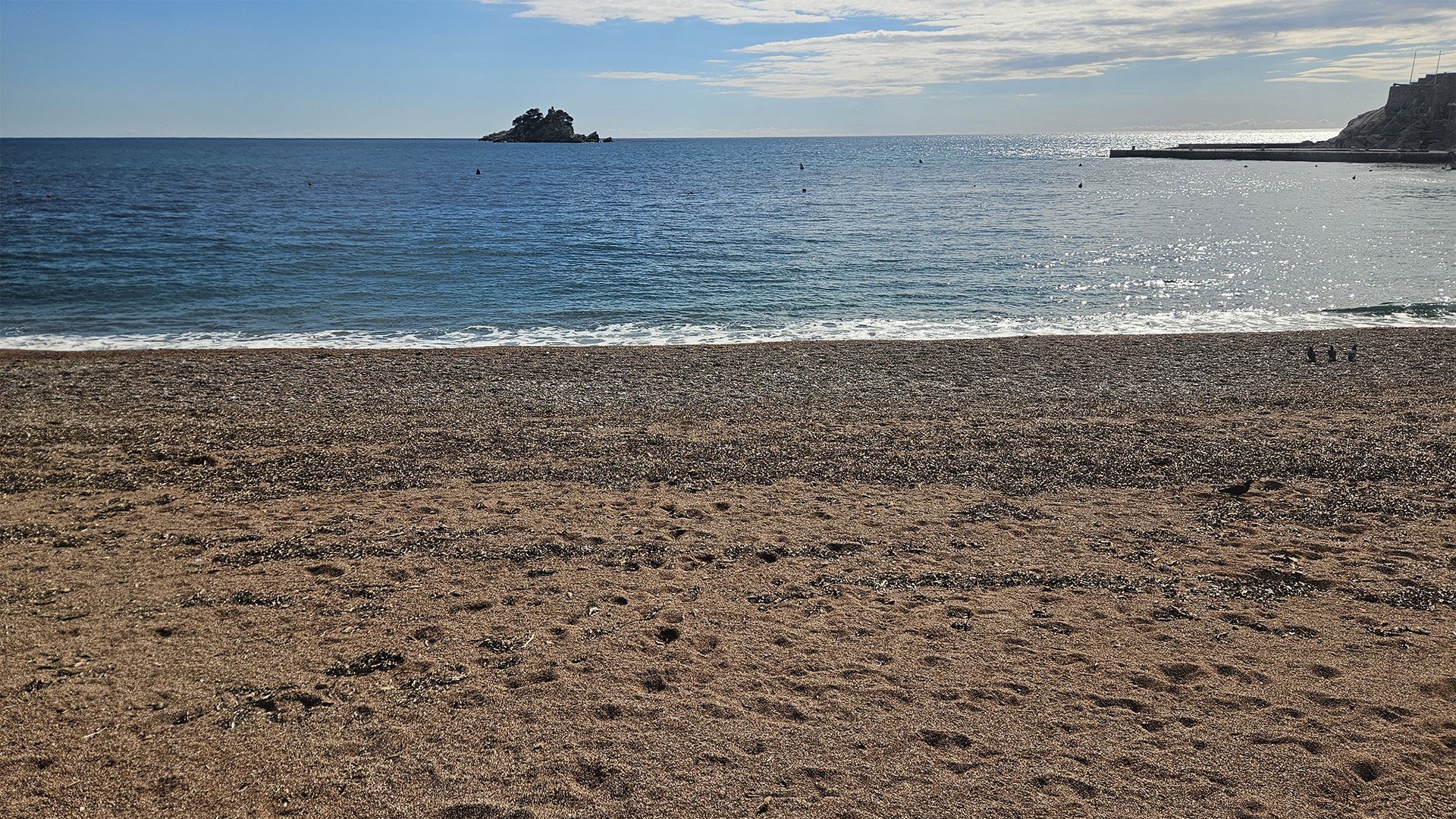
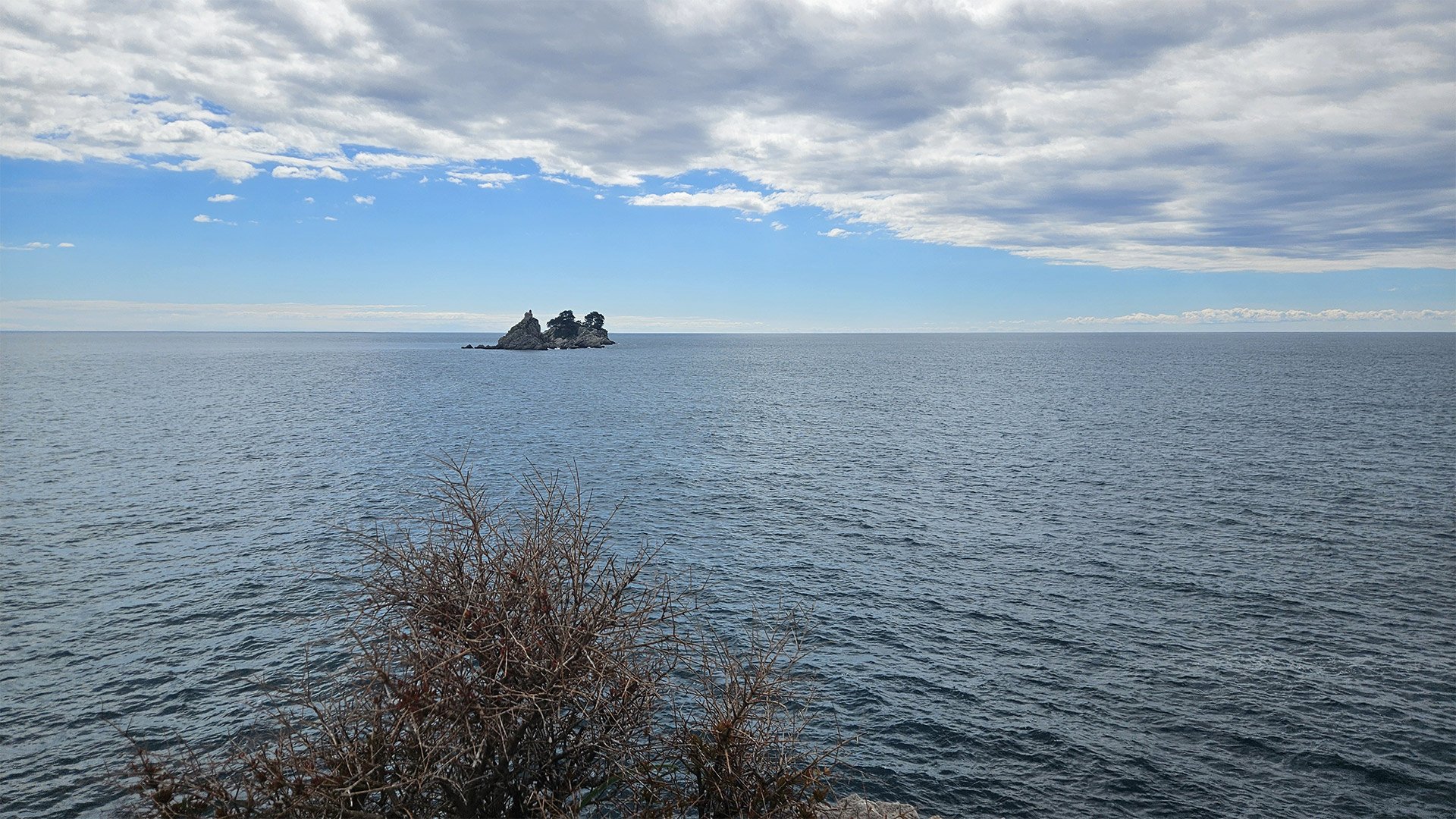
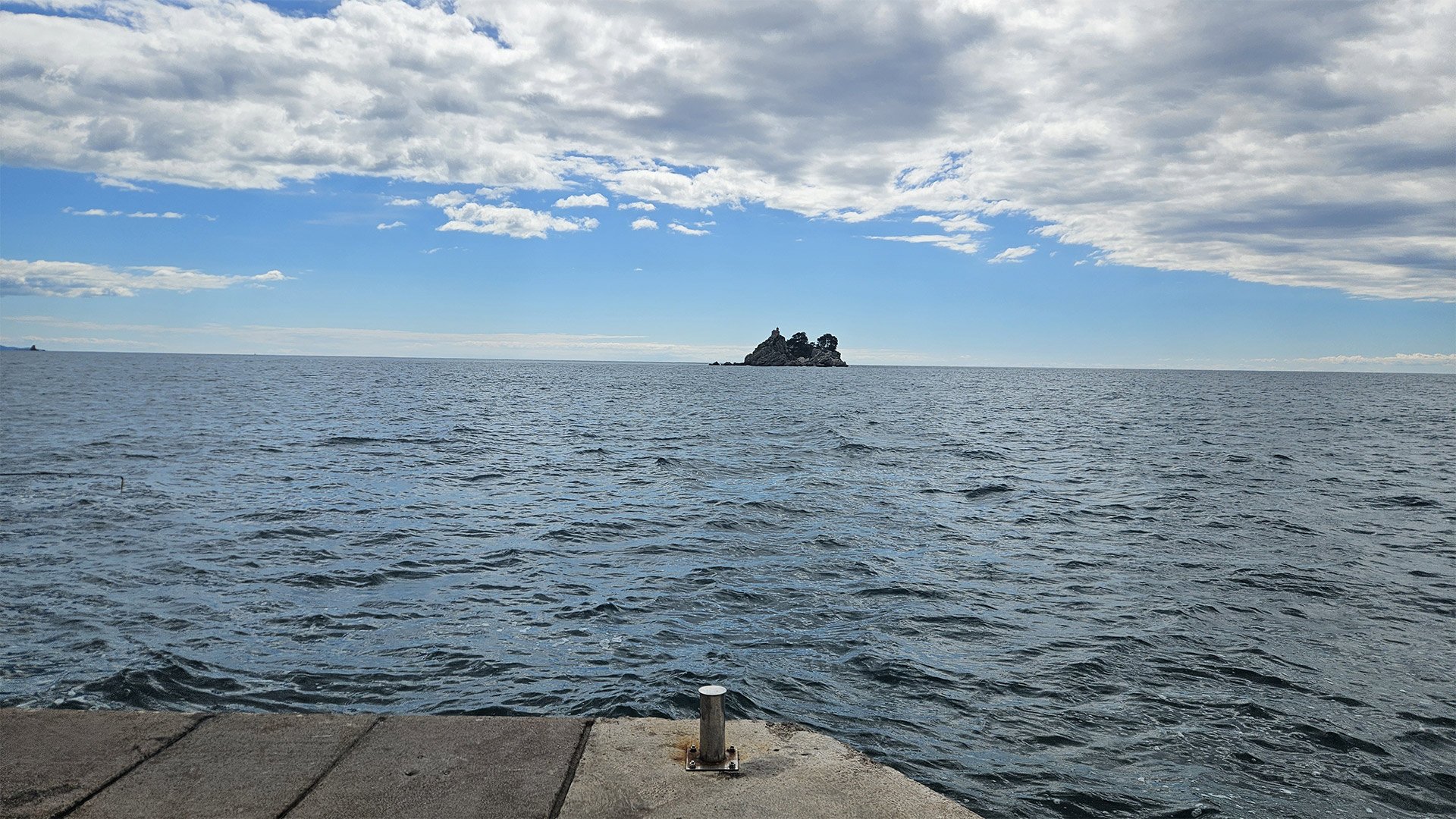
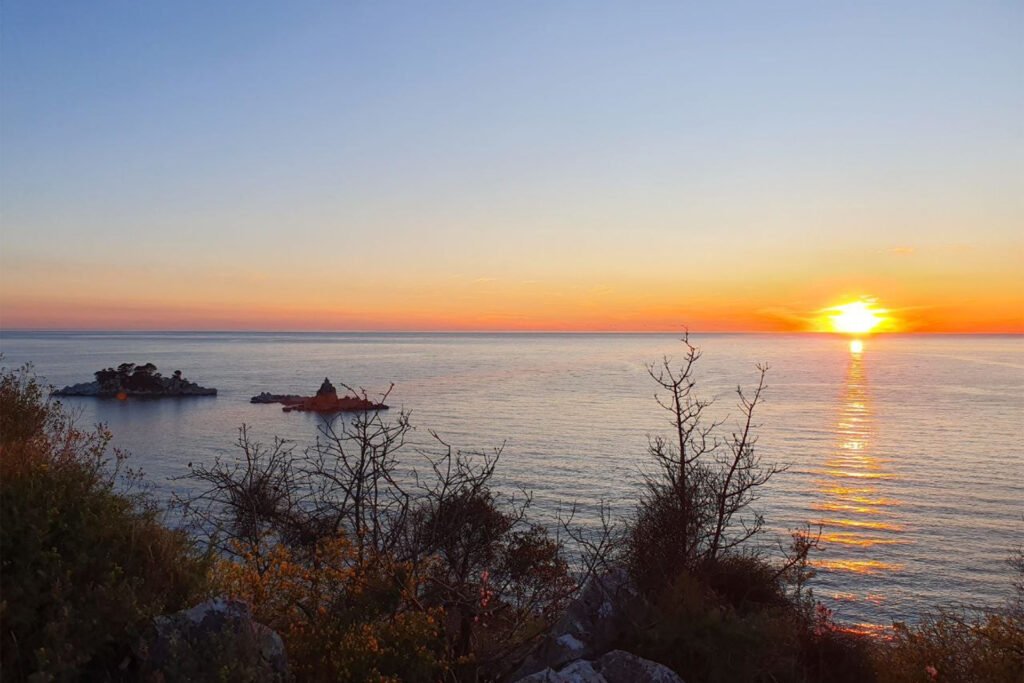
Opposite Petrovac Beach, two small islands—Katić and Sveta Nedelja—are visible. They have become almost emblematic of the city: without them, the view of the bay seems incomplete. The official maritime guide of the National Tourism Organization of Montenegro describes them as landmarks for sailors: Sveta Nedelja Rock and Katić Rock with its lighthouse lie south of the city.
Sveta Nedelja is especially beloved because of its tiny church perched on the cliff. The maritime guide links it to maritime tradition: the chapel was erected by sailors as a token of gratitude for safe voyages on stormy seas. This is precisely the case where it is better to speak carefully: not as a proven historical fact in the strict archival sense, but as a local maritime legend, enshrined in the tourist and navigational description of the region.
Roman Mosaics in Petrovac: Ancient Traces Beneath the Modern City
One of the most valuable, yet least-promoted, attractions in Petrovac are the Roman mosaics at the archaeological site of Mirište. This site is significant because it demonstrates that the territory of modern Petrovac was inhabited and integrated into the life of the Adriatic long before the Venetian fortress of Kastio, medieval Lastva, and the modern resort.
According to the Budva Tourist Organization, the first late-antique Roman mosaic floor was discovered in Mirište in 1902. Another mosaic fragment was later found there. Both likely served as floor decorations for a Roman building from the 3rd–4th centuries CE.
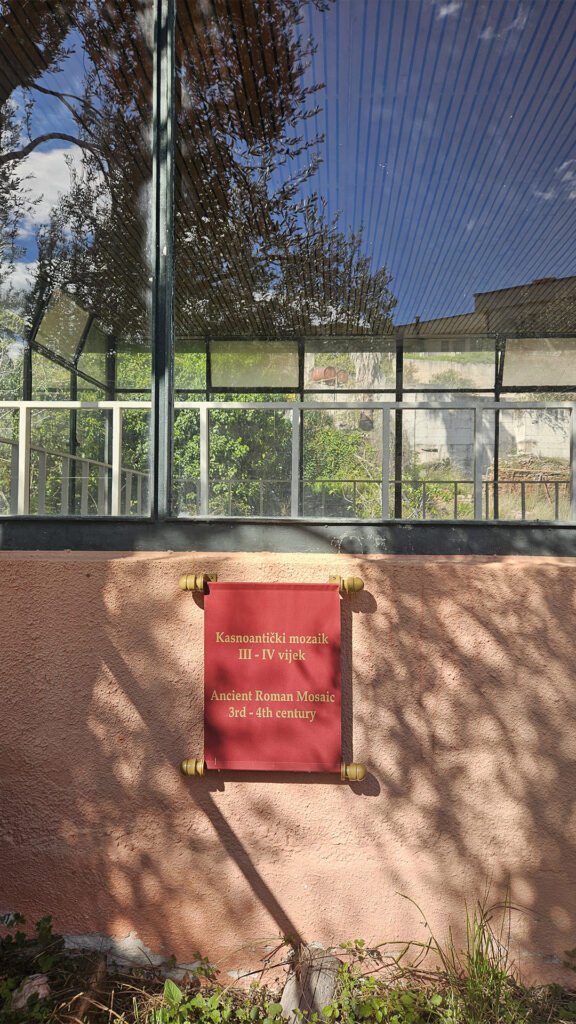
The motif of one of the mosaic floors is particularly interesting: it depicts three fish sharing a common head. This image immediately attracts attention—it appears almost mysterious and can be perceived as a symbolic motif related to the sea, abundance, or early Christian imagery. However, it is important not to take these interpretations as proven fact: the official description records the motif itself but does not provide a definitive explanation of its meaning. The second mosaic floor is more geometric in nature—a rectangular composition of 12 fields.
The archaeological context of Miriste is linked to the remains of a Roman building, which Budva municipal documents designate as Villa Rustica with mosaics. Such villas in the Roman era were typically agricultural farmsteads associated with agriculture, oil production, wine, or other coastal resources. In the case of Petrovac, this is especially logical: the sea, fertile land, old communication routes, and a convenient bay are nearby. However, the specific functions of this particular building require caution—there are no fully completed archaeological studies of the site.
The Roman mosaics of Petrovac are also valuable because they challenge the traditional perception of the city. Petrovac is usually associated with the beach, the promenade, the islands of Katić and Sveta Nedelja, the Kastio fortress, and family vacations. But the mosaics remind us that beneath this tranquil resort image lies a deeper history: Late Antiquity, Roman architecture, decorative art, and coastal life nearly two thousand years ago.
There is also a sad side. The official source explicitly states that archaeological research at the Mirište site is not yet complete, and adequate protection and presentation of the monument have not yet been ensured. Therefore, the Roman mosaics of Petrovac are not only a tourist attraction but also a reminder of how much of Montenegro’s cultural heritage still awaits careful study, preservation, and a fitting presentation to travelers.
Perazića Do Beach: A small cove beneath the Reževići Monastery
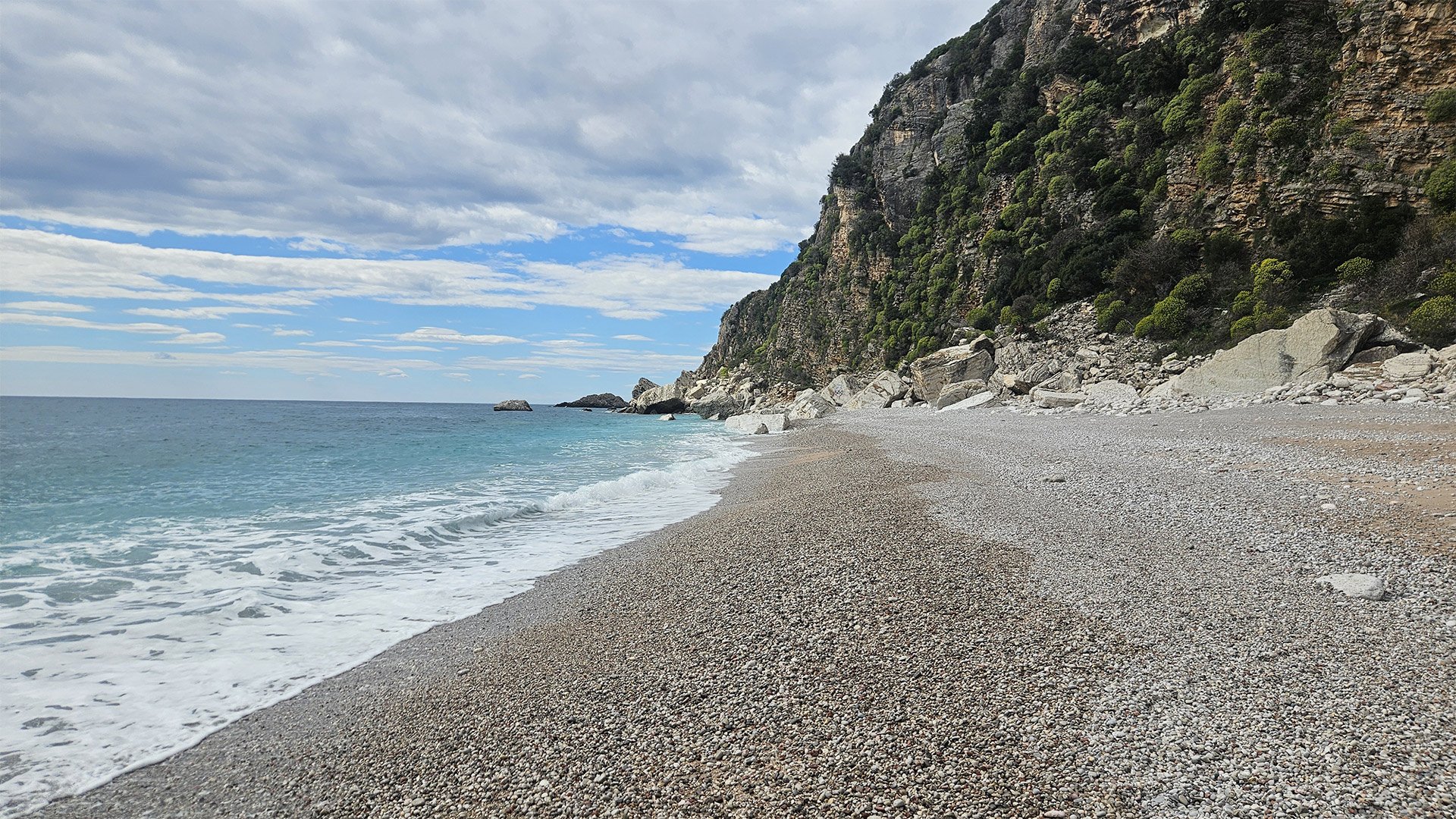
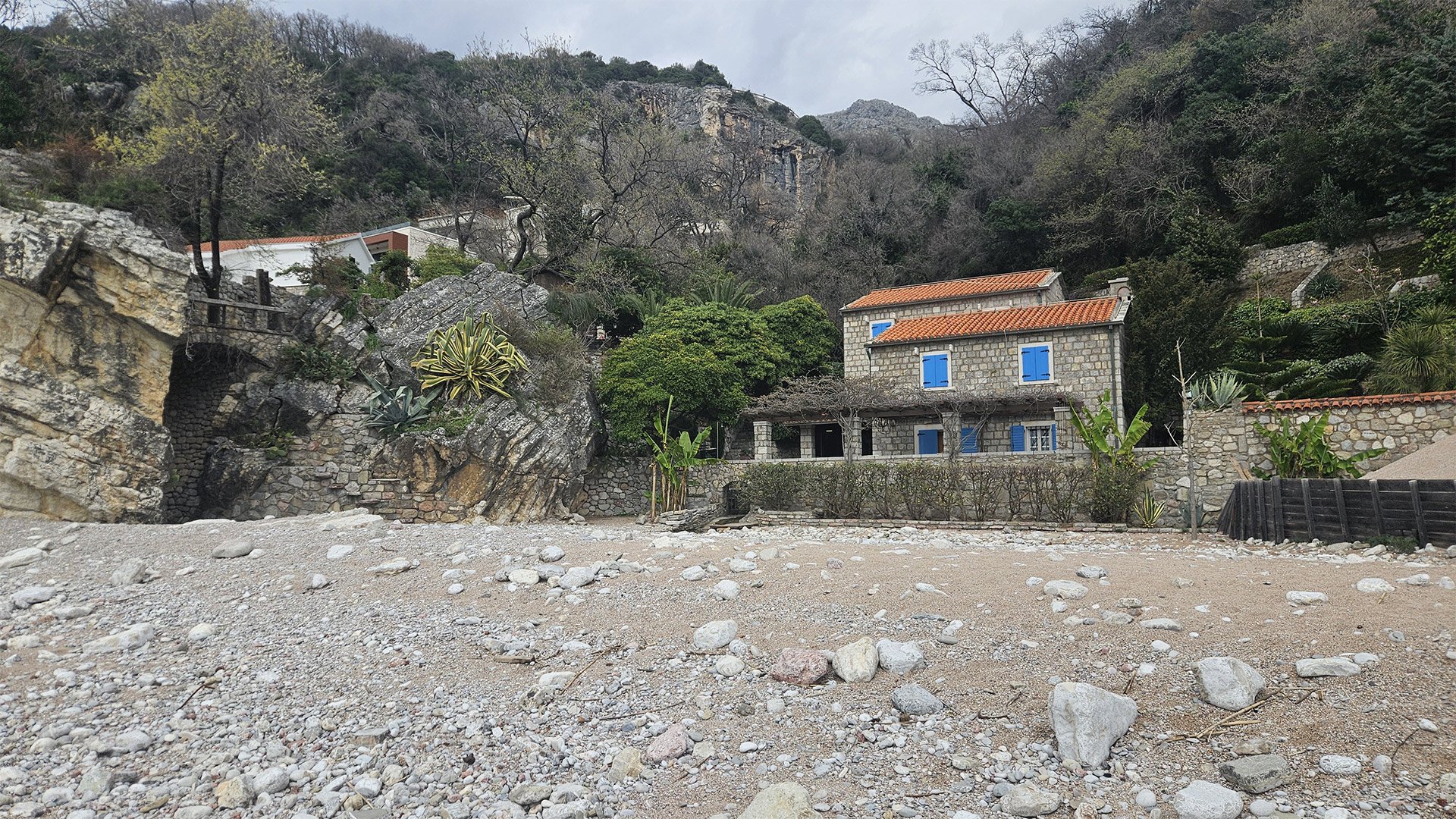
Perazića Do is one of the most atmospheric coves near Petrovac. Budva’s official description describes it as a small beach cove beneath the Reževići Monastery; it can be reached by turning off the Budva-Petrovac main road. The beach is covered in sand and pebbles, and its official dimensions are very modest: about 40 meters long and 540 square meters in area.
Perazića Do isn’t just about swimming. Above the cove lies the cultural context of Reževići. The official Budva website describes the Reževići Spomen-dom as being located along the Budva-Petrovac main road, next to the monastery, in a former school building from 1856, founded by Archimandrite Dimitrije Perazić; today, it houses a gallery, a library, and an ethnographic room.
Perazića Do isn’t an “urban service beach,” but rather a cove for those who enjoy a sense of solitude, stone, pine trees, and an old road. In the 1960s, according to the official description, beautiful summer houses were built in its rear, so the coast has long been perceived as a destination for those seeking natural beauty, not just in high season.
Fenix Beach: the modern name of a small, inaccessible cove
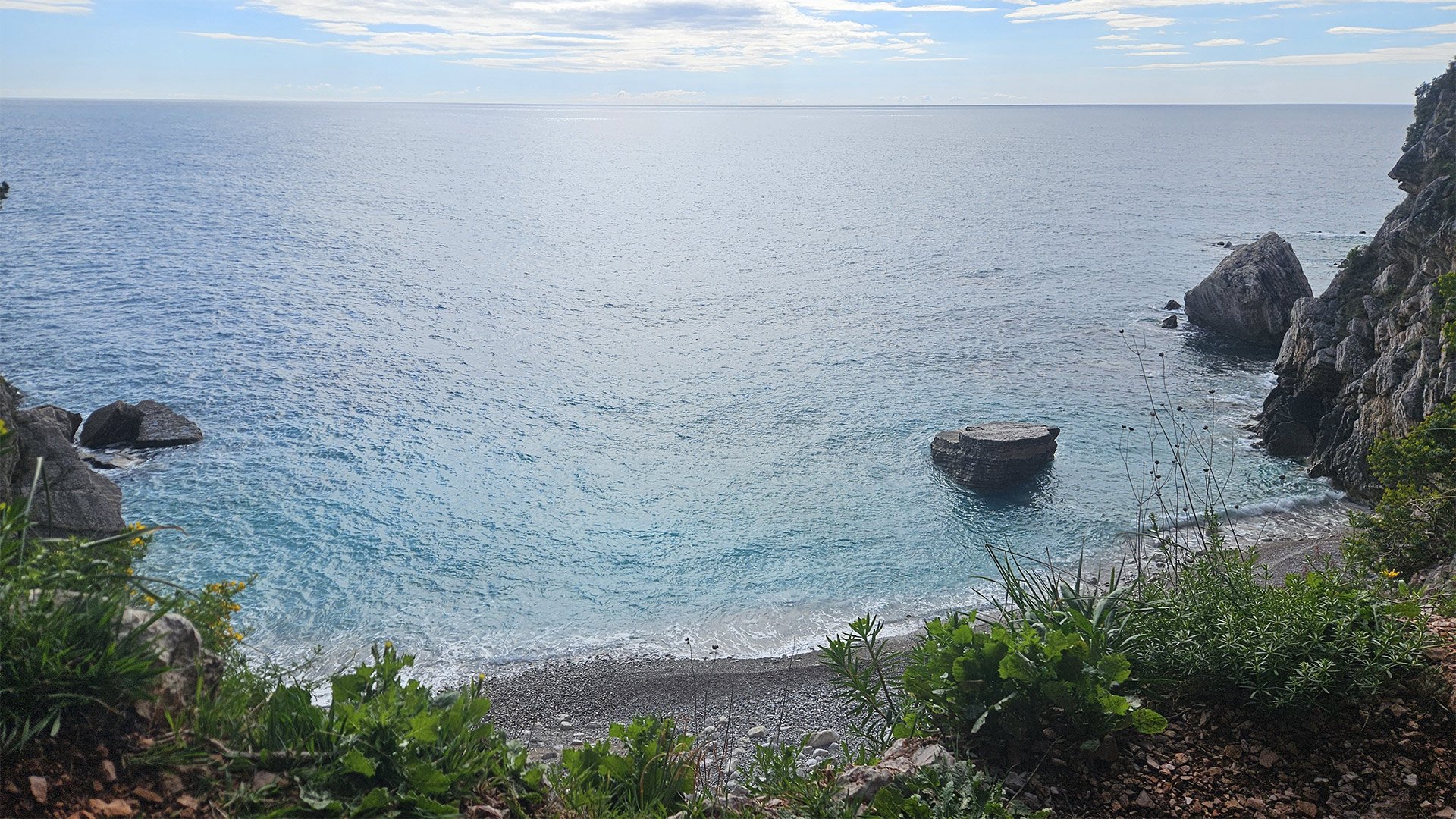
It’s important to be honest about Fenix Beach: in the official list of natural attractions of the Budva Tourist Board, this beach is not designated as a separate historical site like Lučice, Buljarica, or Perazića Do. Available cartographic and beach catalogs describe Fenix Beach as a rocky cove in the Petrovac-Reževići area, near coordinates 42.2072553, 18.9289091; it is also noted that access is essentially by sea – by boat, SUP, kayak, or water taxi from Petrovac.
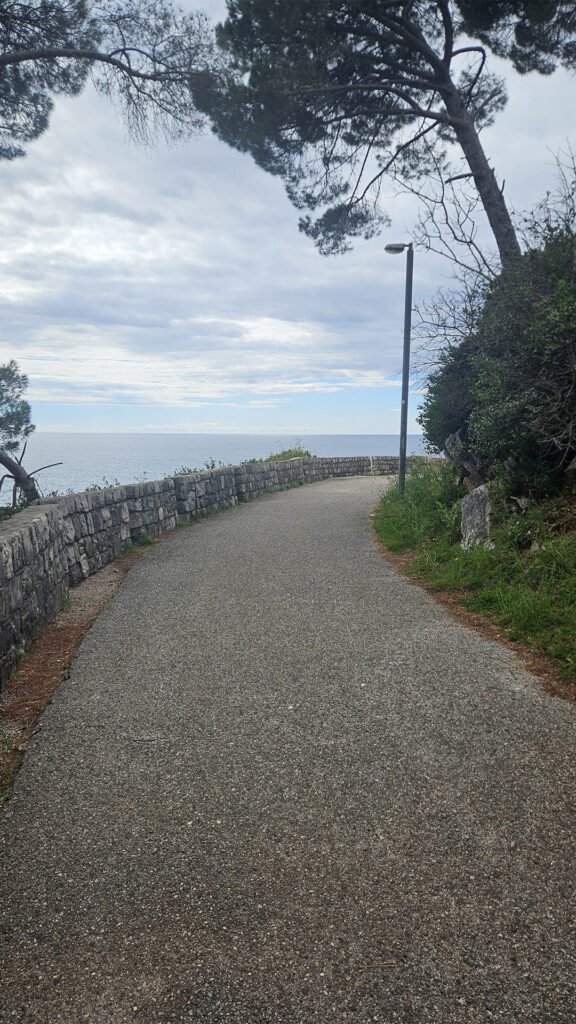
This is precisely what distinguishes Fenix Beach from city beaches. It’s not about a wide promenade, two rows of cafes, and strollers. Its image is of stone, sea, restricted access, and a sense of a “little secret” nestled between more well-known coastal spots. However, due to the lack of a comprehensive official historical reference, it’s best to think of Fenix not as an ancient toponym, but as a modern beach name for a small bay/swimming spot in the natural setting of Petrovac.
Petrovac Beach: the city’s main beach and its reddish sand
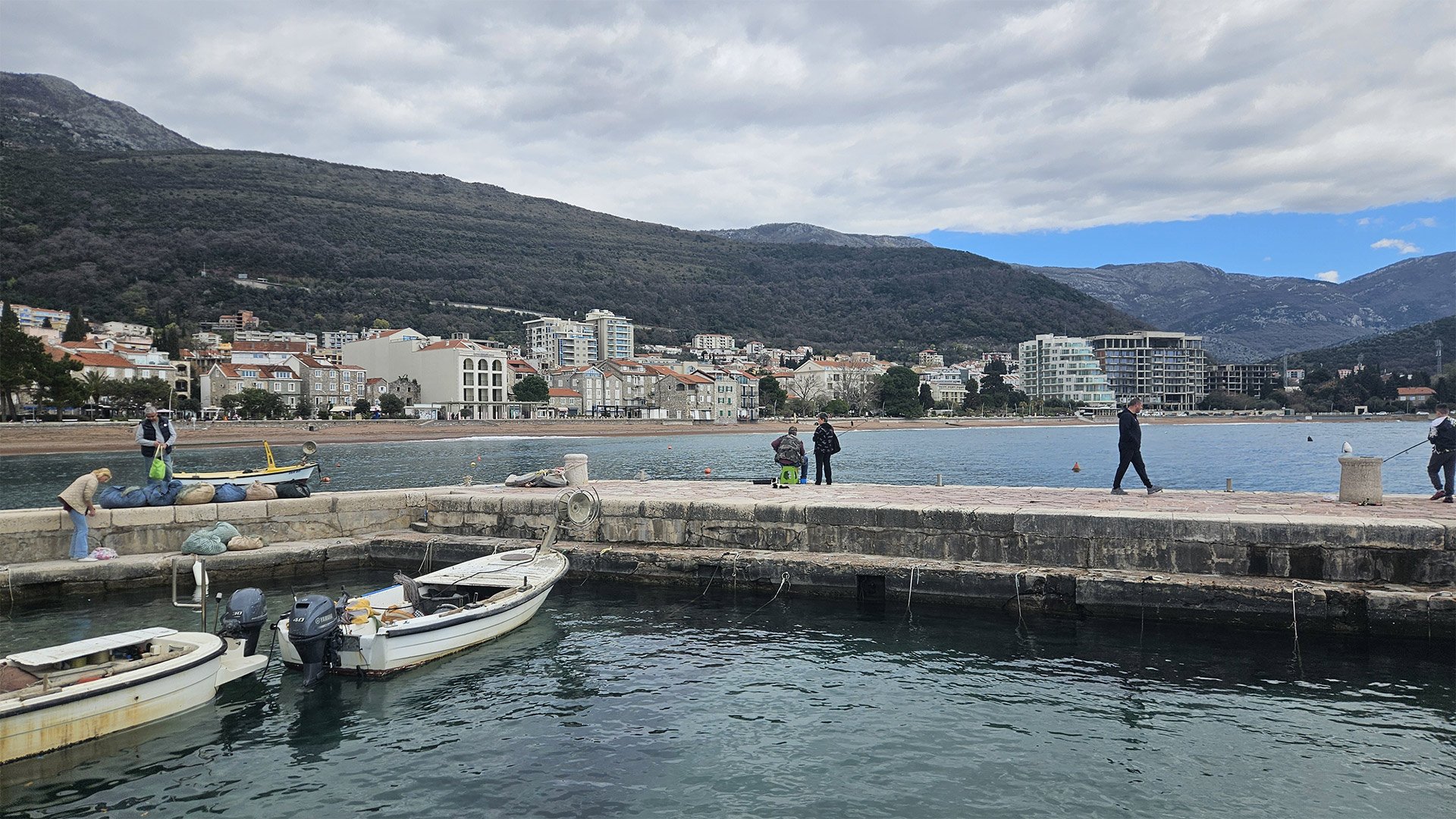
Petrovac Beach, or Petrovac City Beach, is the heart of the resort. It’s more than just a place to swim; it’s an extension of the city to the sea: a promenade runs along it, surrounded by houses, apartments, hotels, cafes, and restaurants. The official description of Budva emphasizes the reddish hue of the sand and also specifies the beach’s length—approximately 600 meters—and its area—9,525 square meters.
The islands of Katić and Sveta Nedelja, located a few hundred meters from the shore, add special beauty to the beach. The section of the sea up to these islets is officially designated a protected nature reserve; today, this image fits well with the broader status of the Katić Nature Park, which encompasses beaches, islands, underwater meadows, cultural monuments, and ancient sea routes.
Petrovac Beach is ideal for those who want to be “inside the city”: leave your apartment in the morning, walk to the sea in a couple of minutes, stroll to Kastio after a swim, and admire the islands at dusk in the evening. This is the most social beach in Petrovac—not the quietest, but the most atmospheric: here you can see the fortress, the promenade, the boats, and the small town life.
Lučice / Luchica Beach: pine trees, shallow water, and a cozy cove
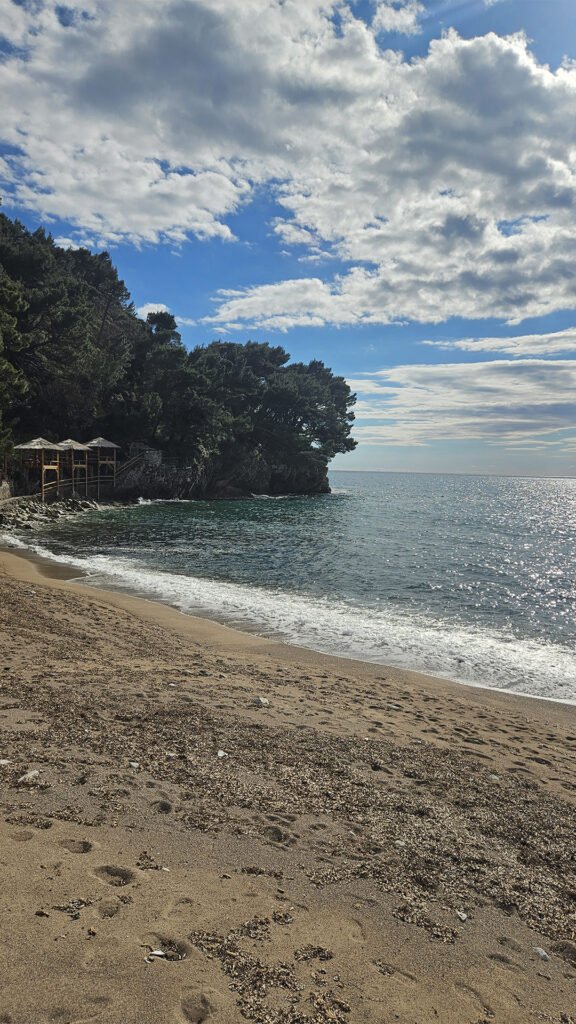
Lučice, often spelled Lučice or Lučica in Russian, is located approximately 500 meters south of Petrovac. The Budva Tourism Organization describes it as a beautiful beach in a bay between two capes, surrounded by cypresses and pine trees. The beach is sandy, with a shallow bottom; the fine sand has a golden-yellow color. The official dimensions are approximately 220 meters long and 4,250 m² in area.
Lucice is often perceived as a “softer” alternative to the city beach. It’s closer to nature, yet still easily accessible from Petrovac. An important detail from the official description is that the immediate rear area of the beach is undeveloped, lending the place a special charm. This is precisely why Lucice is so ideal for family vacations: the cove is compact, visually sheltered, framed by pine and cypress trees, and more intimate than the main city beach.
The Montenegro Nautical Guide also notes that the beaches in and around Petrovac are suitable for children. This doesn’t mean the sea is always completely calm—the Adriatic remains a sea, and the weather changes—but in general, the Petrovac area is considered one of the more family-friendly parts of the Budva Riviera.
Buljarica Beach: a long expanse and the wild edge of the Petrovac Riviera
Buljarica is the largest and most expansive beach in this group. Budva’s official website calls it the longest beach on the Budva Riviera and the second longest on the Montenegrin coast after Ulcinj: 2,250 meters long and 72,850 square meters in area. It is located approximately two kilometers from Petrovac towards Bar.
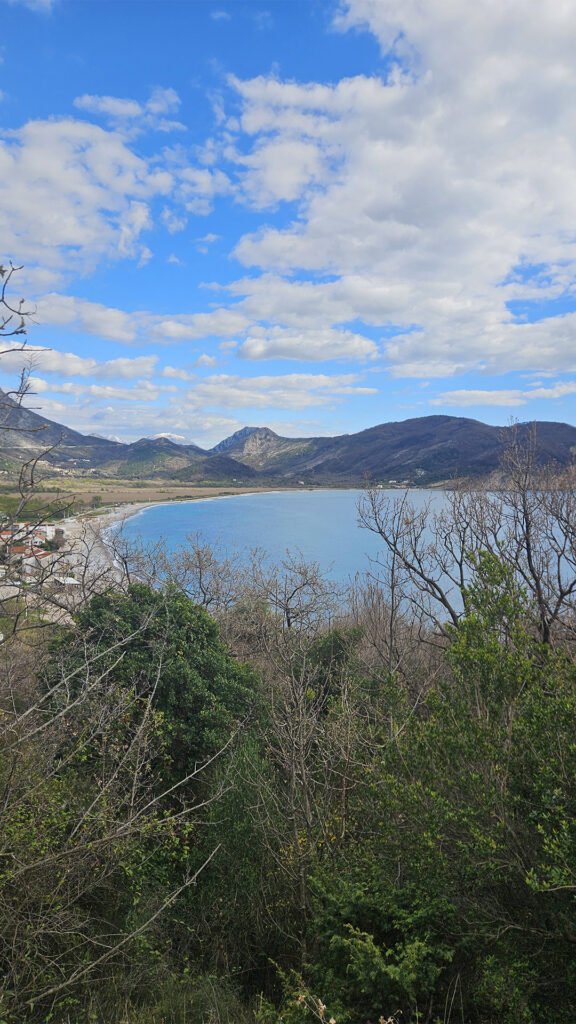
Buljarica’s surface is uneven: closer to Petrovac, it’s sandier, but overall, pebbles and rocks predominate. Its main advantage is its spaciousness. While Petrovac Beach is an urban scene, Lučice is an intimate cove, and Perazića Do is a small natural haven, Buljarica evokes the feeling of an open coastline. The official tourism organization explicitly notes that its length helps escape the summer crowds.
Another treasure of Buljarica is not only its beach but also the surrounding plain. Beyond the beach lies the marshy Buljarica Field, officially described as a nature reserve for numerous rare plant and bird species. This makes Buljarica more than just a “place with lots of sun loungers,” but part of a larger natural landscape: sea, pebbles, fields, birds, wetlands, and mountains in the background.
Petrovac Beaches as a Single Route
If you look at these beaches not separately but as a route, you’ll see a beautifully logical coastal sequence. Perazića Do and Fenix gravitate toward the northwestern, rockier and more secluded side. Petrovac Beach is the center, home to the city bay, fortress, islands, and promenade. Lučice is a gentle transition to the more natural south. Buljarica is the wide finale, where the coast opens up and becomes almost steppe-like in scale.
This chain is connected by the Katič Nature Park. It includes not only famous beaches but also two islands, seagrass meadows (Posidonia oceanica), coral communities, caves, and cultural sites: the Church of Sveta Nedelja, Kastel, Lazaret, and Mirishte. Therefore, a vacation in Petrovac can be perceived not as a simple change of beaches, but as a journey through a small historical and natural system.
Legends and Tales: Where Fact Ends and Memory Begins
Petrovac has several stories that are best described as legends. The first is Sveta Nedelja: a chapel on a cliff is associated with the gratitude of sailors for their rescue and safe passage in stormy seas. This is not a dry date from the archives, but a strong part of the local maritime memory.
The second is the Paštrovići monastery line. The Budva Municipal Cultural Development Program cautiously states: “according to legend,” churches of future monastery complexes were founded in the medieval period, including Reževići in 1223. For travelers, this is important not as a reason to debate the exact date, but as a key to understanding the coast: here, monasteries, schools, reading rooms, harbors, and beaches long coexisted, forming an inseparable maritime culture.
Third, Kastio as a symbol of the old maritime Petrovac. Here, the facts are more solid: a Venetian fortress, a garrison, wine warehouses, a quarantine lazaretto. But a legendary aura always grows around such places—pirates, epidemics, merchant ships, night lights, warehouse vaults, stone walls by the water. And in this sense, Petrovac is good because it doesn’t require any special “invention” of an atmosphere: it is born from real history.
Заключение
Petrovac is not the most famous city in Montenegro, and that is precisely its strength. It rests on a balance: ancient mosaics and beach umbrellas, the Venetian fortress and children’s bathing in Lučica, the reddish sand of the city beach and the damp fields of Buljarica, the legend of sailors on Sveta Nedelja, and modern Fenix Beach, which is easier to reach by sea than by land.
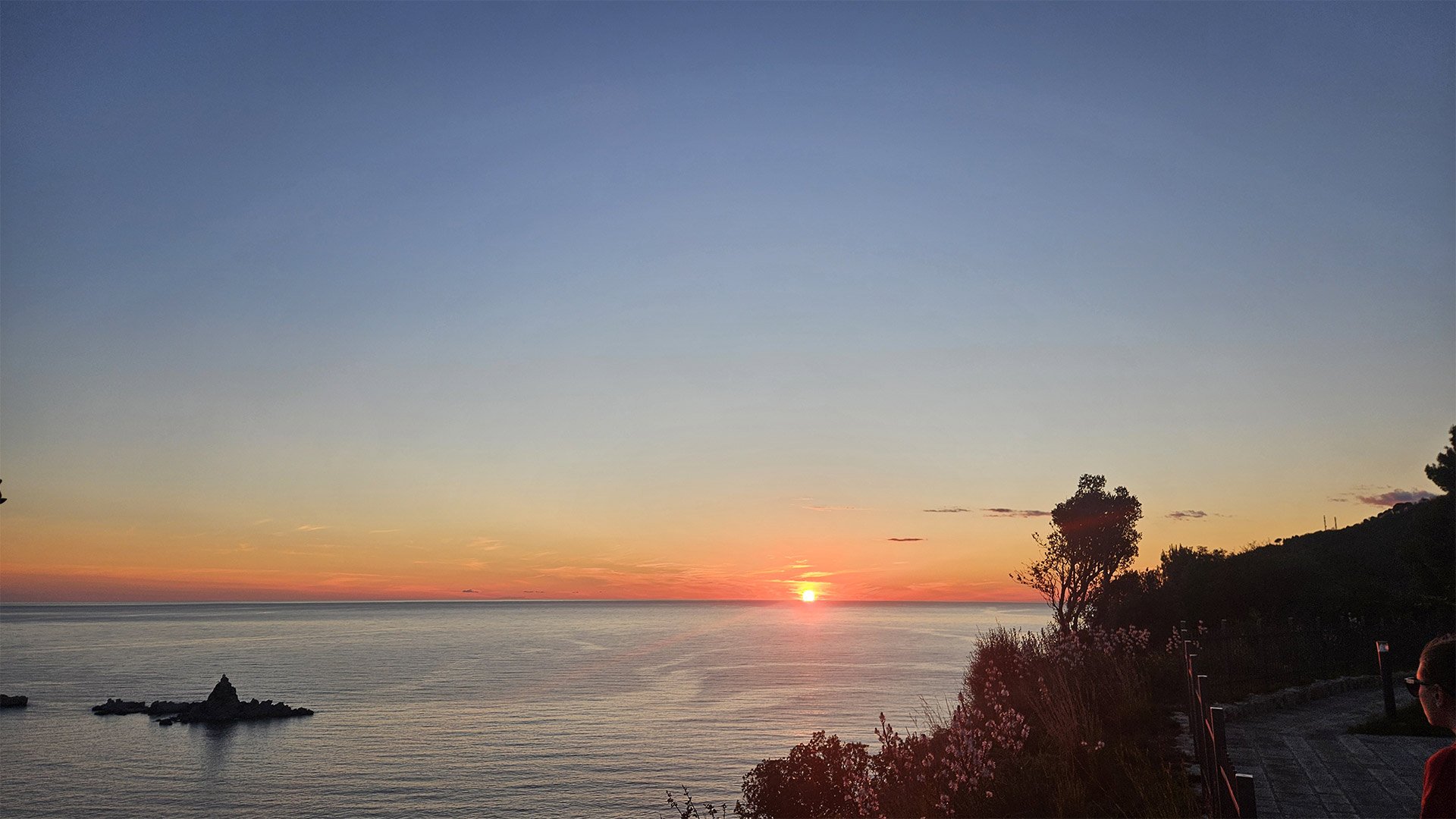
If we were to choose one image of Petrovac, it would be the view from the embankment of the islands of Katić and Sveta Nedelja: the sea and legend ahead, Kastio and the memory of Venice to the side, the city behind us, reddish sand underfoot, and further along the coast, a chain of coves, each with its own character.