



The recent situation with the AI models Claude Fable 5 and Claude Mythos 5 showed something important: business websites are becoming more dependent on external services.
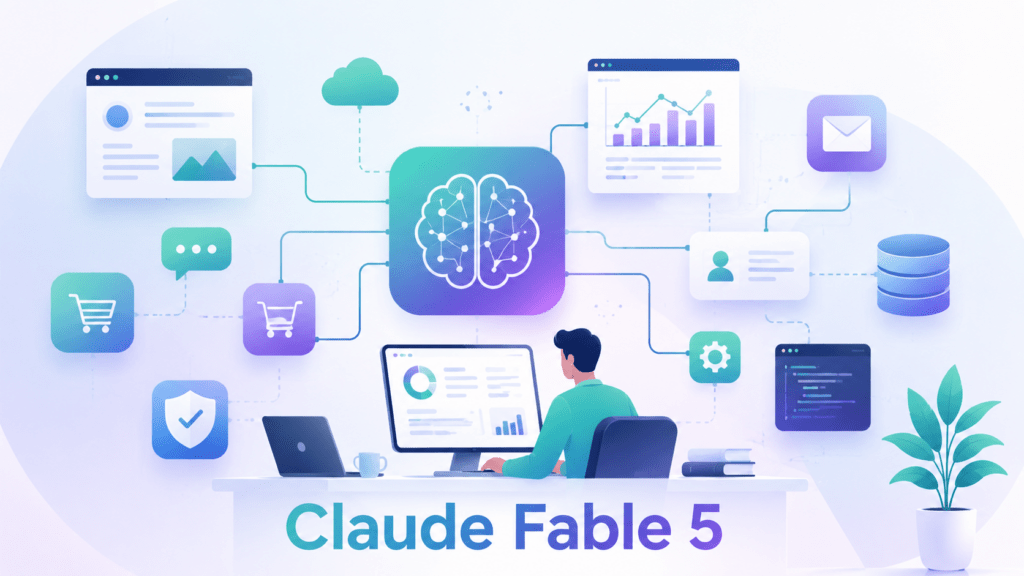
These services can include AI tools, plugins, payment systems, CRM platforms, email marketing tools, chatbots, analytics, cloud platforms, and other solutions that help a website work better.
When everything works normally, these dependencies are easy to ignore. But if access to an important service suddenly changes, it can affect the website, the team, and the customers.
What Happened
In June, Anthropic released new AI models called Claude Fable 5 and Claude Mythos 5.
Later, U.S. authorities temporarily introduced restrictions on access to these models because of security concerns. As a result, Anthropic had to limit access to them for users.
After that, the restrictions were lifted, and access to Fable 5 started to be restored.
At first, this may seem like news only for large technology companies. But there is a simple and important lesson for any business: if your website or team depends on an external tool, you need to understand what will happen if that tool becomes temporarily unavailable.
Why This Matters for Business Websites
Your website will probably not stop working just because one AI model becomes unavailable for a while.
But the problem may not be in the website itself. It may be in the processes around it.
For example, your team may use AI for:
— preparing website content;
— answering customer questions;
— creating product descriptions;
— processing customer requests;
— supporting marketing tasks;
— checking code;
— finding errors;
— working with a knowledge base;
— supporting customers through a chatbot.
If such a tool suddenly stops working, the team may slow down. Customers may wait longer for answers. Website updates may be delayed. Support and marketing teams may face extra workload.
That is why it is important not only to use new technologies, but also to understand how much your business depends on them.
A Modern Website Is More Than Just Pages
In the past, a website was often just a set of pages with information about a company.
Today, a website is part of a larger business system.
It may be connected to:
— hosting;
— WordPress or another CMS;
— plugins;
— payment systems;
— CRM platforms;
— contact forms;
— email marketing tools;
— analytics;
— chatbots;
— AI tools;
— booking systems;
— external APIs.
All these tools help a business work faster and more conveniently. But each of them also creates a dependency.
If one important service changes its rules, pricing, availability, or terms of use, it can affect the website and the team’s work.
A Simple Example
Imagine an online store.
It uses AI to create product descriptions, a chatbot to answer customer questions, and an external service to recommend products.
If the AI service becomes temporarily unavailable, the store may still be able to accept orders. But the team may find it harder to add new products quickly, answer some customer questions, and update content.
Or imagine a B2B company.
It uses AI to prepare articles, process website requests, and support the sales team.
If access to the tool changes, the website may not “break,” but internal workflows may slow down.
That is why it is important to understand in advance which tools are critical for the business.
The Main Lesson for Businesses
AI and other external services should be treated as an important part of the website.
If you use an external tool, you should know:
— where exactly it is used;
— why it is needed;
— what data passes through it;
— who is responsible for setting it up;
— what will happen if it stops working;
— whether there is a backup option.
This does not mean that businesses should avoid AI or external services. On the contrary, they can be very useful.
But they should be used thoughtfully.
AI Should Not Have Full Access to Everything
AI can help with website-related work, but it should not have more access than necessary.
For example, an AI tool can help prepare text for a web page, but a person should still review it before publication.
AI can help a developer find an error, but it should not change a live website on its own without a specialist checking the result.
A chatbot can answer common customer questions, but complex or sensitive requests should be passed to a human.
This approach helps businesses use AI safely and reduce unnecessary risks.
What Website Owners Should Check
If your business uses a website, now is a good time to do a simple review.
Start with a few questions.
1. Which external services are connected to the website?
Make a list of the tools your website depends on.
These may include plugins, CRM systems, payment systems, chatbots, analytics, email services, AI tools, and other solutions.
2. Which of them are truly important?
Not all services are equally critical.
Some simply make the team’s work more convenient. Others directly affect sales, leads, payments, customer support, or security.
It is important to understand which tools your business cannot work properly without.
3. Is there a backup plan?
If the chatbot stops working, who will answer customer questions?
If the AI content tool becomes unavailable, can the team still update the website manually?
If an external service changes its pricing or limits, is there an alternative?
A backup plan does not have to be complicated. The most important thing is that the team understands what to do.
4. Who is responsible for support?
Every important service should have someone responsible for it.
Who monitors updates? Who checks security? Who understands how the integration works? Who can solve a problem quickly?
If no one is responsible, even a small technical issue can become a serious problem.
5. What data is shared with external services?
This is especially important if the website works with personal data, orders, payments, customer accounts, or private company information.
You need to understand what data is shared with third-party tools and whether it is handled safely.
The Main Risk Is Using Technology Without Control
AI can be a strong advantage for a business.
It helps write content faster, answer customers, analyze information, find errors, and automate routine tasks.
But problems start when tools are connected without proper review.
For example:
— installing a plugin without understanding what data it collects;
— connecting a chatbot without testing it properly;
— using AI for important content without human review;
— depending completely on one service;
— not knowing who is responsible for integrations and support.
Technology should help the business, not create hidden risks.
How Starlight Group Can Help
Starlight Group helps businesses build, support, and improve websites with a focus on reliability, security, and long-term usability.
We look not only at how a website looks, but also at how it works every day.
We can help check:
— which services are connected to your website;
— which plugins and integrations are outdated;
— which external tools may affect website performance;
— whether there are security risks;
— how much your website depends on AI tools;
— whether backup processes exist;
— whether external scripts slow down the website;
— whether updates and support are handled correctly.
We also help businesses implement AI tools in a thoughtful and safe way — not because AI is trendy, but because it can bring real value.
This may include AI customer support, help with content creation, improvement of internal processes, or connecting AI to a company knowledge base.
Check Your Website Before Problems Happen
If your website depends on AI tools, plugins, external APIs, CRM systems, payment platforms, or cloud services, it is better to check everything in advance.
This can help you find weak points before they affect customers, sales, or your team’s work.
Contact Starlight Group to audit your website, improve its reliability, and build clear support for the technologies your business depends on.