

There are places that are easily mistaken for an ordinary seaside resort: a long coastline, hot air, a promenade, and the bustle of summer. Sutomore certainly looks like that at first glance. But a historian sees it as more than just a beach town; it’s an ancient border zone where maritime trade, military strategy, and the Christian traditions of two rites converged for centuries. The official tourism portal of the Bar Riviera calls Sutomore the most popular tourist destination on the Bar Riviera and traces its origins to a fishing village on a long sandy beach. According to Montenegro’s official statistics, Sutomore had 1,992 residents in the 2011 census, making it a truly small coastal town by regional standards, not a large urban center.
Sutomore’s secret is that it straddles two eras. Below, there’s the resort rhythm of the Adriatic; above, there are the remains of fortifications, old churches, and the memory of the Venetians, Ottomans, and local communities that shared the same shore for centuries. It’s no coincidence that Montenegro’s official portal lists the Haj-Nehaj Fortress among the most important cultural and historical monuments of Bar, along with Old Bar and King Nikola’s Palace.
Maljevik Beach: A Small Bay with a Big Story
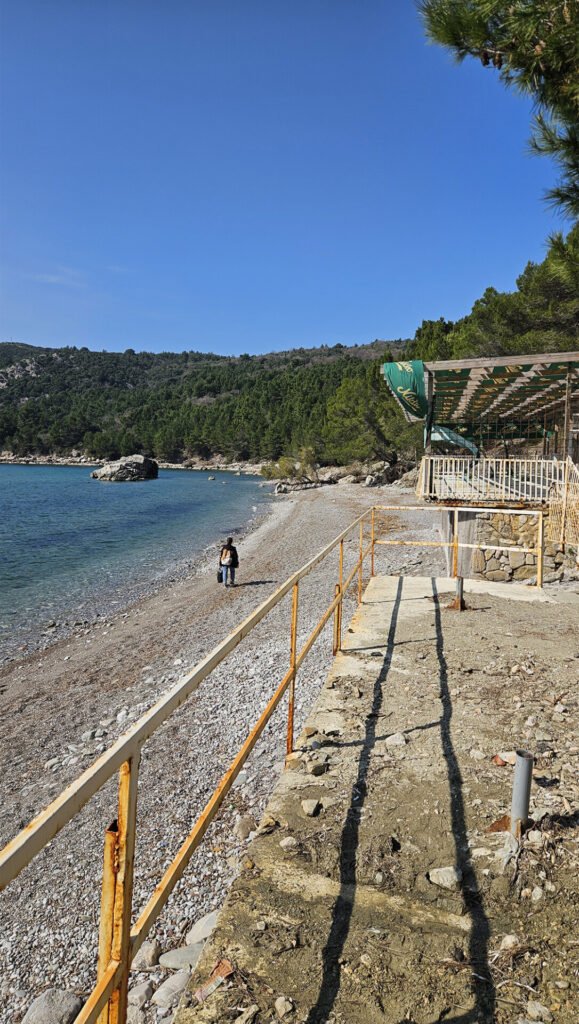
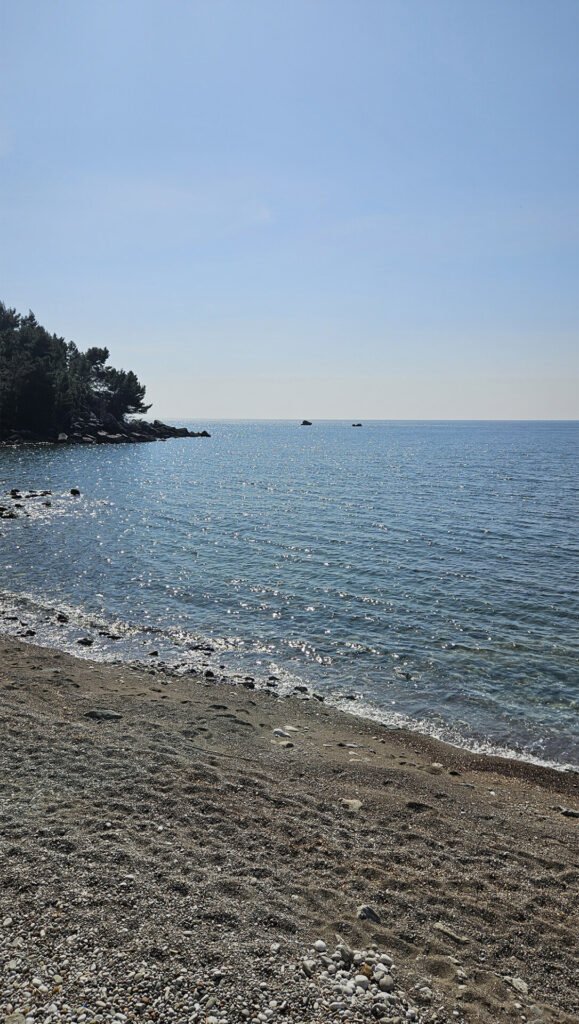
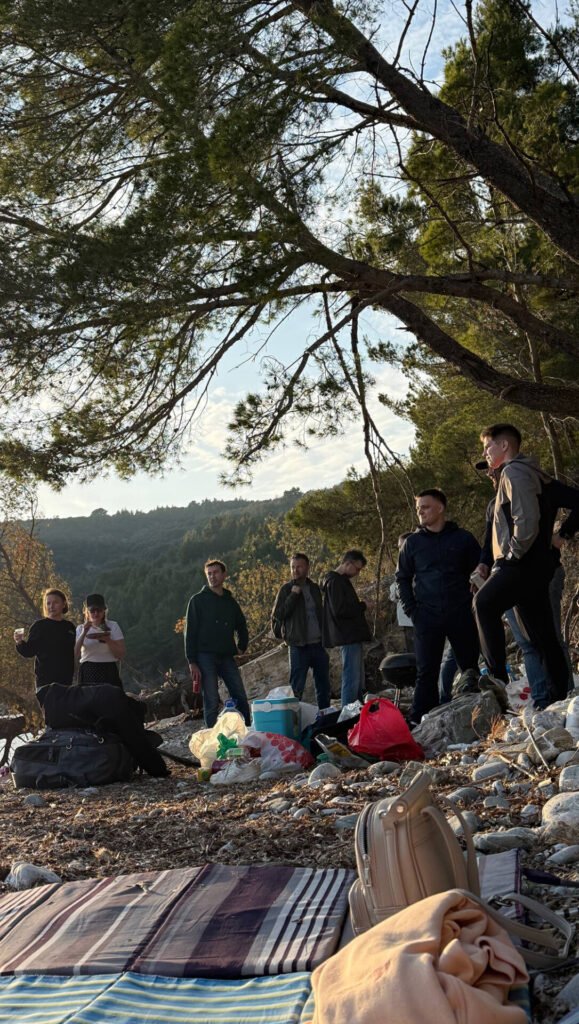
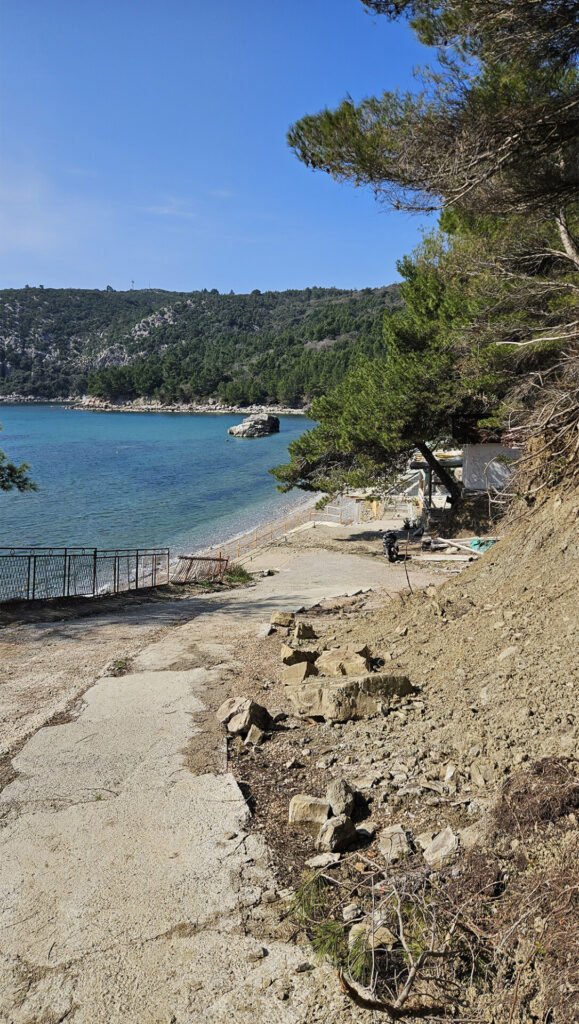
If Sutomore’s main beach is the stage, Maljevik is more like a backstage area, where the place unfolds without the resort hustle and bustle. The official tourist portal TO Bar describes Maljevik as a 330-meter-long pebble beach between Čanj and Sutomore, covering approximately 1,200 square meters. It also emphasizes the exceptional clarity of the water and the rich underwater world.
But Maljevik’s size and water clarity aren’t the only things that matter. Montenegro’s National Tourism Portal describes the bay as a hidden corner amid a pine forest, accessible on foot or by car, and notes the local mud as part of a natural thalassotherapy treatment well-known to locals. It’s worth being clear here: this is a description of a tourist and natural destination, not a medical recommendation. And yet, the fact itself is telling—Maljevik is perceived not simply as a beach, but as a stretch of coastline with its own natural reputation.
Even more importantly, Maljevik is embedded within a broader conservation context. The state-owned company Morsko dobro (Morsko dobro) lists the beach as part of the protected area of the “Katič” Nature Park, the second integrated coastal and marine protected area on the central Montenegrin coast. This explains a lot: Maljevik is valued not for its infrastructural “loudness,” but for its landscape integrity—for that rare case where the shore, sea, and surrounding terrain still read as a single natural space.
This is precisely why Maljevik makes a strong impression on someone interested not only in relaxation but also in cultural geography. Such coves on the Adriatic have always been more than just a place to swim: they served as natural shelters, landmarks on the coastline, areas where local experiences of sea and land were passed down through generations. Today, this is felt in a different way: here, it is especially clear how much Sutomore is not limited to its “central” beach.
Nehaj Fortress: A Fortress That Explains Everything
The fortress on the mountain, not far from Sutomore, is called Nehaj – Nehaj-Grad. Just NEHAJ, without any “Haj.”
Haj is nearby, but still completely separate. This is the Golo Brdo Fortress. The area around Nehaj is called Zagražde.
The tunnel nearby is Haj-Nehaj. And there’s no mistaking this: from Haj to Nehaj.
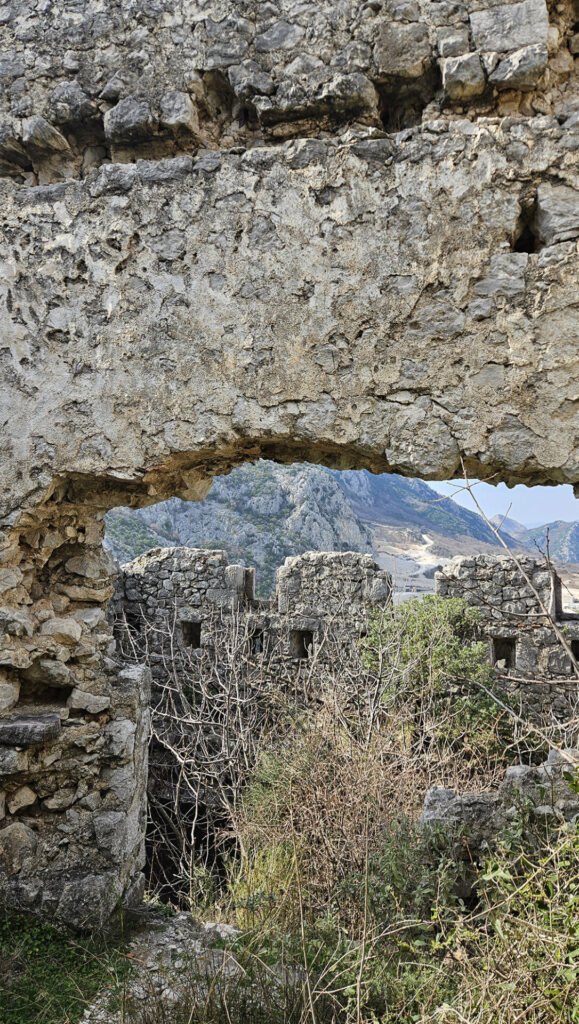
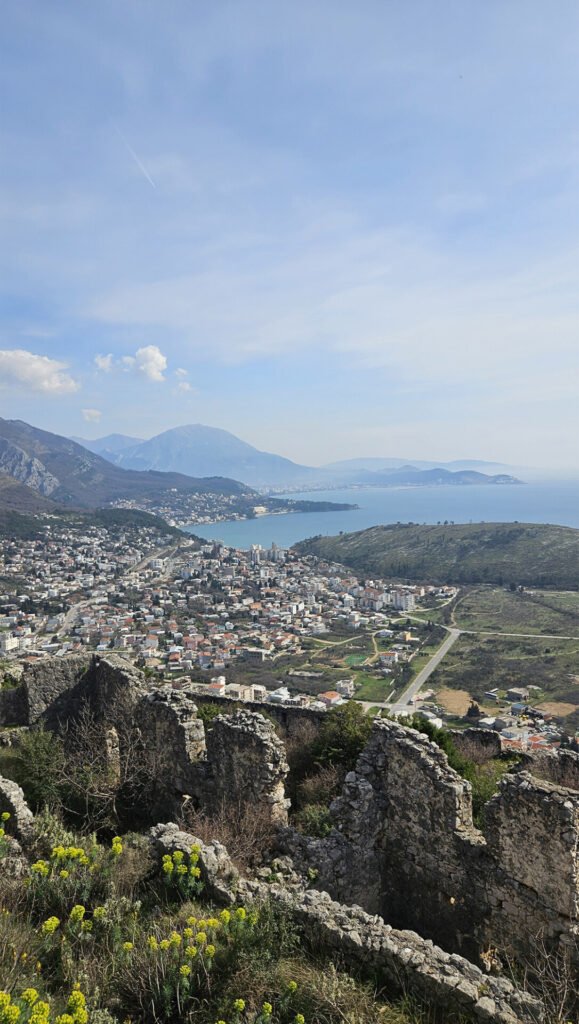
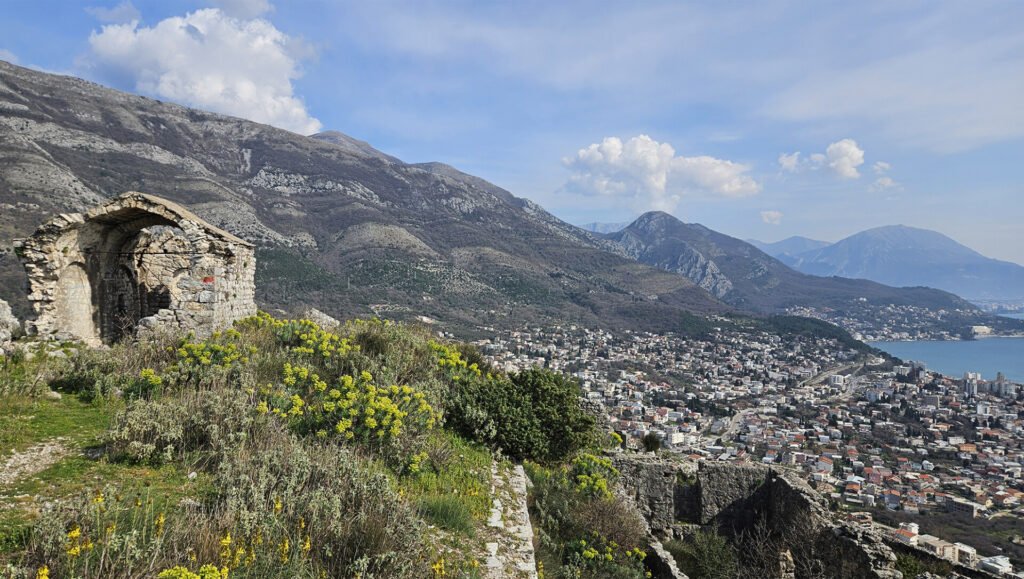
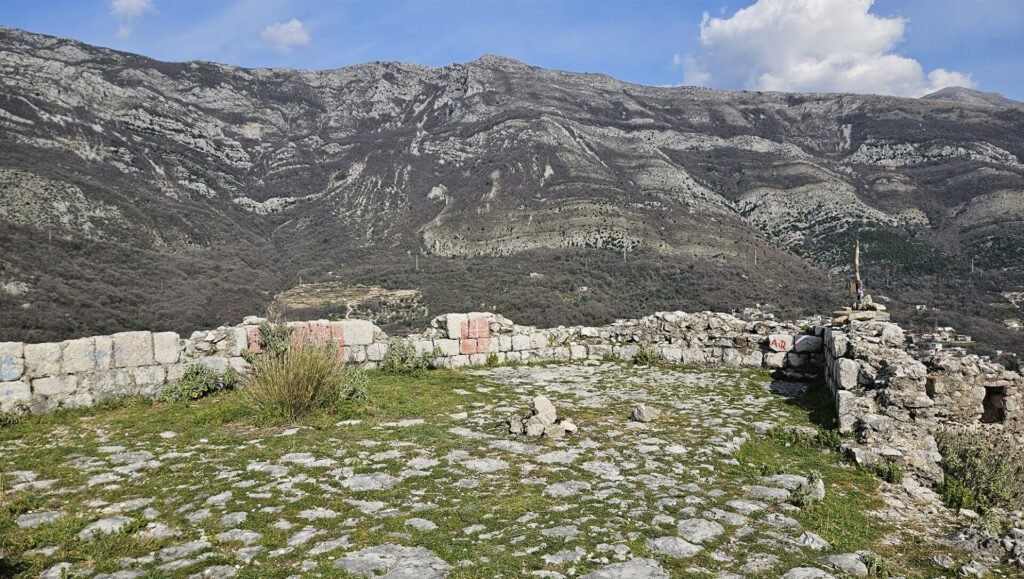
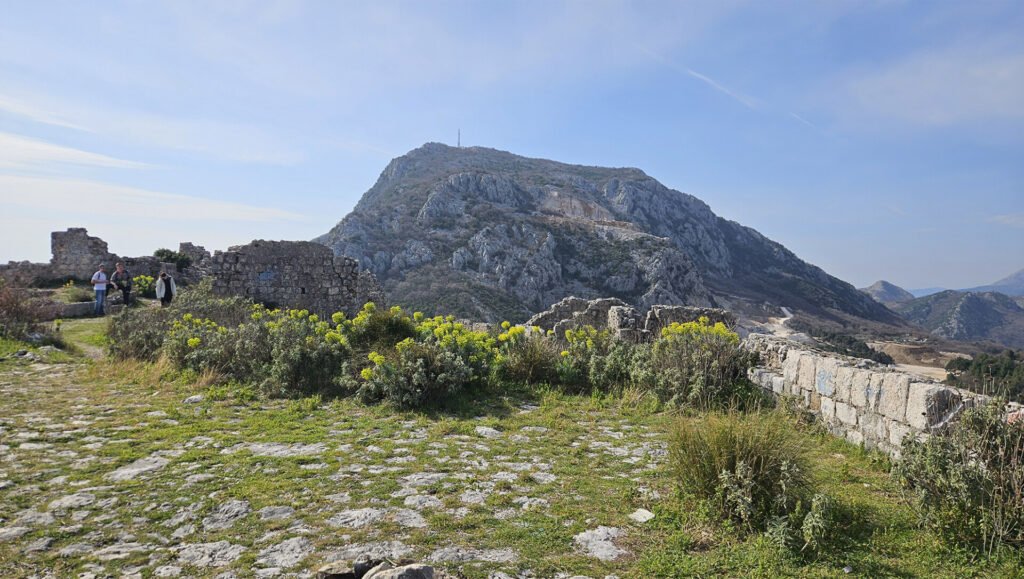
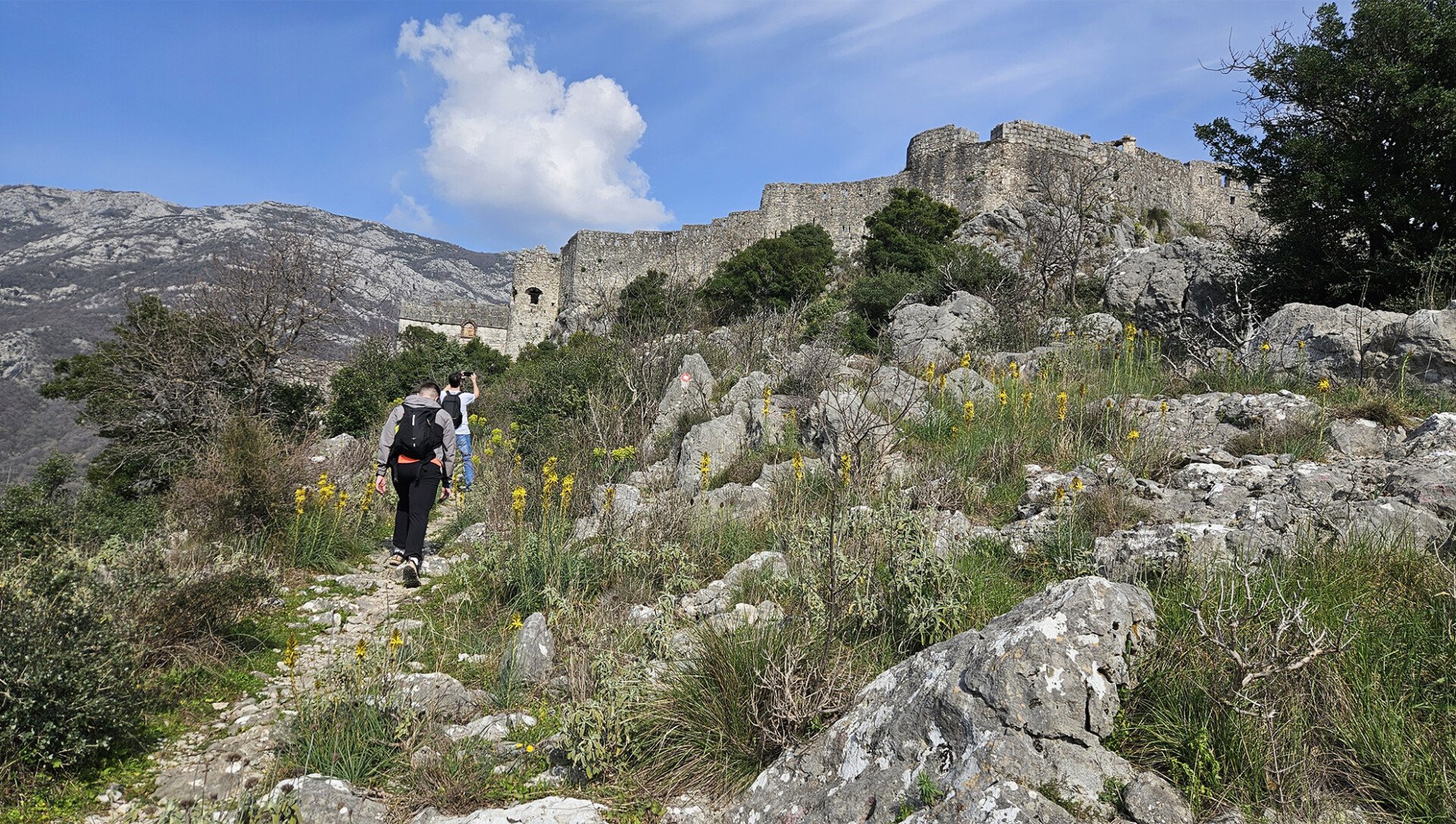
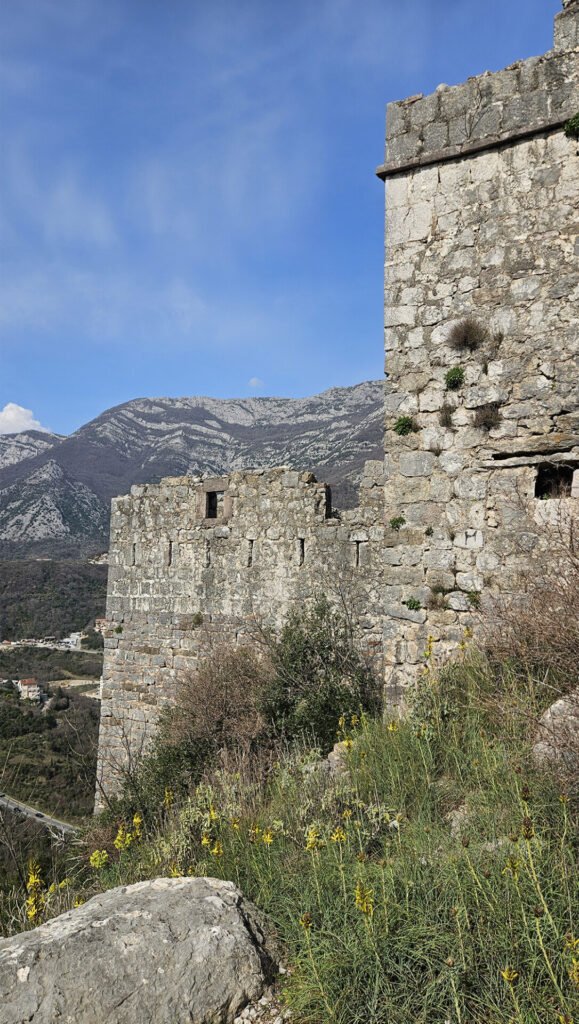
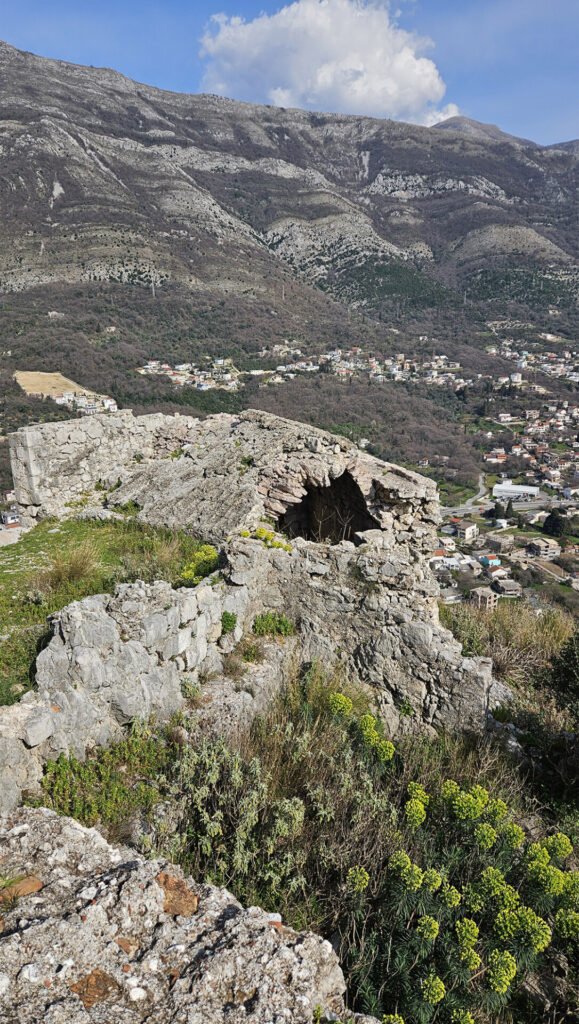
To truly understand Sutomore, you need to look up—to Nehaj. Official tourist information for the Bar Riviera and Montenegro calls it a medieval fortified town from the 15th century. The panoramic route TO Bar explicitly states that the fortress was built by the Venetians for defense. This statement is crucial: Nehaj was not a decorative “castle by the sea,” but was part of the defensive logic of the Adriatic border world.
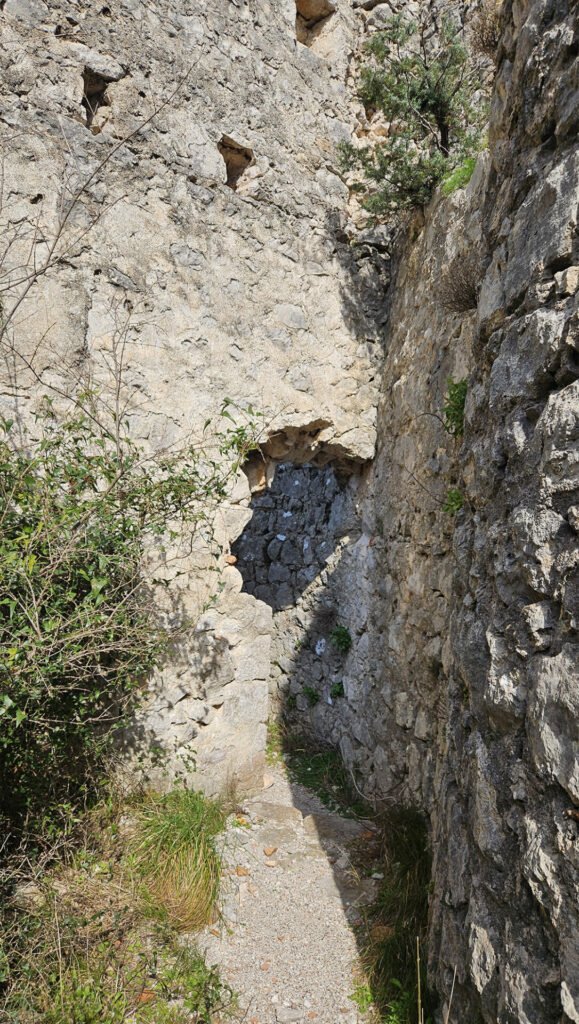
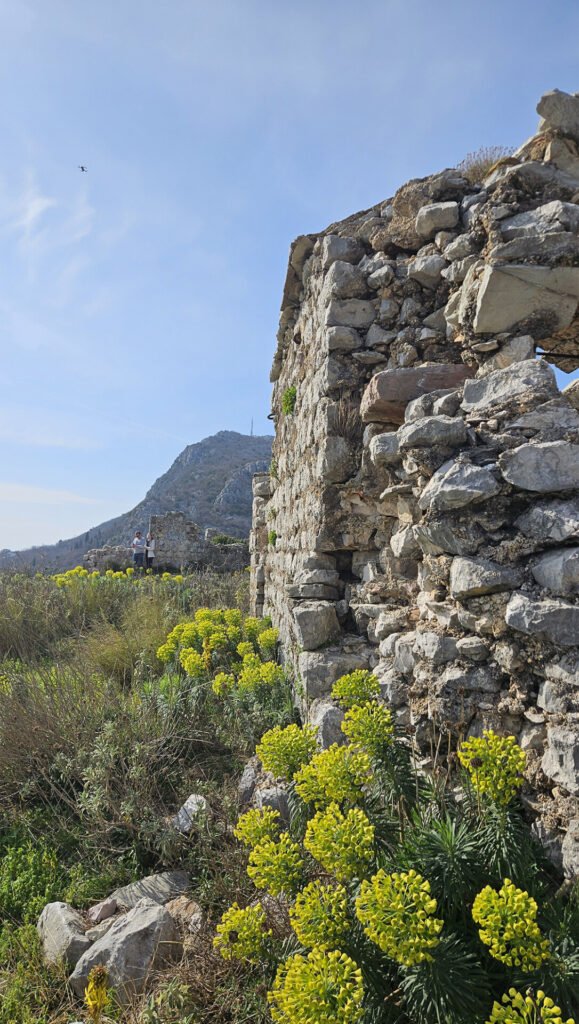
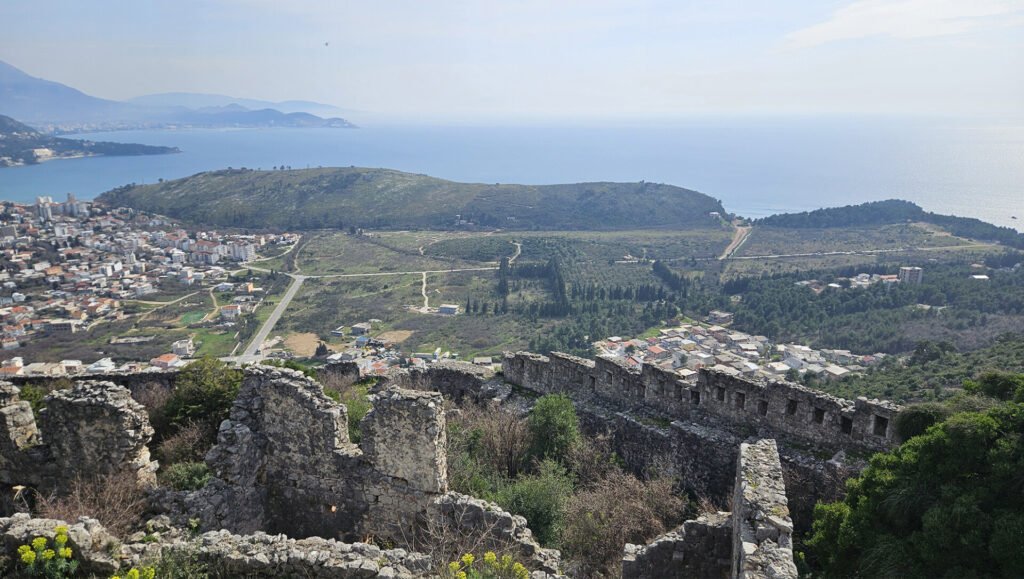
Bar municipal documents add the necessary historical context to this picture. One official document states that the fortress is partially preserved, that it was used by both the Venetians and the Ottomans, and that Nehaj was first mentioned in written sources as a fortified Venetian town in the 16th century under the name Fortezza dei Spizi. It also states that the fortress stands on a steep cliff approximately 230 meters high and is accessible only from the western side. This is a near-complete description of its character: a fortress of observation, control, and a difficult assault.
The very name Nehaj seems made for a borderland story. Even without delving into later folk interpretations of the name, it’s enough to look at the topography: this fortress is born of the landscape. It doesn’t dominate the surroundings like a ceremonial palace, but rather grows into the cliff and works with it. From the heights of Nehaj, Sutomore ceases to be just a resort: From here, you can see how the coastal strip connects the sea, internal roads, and mountain passes. This is the historical value of the point.
A church inside the fortress and a rare Montenegrin theme—”two altars.”
The most subtle and perhaps most underappreciated detail of Nehaj is not on the outside, but within the walls. The official TO Bar website states that the fortress houses the 13th-century Church of St. Demetrius with two altars—Orthodox and Catholic—and that it predates the fortification itself. A separate TO Bar page specifies that the church, built in the late 13th to early 14th centuries, was a small, painted stone structure and today lies in ruins after the 1979 earthquake.
For a historian, this is perhaps the most important story in all of Sutomore. Two altars in one church are not a “tourist exoticism,” but evidence of the genuine coexistence of religious traditions on the Montenegrin coast. And this isn’t an isolated case in the area: west of Sutomore is the 14th-century Church of St. Tekla, which, according to TO Bar, also had two altars—an Orthodox one in the apse and a Catholic one near the southern wall—and services by both priests could be conducted simultaneously. In front of the church was a cemetery for believers of both faiths. Combined with the church in Nehaj, this transforms Sutomore from a “beach town” into a rare historical example of the coexistence of rites on one coast.
Why Sutomore should be read this way
Most seaside resorts have a season. Sutomore, in addition to the season, has depth. It can be experienced as an ordinary summer town—and that will be enough for a vacation. But it can also be read as a place where three timelines converged on a small stretch of coastline.
The first is the maritime, resort-like one: the fishing past, the beaches, the summer life, that very Mediterranean light that people come here for. The second is natural: Maljevik Bay, a pine forest belt, clear water, and a protected coastline. The third is historical: Nehaj, Venetian fortifications, Ottoman use, the Church of St. Demetrius, older than the walls themselves, and the memory of a dual religious tradition—Orthodox and Catholic. All three are confirmed by official tourist and municipal sources, and it is precisely together that make Sutomore truly interesting.