

Njeguši Cheese: The Taste of Montenegro, Carved by Wind, Stone, and Time
There are products in Montenegro that have long ceased to be mere food. They have become part of the local character, historical memory, and even the landscape. Njeguši cheese is one of these. Dense, fatty, with a golden-yellow rind, a slight lactic acidity, and a salty, gradually unfolding piquancy, it embodies not only the flavor of sheep’s milk but also the country’s geography: the Lovćen Mountains, the dry stone of old courtyards, the humid air of cellars, and a tradition that is not easily changed for the sake of convenience.
According to the materials presented, in 2022, Njeguši cheese was recognized as the second best cheese in the world. But for Montenegro, this status is more a confirmation of a long-known fact than a sensation. In the village of Njeguši and the surrounding mountainous regions, its value was understood long before international rankings.
Cheese grown between the mountains and the sea
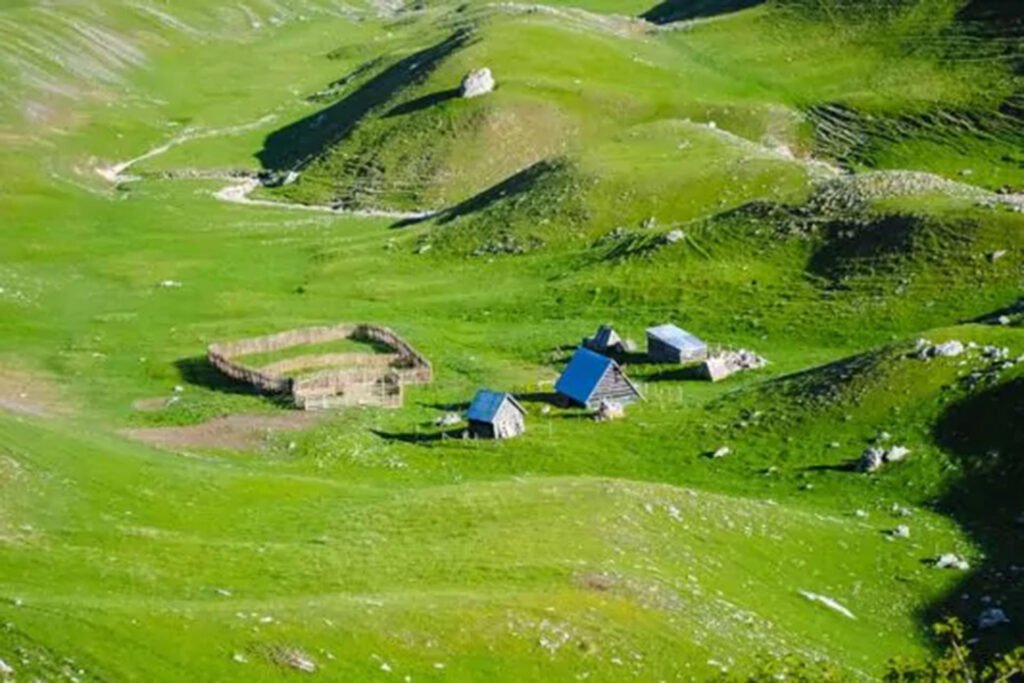
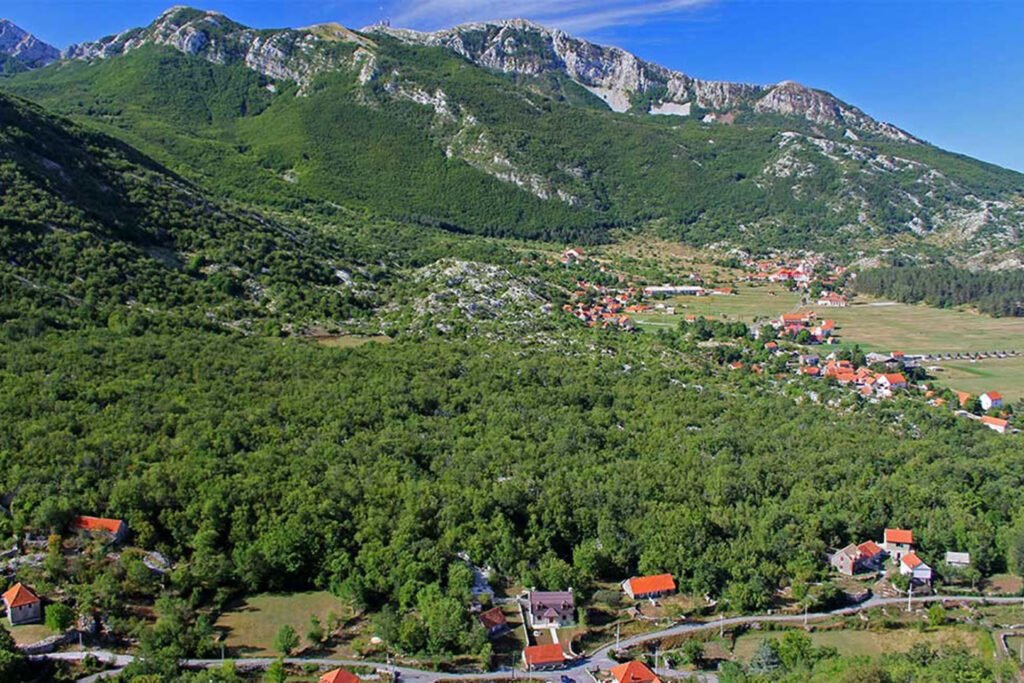
Njeguši cheese is a traditional Montenegrin hard cheese with a high fat content, made primarily from sheep’s milk. The center of its production is considered to be the village of Njeguši, located in the Lovćen region, where the mountain and Mediterranean climates meet. It is this combination—the cool altitude, the proximity of the Adriatic, and the special composition of the grasses in the pastures—that shapes the character of the future cheese.
Here, the flavor is not born in a factory or a laboratory. It is formed by factors that are difficult to standardize: what the sheep fed, how dry the wind was, how the temperature was maintained in the stone vaulted room, and the patience of the cheesemaker. Therefore, Njeguši cheese is a product not only of craft but also of the environment.
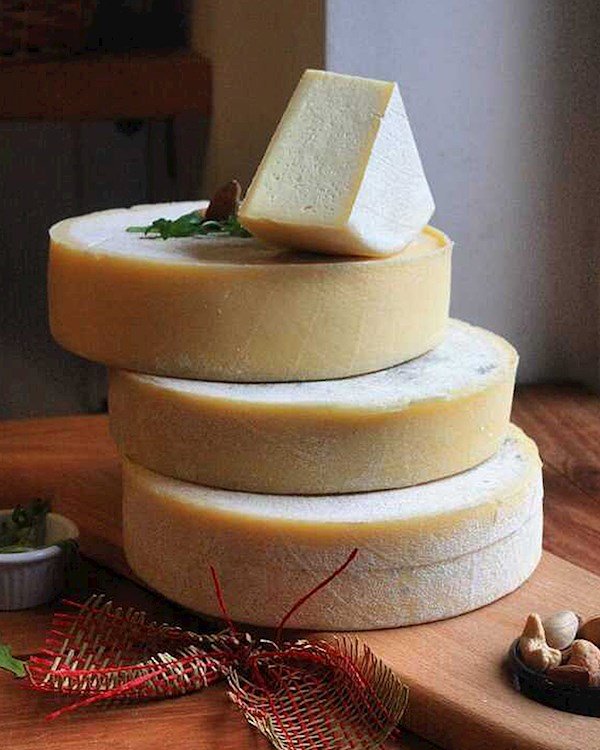
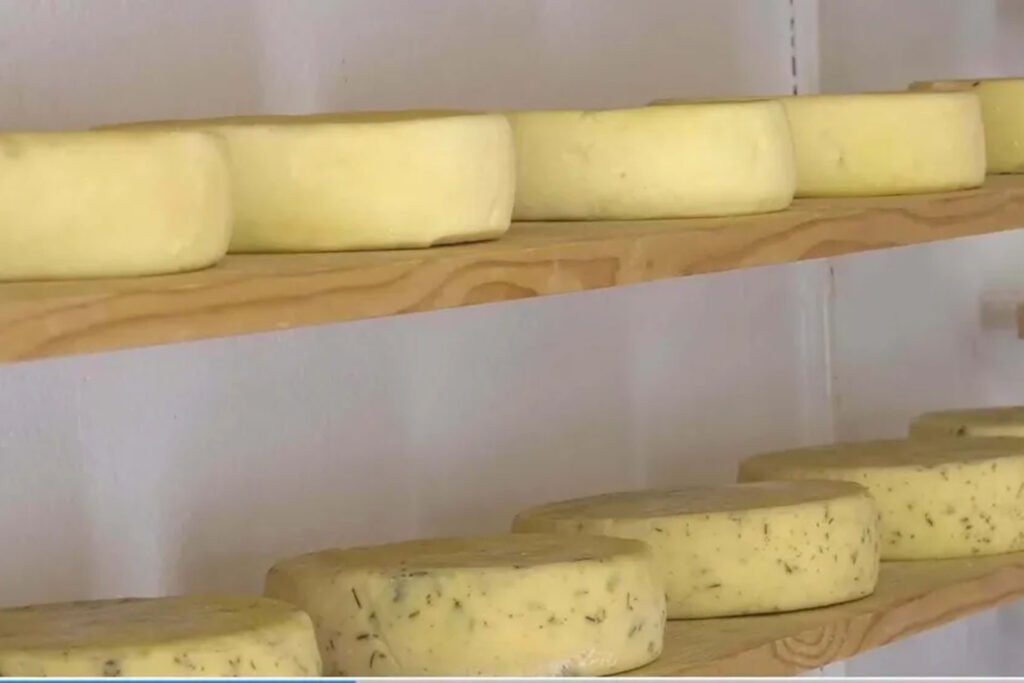
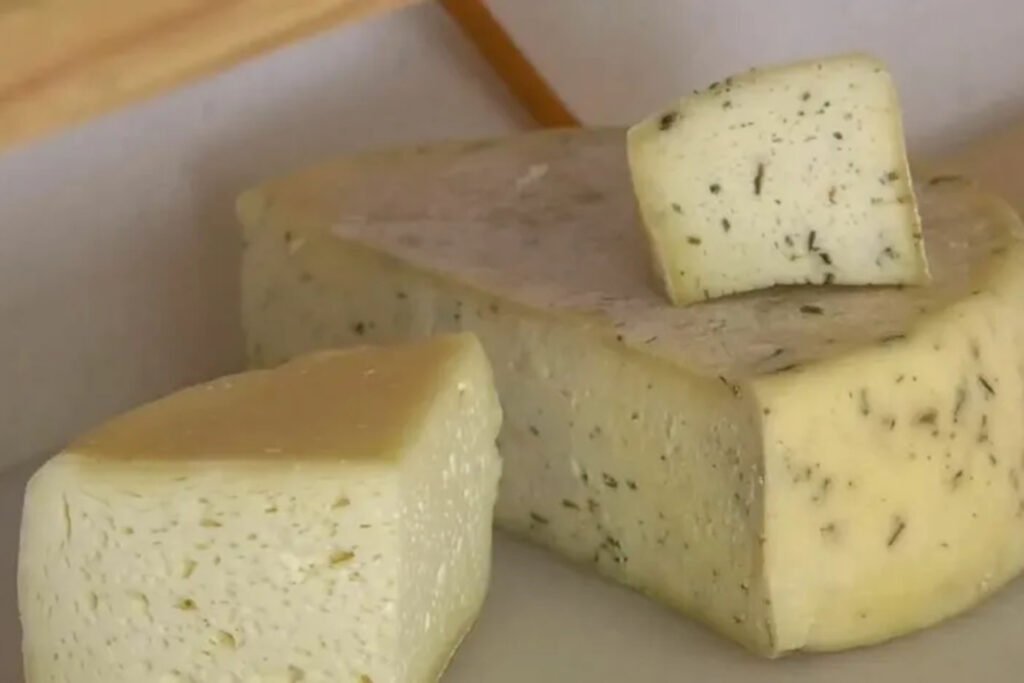
Its appearance fully lives up to its reputation as a quality mountain cheese: typically a low cylinder weighing between one and three kilograms, with a dense, closed structure, rare small holes, and a characteristic golden-yellow rind. But the main thing, of course, is the taste. It’s lactic-sour, salty, rich, with a moderate, and with prolonged maturation, quite distinct piquancy.
Echoes of Antiquity and the European Cheese Route
The history of Njeguši cheese, according to surviving evidence and historical references, goes back far into the past. During the Roman Empire, a cheese called Caseus doclestes was imported to Rome, and in the presented materials, it is identified as the ancestor of Njeguši cheese. And already in the 19th century, this product was known to travelers: in 1841, Heinrich Stieglitz highly praised the cheese he tasted in Njeguši in his travel notes.
This is an important detail. It demonstrates that this isn’t just a local gastronomic curiosity that has survived to this day by chance, but a product with a long history and its own trade history. Njeguši cheese was sold in the markets of Kotor, Dalmatia, Trieste, Venice, Marseille, and Malta. For a small mountainous region, this isn’t just a geographical distribution—it’s evidence that the cheese has long been part of the cultural and economic exchanges of the Mediterranean.
How Njeguši Cheese Is Made
The production technology still retains the hallmarks of a craft that has remained virtually unchanged for a century. It all begins with fresh sheep’s milk. It is strained through a sieve and heated to 32–35°C. Then, rennet, traditionally obtained from parts of lamb’s stomach, is added. Coagulation takes approximately 30 to 60 minutes; during this time, a dense mass should form.
After this, the curd is cut first into walnut-sized pieces, and then even smaller, to the size of a corn kernel. This isn’t a mechanical operation for the sake of precision, but a crucial step that determines the future texture. The mass then continues to form in the whey, gradually heating to approximately 40–45°C—a temperature traditionally described simply and concisely as “until the hand can’t stand it anymore.” The cheesemaker manually shapes the curd into an oval or spherical shape, achieving the desired whey separation. This stage lasts approximately 15–20 minutes.
The formed curd is placed in a sieve or cheesecloth, further squeezed by hand, and then transferred to a wooden or metal mold. Next, pressing begins—an ancient, almost ritualistic process. First, the cheese is pressed with a round wooden board, and a stone is placed on top. After twelve hours, the cheese is transferred, turned over, and pressed for another twelve hours. A total of 24 hours under pressure.
After this, the cheese is removed from the mold and salted with dry salt. It is then placed in a wooden container—references include protective wooden vessels such as a kašun, as well as a wooden pot or container called a “kaca.” Over the first two days, the cheese is turned over several times, and salt is added to the dry side. This wooden container serves more than just a practical purpose: it is also believed to influence the product’s flavor and aroma.
The most important thing begins in the cellar.
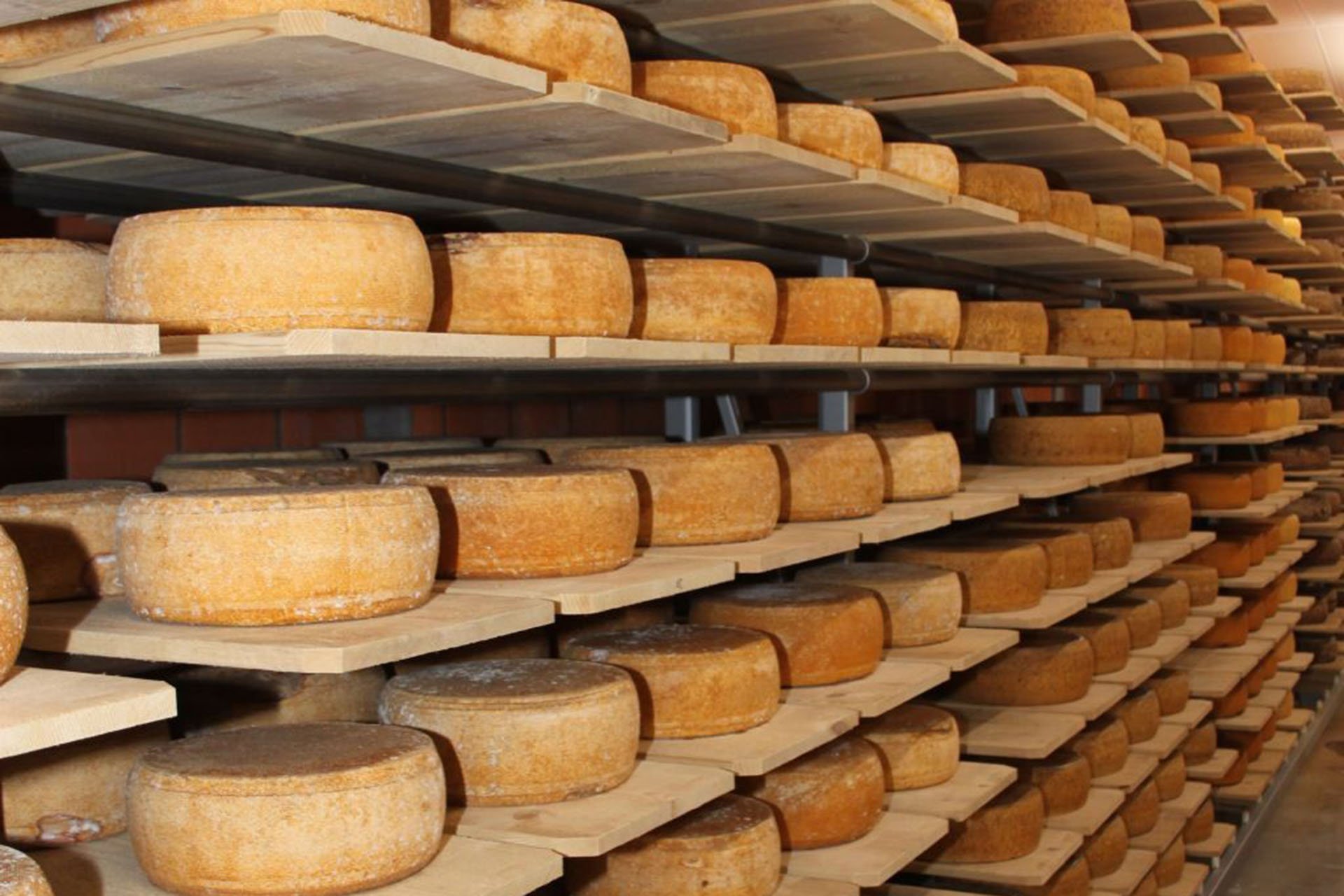
As with many great cheeses, the true character of Njeguši cheese is revealed not at the time of production, but during aging. The minimum aging period is at least four weeks. But the best results, as emphasized in the presented materials, are achieved by aging in a volata—a vaulted stone cellar. Nearly ideal conditions are maintained there: an average temperature of about 16.1°C and humidity of 87.6%.
It is here that the cheese acquires the depth of flavor for which it is prized far beyond Montenegro. Longer aging intensifies the piquancy, creating a richer and more complex flavor. Some mature wheels are additionally smoked for several days, dipped in olive oil, or even aged in wheat grains for 90–150 days. This is more than just a storage method; it’s a subtle manipulation of aroma and texture.
The result is a product with a recognizable, almost architectural profile: dense, composed, without excessive looseness, but not coarse; salty, but not harsh; milky, but with a noble, mature spiciness.
More than gastronomy
Njeguši cheese cannot be separated from its birthplace. Njeguši is not just a producing village, but a place with special symbolic significance for Montenegro. It is the birthplace of the Petrović dynasty, which ruled the country from 1696 to 1918. Traditional stone houses, drystone walls, and the birthplace of Petar II Petrović Njegoš—a poet, thinker, and ruler, one of the key figures in Montenegrin history—have been preserved here.
Therefore, discussions about Njeguši cheese always extend beyond discussions of food. It is part of the national heritage, a product that preserves the way of life of an entire region. Pastures, sheep farming, ancient farming practices, cellar architecture, and artisanal knowledge, passed down not by hand but by hand, are all important here.
In an era when even traditional products often lose their individuality in the name of mass production, Njeguši cheese remains a rare example of how local gastronomy retains its dignity and authenticity. It avoids the urge to please everyone. It demands attention, time, and understanding—just like Montenegro itself.
And perhaps that’s why its taste is memorable. Not as a spectacular gastronomic exotica, but as something much more profound: the taste of a place where stone, milk, salt, and time still speak the same language.